
Why African Patients Prefer India for Treatment
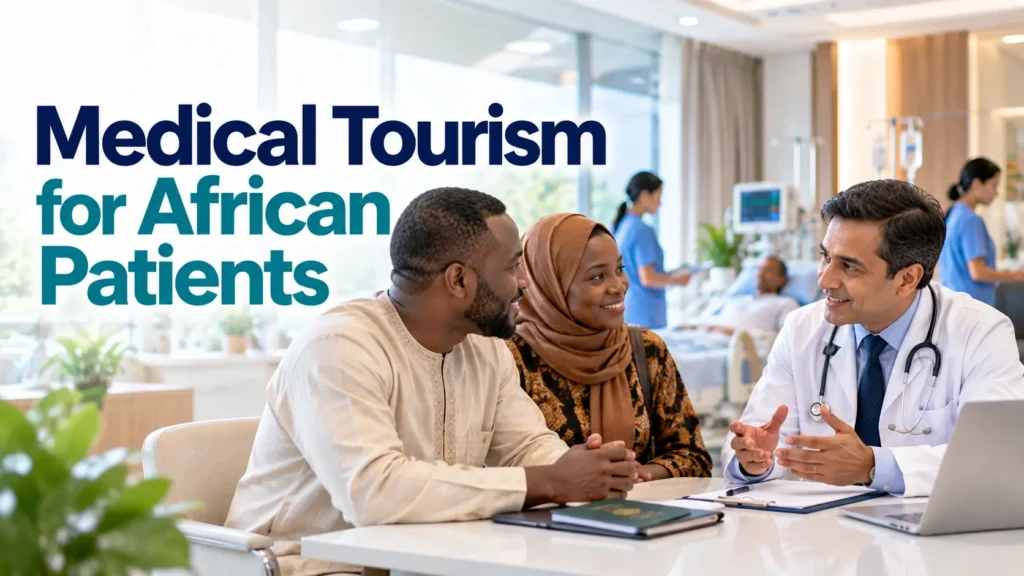
Medical tourism between Africa and India has become one of the most dependable forms of treatment for patients in Africa. Every year, thousands of patients travel to India. In order to receive surgery and other advanced treatments, including chemotherapy, organ transplantation, heart therapy, and many others.
The growth of medical tourism for African patients is driven by affordable treatment costs, experienced doctors, modern hospitals, and shorter waiting times. For many people, receiving advanced healthcare services in India is not easily possible anywhere else in the world.
Get Free Consultation Now
What Actually Is Medical Value Travel?
Let’s look at this plainly without the glossy marketing jargon. Medical tourism, or Medical Value Travel (MVT), is defined as a form of travel involving crossing borders for surgery.
Look, people aren’t traveling for routine checkups or basic prescriptions. These are cases where they need high-end, life-saving operations that require an extremely specialized setup, no waiting lines whatsoever, and top-of-the-line technology. The current framework of medical tourism for African patients ensures that these massive gaps in localized healthcare are bridged smoothly and securely.
The Real Drivers: Why African Families Choose India
The massive growth rate of African patients choosing India isn’t random. It is driven by several solid, practical clinical realities that have completely revolutionized the landscape of medical tourism for African patients.
Massive Cost Reduction
Let’s be completely honest: money is a huge factor. You aren’t just getting cheaper care; you are getting world-class private care at an absolute fraction of what a Western hospital demands. The local operational overheads, structured domestic pharmaceutical manufacturing, and efficient clinical setups mean you can save 75% or more on major surgeries, and often significantly more for procedures like organ transplants, without a single compromise on your safety.
Elite Surgical Repetition
Indian corporate specialists treat thousands of complex international cases every single month. That sheer volume of daily repetition gives them a level of tactical, hands-on surgical muscle that is incredibly rare globally. Many senior specialists have trained or completed fellowships in the US and UK, meaning they follow strictly evidence-based, international clinical paths.
Access to 21st-Century Medical Tech
From advanced robotic surgery setups (like the da Vinci and indigenous SSI Mantra suites) and Proton Therapy cancer care to complex haploidentical bone marrow processing, Indian hospitals feature technologies that mirror any top-tier university hospital globally.
Bypassing the Wait Times
In many public health systems across Africa, the waiting lists for critical procedures like a coronary artery bypass or a specialized tumor resection can stretch into dangerous months. Indian private institutes operate with extreme efficiency, allowing you to finish your pre-surgery evaluations and get onto the operating table within days of landing.
Overcoming the Visa Nightmare
Securing an entry permit for medical treatment in Europe or North America has turned into a bureaucratic maze of rejections and lengthy delays. In contrast, the Indian government has highly streamlined the entire e-Medical visa framework, making the logistics of medical tourism for African patients incredibly fast, with clearances frequently granted in under 72 hours.
Common Advanced Treatments Sought in Indian Hubs
Families utilizing medical tourism for African patients predominantly seek out India’s Oncology: Integrated cancer treatment by employing state-of-the-art radiation therapy devices, immunotherapy, and tumor debulking surgery.
- Transplantation: Standardized transplantation of kidneys and livers from living donors with high success rates.
- Cardiothoracic Surgery: Advanced pediatric cardiac surgeries, valvular replacement surgery, and coronary artery bypass surgery on multiple vessels.
- Orthopedics and Spinal Surgery: Joint replacement, scoliosis correction, and minimally invasive spinal surgery.
- Neuroscience: Advanced brain tumor surgeries with navigation guidance and post-stroke rehabilitation programs.
- Reproductive medicine: High-level In Vitro Fertilization and advanced fertility care services.
Financial Blueprint: India vs Western Alternatives
The absolute price contrast between India and Western medical systems is staggering. It is the core reason why advanced treatment becomes financially realistic for regular families.
Look at how the average cost ranges look side-by-side in US Dollars:
| Specialty Surgery | India Cost (USD) | USA Cost (USD) | UK Cost (USD) |
|---|---|---|---|
| Heart Bypass Surgery | $4,500 – $8,000 | $100,000+ | $40,000+ |
| Kidney Transplant | $7,000 – $15,000 | $250,000+ | $80,000+ |
| Liver Transplant | $25,000 – $45,000 | $300,000+ | $150,000+ |
| Hip Replacement | $5,000 – $9,000 | $35,000+ | $20,000+ |
Premier Healthcare Institutes and On-Ground Services
India houses several massive, JCI- and NABH-accredited corporate hospital chains that run highly dedicated international patient wings:
- Apollo Hospitals (Chennai/Delhi): Sprawling institutional giants that are heavily favored by African families, featuring extensive information centers directly inside nations like Kenya, Ethiopia, and Tanzania to bridge the care path.
- Medanta – The Medicity (Gurugram): A massive medical city globally renowned for running ultra-high-volume organ transplant and advanced robotic bypass divisions.
- Fortis Memorial Research Institute (Gurugram): Highly praised for its tech-heavy setups, specialized bone marrow isolation suites, and advanced neuro-navigation units.
- Max Super Speciality Hospital (Delhi NCR): Known for its incredibly rigid infection control systems, top-tier critical care units, and advanced multi-disciplinary oncology boards.
- Manipal Hospitals (Bengaluru): A premier southern heavyweight offering a highly personalized, integrated approach from initial molecular diagnostics down to physical rehab.
- Kokilaben Dhirubhai Ambani Hospital (Mumbai): A top-tier western hub offering full-spectrum, world-class tertiary care and advanced technological support.
End-to-End International Patient Support
To maintain India’s position as a leader in medical tourism for African patients, top-tier corporate hospitals have engineered a smooth, frictionless pipeline to support international families from the moment they submit a query until long after they return home. The typical support layout includes:
- Digital Pre-Evaluations: You securely upload your digital scans and lab reports from home. An expert Indian specialist reviews your files completely free of charge to provide a customized treatment plan and a transparent cost estimate before you ever book a flight.
- Visa Invitation Letter: Within moments of the request, the international department of the hospital issues the visa invitation letter, which helps in obtaining necessary travel permissions from your government officials.
- Ground Transport Assistance: As soon as you reach the airport, a vehicle from the hospital, or in some cases a special medical ambulance, will wait for you right at the entrance of the airport terminal.
- Language Communication Services: Even though the English language is spoken quite fluently by virtually all doctors and nurses in India, hospitals that take care of African tourists provide an interpreter service fluent in languages like Swahili, French, Amharic, and Arabic.
- Service Apartments for Outpatients: They assist your family in finding sanitized, quiet apartments. These are near the hospital premises, equipped with kitchens where your family can cook special meals for you while you recover after treatment.
The Step-by-Step Travel Blueprint
Navigating your medical trip moves in a very specific chronological layout:
- Share Records for Expert Assessment: Phase 1: Digital Consultation.
2. Secure Your Treatment Plan & Cost Quote: Phase 2: Budgeting.
3. Secure Your Official Hospital Invitation Letter: Phase 3: Immigration.
4. Execute Travel and Landing Logistics: Phase 4: Transition.
5. Undergo Treatment and Establish Tele-Followups: Phase 5: Continuity.
Conclusion
Facing a severe medical crisis is an incredibly steep, emotional mountain to climb. However, the data proves that you do not have to handle the burden of inaccessible or overpriced care alone. By combining elite, Western-trained surgical talent, state-of-the-art corporate infrastructure, and accessible, transparent pricing, the system of medical tourism for African patients has built a highly reliable medical bridge for the Global South. It requires deep personal planning, strict adherence to post-op protocols, and clear logistical coordination. But for thousands of African families every single year, taking this definitive step in India is the ultimate gateway to conquering disease, protecting their long-term health, and stepping safely back into a long, vibrant life.
Frequently Asked Questions
How much can African patients actually save by getting treatment in India?
Savings are typically 75% or more compared to US or UK pricing, and often significantly higher for procedures like organ transplants, where the gap can exceed 90%. Your exact savings depend on the specific procedure and hospital package you choose.
Do I need to travel to India for an initial consultation, or can I get evaluated first?
Most major hospitals offer free digital pre-evaluation, where you upload your scans and lab reports for a specialist to review remotely and provide a treatment plan and cost estimate before you book any travel. This lets you make an informed decision before committing to the trip.
Will I be able to communicate with doctors and staff in my own language?
English is widely spoken by doctors and nurses across Indian hospitals, and hospitals with dedicated African patient programs typically also provide interpreters fluent in languages like Swahili, French, Amharic, and Arabic. This support is usually arranged as part of your international patient package.
Can I get a kidney or liver transplant in India using a family member as a donor?
Yes, living donor kidney and liver transplants from a matching relative are a standard, well-established pathway with high success rates at major Indian transplant centers. Deceased donor organs are generally not a realistic option for international patients, so planning around a living donor is the practical approach.
How quickly can I get a medical visa to travel to India for treatment?
Clearances are frequently granted in under 72 hours once your documentation, including your hospital invitation letter, is complete and accurate. It’s still wise to apply at least a week or so before your planned travel to account for any unexpected delays.
Medically Reviewed
This page has been medically reviewed by Dr. Rashid Ali, MBBS, a Delhi Medical Council–registered practitioner (Registration No. DMC/R/36289), to ensure it reflects accurate, current, and evidence-based medical information.
At Medicsaz, every treatment page is checked by a licensed doctor before publication, not written by a marketing team alone. Dr. Rashid Ali review covers the accuracy of procedures, terminology, and claims described on this page, so patients researching can rely on what they read here to make informed decisions.
Last medically reviewed: 09/09/2026
You can independently verify Dr. Rashid Ali’s registration on the Delhi Medical Council’s official website using Registration No. DMC/R/36289, or read more about his role as Medicsaz’s medical reviewer on his reviewer profile page.