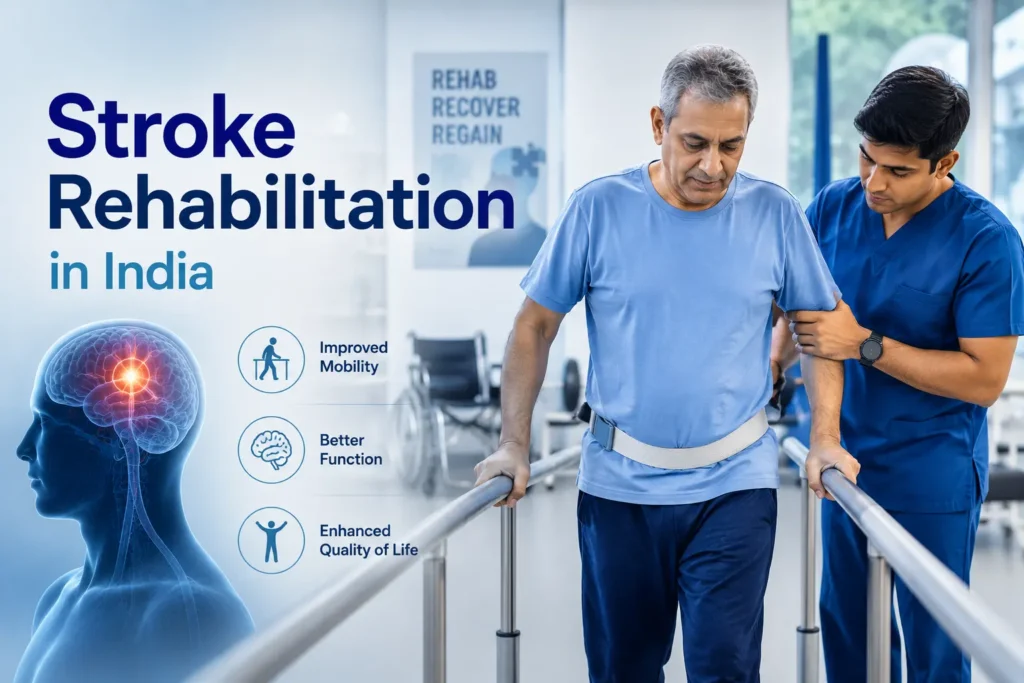
Stroke Rehabilitation in India
The occurrence of a stroke can be said to be a sudden change in the functioning of the body. At one point, all seems to be normal, but in an instant, blood flow to a part of the brain is obstructed. The result is that simple things such as moving to the kitchen become difficult. It is a very scary period for the individual experiencing the stroke and a very tiring period for the family members.
Medical care at the emergency room is just one side of the whole experience. The second part of the process is through rehabilitation. Stroke Rehabilitation in India has become a very organized method for helping patients regain function. It helps the body relearn how to function independently again.
Get Free Consultation Now
What Is Stroke Rehabilitation?
You should think of stroke rehab as a specialized training program for the brain and the body. Its main job is to help relearn skills that were affected by the stroke. This includes everything from moving a hand to remembering a name or a phone number. It is not just about physical recovery but about restoring a person’s sense of independence and identity.
Why Rehabilitation Is Important After Stroke
The brain has a natural ability to rewire its own pathways through a process called neuroplasticity. But it needs consistent, professional guidance to do this work effectively. Without a proper plan, recovery often stays incomplete. Rehab is vital because it builds physical strength and helps restore the ability to communicate clearly.
Common Challenges After Stroke
Recovery processes vary from one person to another; however, there are some common problems that almost all patients encounter during the course of their recovery process after suffering from a stroke. The following are the problems that a rehabilitation program aims at solving:
- Weakness on One Side: Being unable to move one’s arms or legs.
- Communication Problems: Having difficulty with communication, either speaking or comprehending others.
- Memory Loss: Inability to concentrate and recall things easily.
- Balance Loss: Inability to maintain balance while walking.
Types of Stroke Rehabilitation Therapies
Rehabilitation requires teamwork from various specialists as follows:
- Physical Therapy: Deals with mobility and exercise of the legs.
- Occupational Therapy: Aids in performing daily tasks, such as feeding and dressing oneself.
- Speech Therapy: Aids in ensuring communication skills are clear and effective, and swallowing is safe.
- Cognitive Therapy: Acts as an exercise for the brain.
How Stroke Rehabilitation in India is Planned
Doctors in India now create custom plans for each patient instead of using a one-size-fits-all approach. They look at how severe the stroke was and what the patient actually wants to achieve, whether that’s returning to work or simply being able to walk to a local park.
Role of Physiotherapy in Stroke Recovery
The largest portion of physical recovery comes from physiotherapy. This therapy requires repetitive actions to reactivate muscles and help rebuild coordination between limbs. The patient works closely with a therapist, practicing actions like stepping slowly, gradually turning them into more natural movement again.
Speech and Cognitive Therapy After Stroke
One of the hardest experiences is knowing exactly what you want to say but being unable to get the words out. Specific exercises can help strengthen the muscles involved in speech and improve clarity over time. Speech therapy can also help the brain find alternative ways to communicate when needed.
Recovery Timeline After Stroke Rehabilitation in India
Recovery is not a sprint but a marathon, and it looks different for everyone. In most cases, the greatest gains happen during the first few weeks. From month one to month six, progress often continues through smaller, steady gains. Recovery doesn’t necessarily stop even a year later, though the pace of improvement typically slows over time.
Tips to Improve Recovery After Stroke
Even as doctors contribute their share, there are some small steps one can take at home that help with the process of recovery:
- Follow the Plan: Never miss a therapy session, not even if you feel too fatigued or disheartened.
- Eat Healthy: A healthy diet contributes to brain healing.
- Stay Active: Move around a bit each day to keep your joints flexible.
- Have a Positive Atmosphere: The atmosphere at home really does matter.
Long-Term Care and Support
The journey doesn’t end when initial rehab sessions are complete. Long-term care means staying consistent with exercises and check-ups to maintain progress. This helps prevent regression over time. Family support remains one of the most powerful tools for motivation during this long recovery road.
Stroke Rehabilitation in India Cost
Stroke Rehabilitation in India typically costs around $3,000 to $8,000. The cost varies depending on the patient’s level of disability, rehabilitation setting, program duration, therapy intensity, nursing requirements, accommodation, and use of advanced rehabilitation technologies.
The exact cost depends on the patient’s condition and rehabilitation plan. Programs may include physiotherapy, occupational therapy, speech and swallowing therapy, cognitive rehabilitation, balance and gait training, and caregiver education. Longer or more intensive inpatient programs, as well as robotic rehabilitation and other advanced therapies, can increase the overall cost. These figures are general estimates, not fixed quotes.
How Medicsaz Supports Your Stroke Rehabilitation in India Journey
Medicsaz connects international patients with vetted partner rehabilitation centres and experienced rehabilitation physicians, physiotherapists, occupational therapists, and speech therapists for Stroke Rehabilitation in India. The team assists with medical record review, rehabilitation-centre and specialist matching, treatment and cost estimates, travel and visa support, accommodation, and coordination throughout the patient’s rehabilitation journey.
For patients exploring Stroke Rehabilitation in India, Medicsaz can help identify an appropriate rehabilitation program based on the patient’s medical records and functional needs, while providing guidance on expected costs and the overall rehabilitation process.
Conclusion
Stroke recovery demands a lot of commitment and proper medical attention. What is significant to understand is that results tend to differ greatly depending on patients; according to the statistics, about one in five stroke victims is able to recover fully, whereas many other patients manage to make great strides towards independent living, despite some residual problems. Regular rehabilitation can really help improve the condition of most patients and provide a better quality of their lives, and any step towards walking, talking, and independence is a great result. Stroke Rehabilitation in India is equipped with all modern tools that can help a patient achieve the best possible results for their specific case.
Frequently Asked Questions
Will I make a complete recovery after a stroke if I do all my rehab exercises?
Not necessarily — research shows only around 10 to 20% of stroke survivors achieve a full recovery, while many others make substantial, meaningful progress. This depends heavily on stroke severity and location, not just effort, so consistent rehab significantly improves outcomes even when full recovery isn’t possible.
What is neuroplasticity, and why does it matter for stroke recovery?
Neuroplasticity is the brain’s natural ability to rewire itself and form new neural connections, allowing healthy areas of the brain to help take over functions affected by the stroke, especially with consistent, guided therapy.
When does the most improvement happen after a stroke?
The most significant gains typically happen in the first few weeks after a stroke, though steady, meaningful progress often continues for six months to a year or longer with consistent rehabilitation.
What types of therapy are involved in stroke rehabilitation?
A typical rehab team includes physical therapy for movement and strength, occupational therapy for daily living skills, speech therapy for communication and swallowing, and cognitive therapy for memory and reasoning.
How important is family support during stroke recovery?
Extremely important — a supportive home environment plays a major role in a patient’s motivation and consistency with therapy, which directly affects long-term outcomes.
Does stroke recovery ever really stop?
Progress often continues well beyond the first year, though it typically slows down over time, which is why long-term consistency with exercises and check-ups remains important even after formal rehab sessions end.
Medically Reviewed
This page on Stroke Rehabilitation in India has been medically reviewed by Dr. Rashid Ali, MBBS, a Delhi Medical Council–registered practitioner (Registration No. DMC/R/36289), to ensure it reflects accurate, current, and evidence-based medical information.
At Medicsaz, every treatment page is checked by a licensed doctor before publication, not written by a marketing team alone. Dr. Rashid Ali review covers the accuracy of procedures, terminology, and claims described on this page, so patients researching Stroke Rehabilitation in India can rely on what they read here to make informed decisions.
Last medically reviewed: 09/09/2026
You can independently verify Dr. Rashid Ali’s registration on the Delhi Medical Council’s official website using Registration No. DMC/R/36289, or read more about his role as Medicsaz’s medical reviewer on his reviewer profile page.