
Liver Transplant Success Rate in India
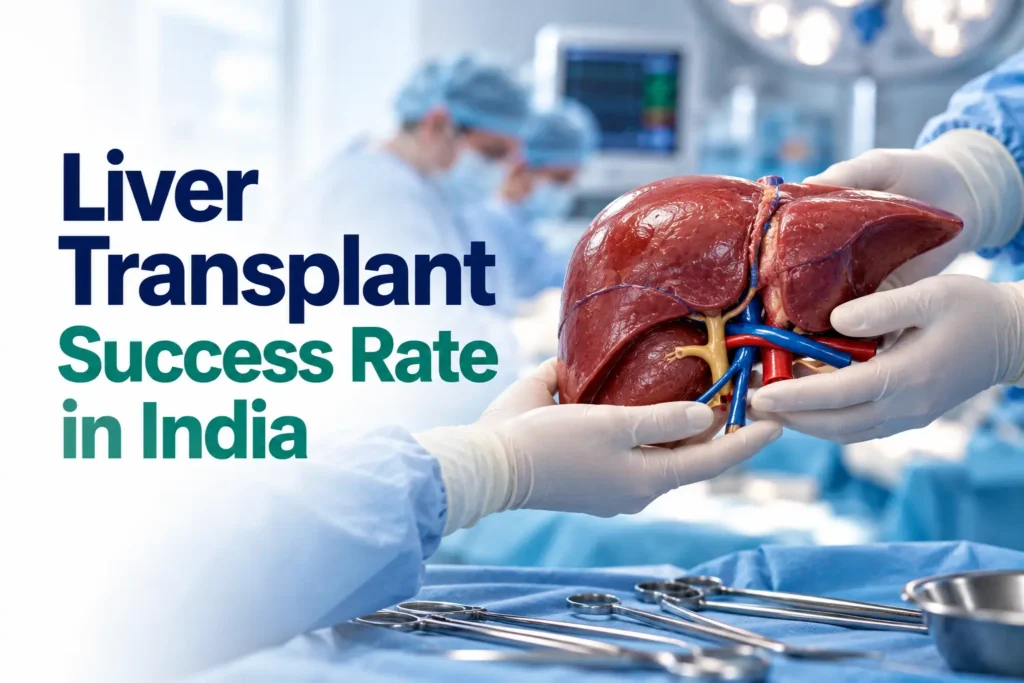
Having been informed that your liver isn’t functioning properly is one of the most shocking experiences that can happen to someone. All of a sudden, you are plunged into a world of complicated terms, numerous hospital stays, and the harsh reality of managing a totally worn-out body. In cases when there’s no hope left and only severe cirrhosis or acute liver failure can be observed, liver transplants in India are a true game-changer.
In the past decade or so, however, India has become a huge center for this type of surgery. Why is that? Because you get state-of-the-art surgical talent and facilities that do not come with the equally painful price tag associated with Western medicine. It would be helpful to know about the success rate of liver transplants in India when you’re in this position.
Get Free Consultation Now
What Is a Liver Transplant?
Let’s break it down simply. A liver transplant is a major operation where a broken, non-functional liver is swapped out for a healthy one. This can happen in two ways. You either wait for an organ from a deceased donor (someone who tragically passed away), or a healthy family member steps up as a living donor and gives you a piece of theirs.
The liver is actually a pretty wild organ because it can regenerate.
The regeneration factor: Within a couple of months after the surgery, both the piece left inside the donor and the piece inside the recipient naturally grow back to full, normal size.
Doctors usually bring up a transplant as a last resort. It’s for when medications stop working, and the liver damage is permanent and irreversible.
Why Patients Choose India for Liver Transplants
The rush of international patients to Indian hospitals isn’t just clever marketing. It’s a system built on solid results and highly streamlined care. Look at why it actually works:
- Massive surgery volumes: Indian transplant surgeons do this every single day. That sheer repetition makes their hands-on skills incredibly sharp.
- Insane infection control: The post-op transplant ICUs use ultra-strict isolation tech to protect patients while their immune systems are completely vulnerable.
- Bypassing the wait: If you bring a relative who matches your blood type, the hospital clears the legal and clinical paperwork fast, so you don’t waste precious time.
- All-in-one handling: They have entire departments dedicated to international patients, handling everything from visa paperwork to language interpreters.
This consistent excellence is a primary factor contributing to the high liver transplant success rate in India.
Understanding Liver Transplant Success Rates
When a surgeon throws a “success rate” percentage at you, they aren’t just talking about surviving the operating table. True success means you get your life back. It means the new organ takes, your body doesn’t fight it, and you walk out of the hospital on your own two feet.
Of course, these numbers shift based on a few realities: how old you are, how sick you were before checking in, how good the donor match is, and whether you actually take your pills on time. Thanks to better surgical tools and massive upgrades in anti-rejection medicines, the risks are lower than they’ve ever been.
Liver Transplant Success Rate in India
The data doesn’t lie. The actual liver transplant success rate in India runs neck-and-neck with the absolute best university hospitals in the US or UK.
Outcome / Transplant Type | Success Rate | The Reality |
First-Year Survival | 85% – 95% | The most critical hurdle. This is where close monitoring happens. |
Three-Year Mark | 80% – 90% | Long-term stability. The body has fully accepted the new organ. |
Five-Year Survival | 70% – 85% | Total return to normal. Many go on to live for decades. |
Living Donor Surgery | Up to 95% | Usually higher because the surgery is planned before a crisis hits. |
These numbers keep ticking upward because Indian medical teams now use advanced AI matching software and microsurgical tools that minimize tissue damage.
Factors That Affect Liver Transplant Success
The Patient’s Current Baseline
Timing changes everything. If you get the transplant before your other organs (like your kidneys) start giving up under the strain, your recovery time is cut in half.
Understanding these variables is key to contextualizing the impressive liver transplant success rate in India.
Donor Compatibility
A clean tissue and blood group match means your immune system is far less likely to throw a fit and try to reject the new liver in those first few critical weeks.
Choosing the Right Team
Stick to high-volume centers. A hospital team that executes three transplants a week is always going to have a lower complication rate than a clinic that does one a month.
The Post-Op Grind
The operating room is just phase one. Real, long-term survival is won or lost during the follow-up clinics, the regular blood tests, and how fast your doctor catches any tiny shift in your labs.
Sticking to the Meds
Your body will always view the new liver as a stranger. If you skip your anti-rejection drugs even once because you felt fine, you risk triggering a silent, internal rejection crisis.
Living Donor vs Deceased Donor Liver Transplant
Both routes can save your life, but the logistics look completely different.
- Living Donor: This is how most transplants happen in India. Because a relative steps up, you get to schedule the surgery whenever your body is at its most stable. No waiting around for months. This planning is exactly why the one-year success rates lean closer to 95%. This proactive approach is a major reason for the competitive liver transplant success rate in India.
- Deceased Donor: Here, you are placed on a state waiting list. You might get the call tonight, or it might take months. It’s an emergency setup. The moment a matching organ becomes available, you have to drop everything and get to the operating theater immediately. For international patients specifically, it’s important to know that deceased donor livers are generally allocated to foreign nationals only after all matching Indian candidates have been considered, which makes this route difficult to plan a trip around. Bringing a living donor is the far more practical and predictable path for most patients traveling to India specifically for transplant surgery.
Top Hospital for liver transplants in India
India is packed with massive corporate medical cities that feature elite, dedicated transplant wings:
- Medanta – The Medicity (Gurugram): Universally known for running one of the largest living-donor liver programs on Earth.
- Apollo Hospitals (Chennai/Delhi): The pioneers who did India’s first successful transplants; excellent with pediatric cases.
- Max Super Speciality Hospital (Delhi): Highly rated for complex critical care and managing high-risk patients.
- Fortis Memorial Research Institute (Gurugram): Offers incredibly deep diagnostic tech and top-tier post-op rehabilitation.
- Manipal Hospitals (Bengaluru): The major healthcare heavyweight in the south with an incredible multidisciplinary team.
- Gleneagles Global Hospital (Chennai): Very popular with overseas patients due to its specialized liver-only ICUs.
Cost of liver transplants in India
This is the real game-changer. You get top-tier medical attention without a bill that bankrupts your entire family for generations.
Affordability coupled with quality care has significantly boosted the overall liver transplant success rate in India.
- Living Donor Transplant: $25,000 – $40,000 (Roughly ₹20 Lakhs to ₹32 Lakhs)
- Deceased Donor Transplant: $30,000 – $45,000
- Pre-Surgery Workups: $1,000 – $3,000
- Post-Transplant Medications: Varies by patient
Compare that to Western healthcare systems, where a liver transplant easily breezes past $200,000 or $300,000. India offers a legitimate lifeline that is financially survivable.
Challenges and Risks
The truth is, this is an operation that takes several hours. There is potential for things to take a turn for the worse. The biggest challenge would be the rejection of the liver by your body’s immune system. This may also come with risks like infections due to lowered immunity, internal bleeding, blood clotting in the main artery, and leakage of the bile duct. However, there is good news here as well, since medical experts will notice any change in your blood tests before you do.
Conclusion
Dealing with liver failure can be highly overwhelming, but statistics clearly indicate that there exists an incredibly dependable ray of hope on the horizon. With highly skilled surgeons, sophisticated hospital environments, and low-cost operations, the survival rate for liver transplants in India is second to none compared to any other top destination in the world. A good amount of determination, discipline, and family backing will definitely be required. But for countless individuals each year, choosing this route in India is the precise route to take.
Frequently Asked Questions
Can international patients get a deceased donor liver in India?
This is generally not practical to plan around, since deceased donor livers are allocated to foreign nationals only after all matching Indian candidates have been considered. Bringing a living donor, usually a relative, is the far more realistic and plannable path for patients traveling to India specifically for transplant surgery.
How long does it take for the liver to regenerate after a living donor transplant?
Both the donor’s remaining liver and the recipient’s transplanted portion regrow substantially within a couple of months, with most regeneration complete within a few months after surgery. This is one of the unique features that makes living donor liver transplants possible in the first place.
What is the success rate for liver transplants in India?
First-year survival typically ranges from 85% to 95%, with living donor surgeries trending toward the higher end of that range since they’re planned rather than performed as an emergency. Five-year survival rates of 70% to 85% are also in line with leading transplant centers globally.
What are the biggest risks of liver transplant surgery?
The main risks include organ rejection, infection due to lowered immunity, internal bleeding, blood clotting, and bile duct leakage. Your medical team monitors blood tests closely after surgery specifically to catch these issues early, often before symptoms appear.
How much does a liver transplant cost in India compared to Western countries?
Living donor transplants in India typically cost 80-90% less than in Western countries, where the same procedure can run into hundreds of thousands of dollars. This dramatic cost difference makes India a genuinely accessible option for many international families facing liver failure
What factors most affect whether my liver transplant will be successful?
Your health before surgery, how well your donor’s tissue and blood type match yours, the experience of your surgical team, and strict adherence to anti-rejection medication afterward all play major roles. Choosing a high-volume transplant center and never skipping your medication are two of the most controllable factors in your own hands.
Medically Reviewed
This page on Liver Transplant Success Rate in India has been medically reviewed by Dr. Rashid Ali, MBBS, a Delhi Medical Council–registered practitioner (Registration No. DMC/R/36289), to ensure it reflects accurate, current, and evidence-based medical information.
At Medicsaz, every treatment page is checked by a licensed doctor before publication, not written by a marketing team alone. Dr. Rashid Ali review covers the accuracy of procedures, terminology, and claims described on this page, so patients researching Liver Transplant Success Rate in India can rely on what they read here to make informed decisions.
Last medically reviewed: 09/09/2026
You can independently verify Dr. Rashid Ali’s registration on the Delhi Medical Council’s official website using Registration No. DMC/R/36289, or read more about his role as Medicsaz’s medical reviewer on his reviewer profile page.