
Why Bangladesh Patients Choose India for Healthcare
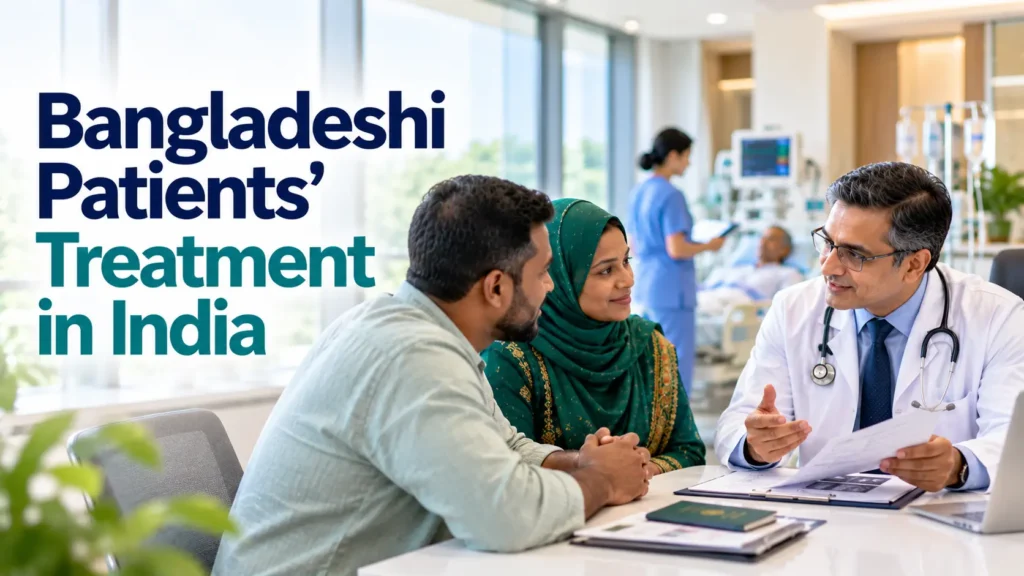
Realizing local clinics cannot handle a severe diagnosis is overwhelming. Facing a critical health crisis means navigating legal boundaries, medical travel files, and expensive procedures. For years, Europe or America were the default secondary choices, but excessive wait times and near-impossible visa protocols created massive hurdles.
Instead, India acts as a primary, practical lifeline for the region. Lakhs of individuals cross the borders annually because they can access highly specialized tertiary facilities at a fraction of Western costs. Understanding why this framework functions effectively is the best way to plan an overseas journey. Bangladeshi patients’ treatment in India is a widely sought-after medical journey.
Get Free Consultation Now
Affordable Treatment Costs
Let’s look at the numbers cleanly. While quality of care is the primary priority, financial realism is what makes a treatment plan actually viable for a family. India offers world-class private care under strict international protocols at a fraction of Western or Middle Eastern rates.
The domestic medical manufacturing industry, combined with lower hospital operational overheads, keeps the costs highly manageable. This pricing structure means you can save up to 70% on major interventions while using identical, internationally accredited technologies.
Here is a realistic look at how the average cost ranges shape up across global options:
| Advanced Clinical Procedure | India Average Cost (USD) | Alternative Destinations (USD) |
|---|---|---|
| Heart Bypass Surgery | $4,500 – $8,000 | $30,000 – $150,000 |
| Kidney Transplant | $7,000 – $15,000 | $50,000 – $250,000 |
| Liver Transplant | $25,000 – $45,000 | $100,000 – $300,000 |
| Hip Replacement | $5,000 – $9,000 | $20,000 – $60,000 |
The affordability of Bangladeshi patients’ treatment in India allows many families to access advanced care without overwhelming financial stress.
Experienced Doctors and Specialists
Indian corporate hospitals house sprawling clinical teams where doctors specialize in highly narrow sub-disciplines. You aren’t just seeing a general surgeon; you are putting your care into the hands of a specialist who focuses solely on your specific type of tumor or structural heart issue.
A significant percentage of senior Indian consultants have completed advanced fellowships or held active tenures in premier institutes across the US and UK. They follow strictly evidence-based medical pathways, bringing an elite level of global expertise straight to your treatment bedside.
The high standard of specialized care contributes significantly to the growing trend of Bangladeshi patients’ treatment in India.
Advanced Medical Technology
Top-tier Indian hospitals operate with advanced medical equipment that aligns with any leading university clinic in the West. The technological array available includes:
- Highly sophisticated robotic surgery platforms, such as the da Vinci robotic platform used in minimally invasive surgeries of the prostate and kidneys.
- Highly sophisticated imaging facilities such as the PET-CT scanner and MRI machine for high teslas.
- An advanced linear accelerator used for high precision in oncology radiation while sparing normal tissue.
- High-end positive-pressure sterile isolators designed specifically for use by immunocompromised transplant patients.
Common Treatments Sought by Bangladeshi Patients
The movement for Bangladeshi patients’ treatment in India spans across several complex tertiary specialties where highly precise intervention is non-negotiable:
Cardiovascular Interventions
From complex pediatric hole-in-the-heart closures to multi-vessel bypass surgeries and advanced valve reconstructions, India’s cardiac wings are globally renowned for their survival numbers.
Comprehensive Oncology
Full-spectrum cancer care combining complex tumor debulking resections with micro-targeted chemotherapy, biological immunotherapies, and advanced bone marrow transplants.
Advanced Organ Transplantation
India runs one of the largest and most clinically successful living donor liver and kidney transplant programs in the world, backed by strict legal clearances and exceptional post-op graft survival rates.
Joint and Spine Reconstructions
Full-scale hip and knee replacements using advanced computer-guided alignment tools, along with minimally invasive keyhole spine surgeries to correct debilitating disc disorders.
Reproductive Medicine
High-success IVF tracks and complex reproductive micro-surgeries for couples seeking advanced fertility solutions.
The increasing demand for Bangladeshi patients’ treatment in India reflects the wide range of medical services available.
Unmatched Ground Support and Cultural Familiarity
One of the most comforting aspects of choosing India is how smoothly the entire transition is managed. Leading hospitals maintain dedicated international patient wings that act as your on-ground guardians. The support ecosystem includes:
- Zero-Delay Airport Logistics: The moment you touch down, the hospital’s private transport or ambulance team meets you right at the gate to bring you safely to the clinic.
- Language Comfort: Communication is entirely frictionless. Because Bengali is spoken fluently across hospitals in Kolkata and parts of eastern India, and almost all clinical staff in northern and southern hubs are completely fluent in English, nothing gets lost in translation.
- Outpatient Stay Coordination: They actively help your attendants find quiet, hygienic serviced apartments near the hospital campus, complete with private kitchens so you can cook clean, home-style meals during your outpatient recovery weeks.
Step-by-Step Travel and Clinical Layout
Organizing your medical journey moves in a very specific chronological order:
- Phase 1: Remote Review – Upload digital scans, prescriptions, and reports to the hospital portal for senior consultant evaluation.
- Phase 2: Budgeting – Receive a custom treatment plan and transparent package cost quote from international coordinators.
- Phase 3: Visa Clearance – Obtain an official Visa Invitation Letter with your passport details from the hospital to apply for a medical visa.
- Phase 4: Transition – Book travel, share arrival details with your coordinator, and use hospital pickup to check in.
- Phase 5: Recovery – Complete your procedure, clear safety checks, and arrange telemedicine follow-ups prior to departure.
Tips to Get Bangladeshi Patients' Treatment in India
To make sure that every bit of your treatment journey is free from any bumps, follow these tactics:
- Requirement of Medical Visa: Avoid arriving in India on a tourist visa to undergo significant surgery. Indian Immigration laws strictly forbid surgical operations to take place on tourist visas, so always make sure that you possess a proper MED (Medical) visa.
- Processing Priority: The Indian Embassy processes priority cases of aggressive cancers and organ transplantation promptly. Since visa processing faced massive disruptions from mid-2024 through to June 2026, everything is back to normal. Always confirm the processing time with your coordinator instead of taking anything for granted.
- Attendees with You: Bilaterally, a patient is allowed to have three people with him/her on MED-X visas.
- Emergency Cash Reserve: Set aside an additional amount ranging between $1,500 and $2,000 other than the hospital estimate.
Conclusion
Navigating a severe clinical diagnosis is an incredibly steep emotional challenge. However, modern medical access means you do not have to carry that weight alone. The combination of globally elite surgical muscle, advanced navigation tech, and accessible pricing models ensures that choosing Bangladeshi patients’ treatment in India provides a reliable medical bridge. It demands thorough planning, compliance with post-op protocols, and clear logistical coordination. For thousands of families every year, taking this step is the ultimate gateway to conquering disease and entering a healthy future.
Frequently Asked Questions
Do I need a medical visa, or can I travel on a tourist visa for treatment?
You need a Medical (MED) visa. Indian hospitals are not permitted to treat patients on a tourist visa, and attempting to do so can lead to your treatment being refused or complications with immigration authorities.
How do I make sure the hospital and doctor I choose are legitimate and internationally credible?
Look for hospitals with international accreditation (such as NABH or JCI), check the specific doctor’s qualifications and fellowship history, and ask the hospital’s international patient team for verifiable patient outcome data or references before committing.
What happens if I need follow-up care after I return to Bangladesh?
Most major hospitals offer telemedicine follow-up consultations after you return home, and can coordinate with a local doctor in Bangladesh for ongoing monitoring, especially important for post-surgical or transplant care.
How do I pay for treatment, and can I pay in installments?
Most hospitals require an advance deposit before treatment begins, with the balance settled during your stay. Payment is typically accepted via bank transfer, card, or sometimes through partnered financing options. This varies by hospital, so confirm directly with your coordinator.
What if a complication happens after I've already returned home?
Discuss this with your hospital before treatment. Reputable hospitals will have a clear protocol for remote consultation, and in serious cases, coordinate re-admission if a return trip becomes necessary. Get this in writing as part of your treatment plan.
Is it safe to travel to India for treatment right now given the recent visa disruptions?
Visa processing has been steadily normalizing since mid-2026, but processing times can still vary. Confirm current visa timelines directly with the Indian High Commission or your hospital’s coordination team before finalizing your travel plans, rather than relying on older information.
Medically Reviewed
This page has been medically reviewed by Dr. Rashid Ali, MBBS, a Delhi Medical Council–registered practitioner (Registration No. DMC/R/36289), to ensure it reflects accurate, current, and evidence-based medical information.
At Medicsaz, every treatment page is checked by a licensed doctor before publication, not written by a marketing team alone. Dr. Rashid Ali review covers the accuracy of procedures, terminology, and claims described on this page, so patients researching can rely on what they read here to make informed decisions.
Last medically reviewed: 09/09/2026
You can independently verify Dr. Rashid Ali’s registration on the Delhi Medical Council’s official website using Registration No. DMC/R/36289, or read more about his role as Medicsaz’s medical reviewer on his reviewer profile page.