
Uterine Artery Embolization (UAE) in India
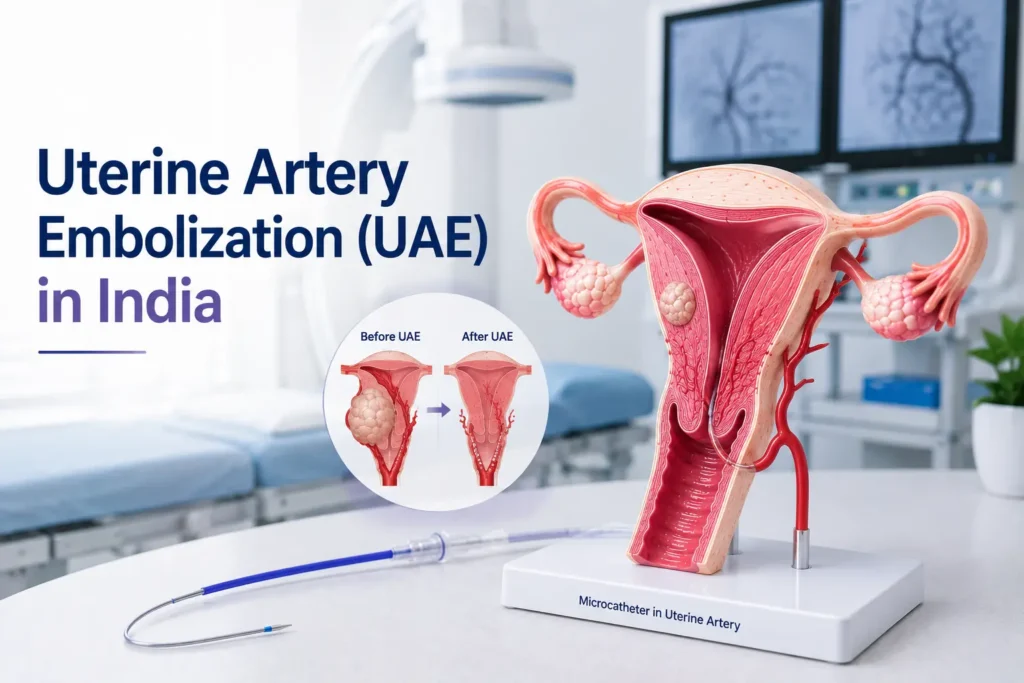
Pain, pressure, and uncontrolled bleeding due to noncancerous uterine fibroids are tiring. Although the surgical route has been considered the traditional means, most women today go for options that are less invasive in nature, where the uterus stays intact.
Uterine artery embolization (UAE) in India can be considered one of those routes where fibroid-related symptoms are relieved through a less invasive process. Interventional radiologists use advanced imaging procedures to perform this procedure to shrink the fibroids.
Get Free Consultation Now
What Is Uterine Artery Embolization (UAE)?
UAE is a minimally invasive therapy that can treat fibroids while retaining the uterus. Instead of surgery, particles will be injected into the fibroid-feeding blood vessels through a specialized injection. As such, particles obstruct blood flow, which eventually results in the shriveling of fibroids over the next few months.
When Is UAE Indicated in Case of Uterine Fibroids?
In some cases, UAE might be required for patients having:
- Excessive Bleeding: When there is heavy bleeding during menstruation causing tiredness and anemia in patients.
- Pain in Pelvis and Pressure: Painful symptoms caused by large uterine fibroids.
- Urinary Problems: When fibroids press on the bladder.
- Multiple Fibroids: When several uterine fibroids need to be removed.
- Retaining Uterus Intention: When hysterectomy needs to be avoided for various reasons.
- Higher Risks Associated with Surgery: For people suffering from different health issues.
It is important to keep in mind that when preservation of fertility is of the highest significance to you, despite the fact that it used to be considered a preferred method by specialists, myomectomy is recommended in this case according to most current scientific studies. This is worth discussing in detail with your specialist based on your specific goals.
How Uterine Artery Embolization (UAE) in India Helps Shrink Fibroids Without Surgery
Fibroids rely on a steady blood supply to grow. UAE works by blocking that blood supply, causing the fibroid tissue to gradually shrink. Over the following months, this typically leads to a significant reduction in fibroid size, which helps relieve heavy bleeding and pelvic pressure.
Symptoms That May Lead to UAE Treatment
Consider an evaluation if you experience:
- Heavy or prolonged menstrual periods
- Pelvic pressure or fullness
- Lower abdominal pain
- Frequent urination
- Constipation
- Pain during intercourse
- Visibly enlarged abdomen
Tests and Diagnosis Before Uterine Artery Embolization (UAE) in India
Before the procedure, your medical team will conduct thorough imaging to plan treatment accurately. This typically includes a pelvic ultrasound and detailed MRI scan to map out the fibroids and surrounding blood vessels. This helps ensure your UAE in India is planned based on accurate, detailed information.
Benefits of UAE Compared to Traditional Surgery
Choosing UAE over open surgery offers several potential advantages:
- Minimally invasive, with no large surgical incisions
- Shorter hospital stay
- Faster recovery compared to open surgery
- Reduced blood loss during the procedure
- Preservation of the uterus
- Ability to treat multiple fibroids in a single procedure
What to Expect After the Procedure
It’s common, not a sign that something has gone wrong, to experience what’s known as post-embolization syndrome in the days following treatment. This typically includes pelvic pain, low-grade fever, nausea, and general discomfort, usually starting within the first day or two and resolving within one to two weeks with pain relief, anti-nausea medication, and rest. Your care team will give you guidance on managing these symptoms and what would be unusual enough to warrant a call to your doctor.
Risks and Complications of UAE
Although UAE is typically a safe and well-tested procedure, it is necessary to know all risks connected with it. Along with the already described post-embolization syndrome, other complications, which are rare but recognized, include:
- Tissue of Fibroids Removal: It happens when fibroids protrude into the uterine cavity and, as a result of the procedure, can shrink and get removed through the vagina, leading to pain, bleeding, and possible infections requiring treatment.
- Infection: It is a possible yet rare risk connected with the procedure.
- Influence on Ovarian Reserve: Research on it is being carried out right now. There are several scientific papers that report no effect of UAE on ovarian reserve or fertility, except for some older women and very rarely for young ones.
- Serious Complications: Such possible consequences are extremely rare and include serious infection or inadequate blood supply to the uterus, which in very rare cases leads to hysterectomy.
These will be discussed by your interventional radiologist before the procedure.
Fertility and Pregnancy After UAE Treatment
Women interested in UAE will obviously be worried about their future fertility. During the process, the womb stays intact, and cases of successful pregnancies have been documented post-UAE. On the other hand, the results on how effective UAE can be in terms of ensuring future fertility as opposed to myomectomy are yet to be proven, and there seems to be conflicting evidence in some cases. For instance, UAE poses a different risk profile when considering pregnancy as opposed to myomectomy.
Uterine Artery Embolization (UAE) in India Cost
Uterine Artery Embolization (UAE) in India typically costs around $1,000 to $5,500, depending on the size and number of fibroids and the complexity of the procedure. The cost may vary based on the interventional radiologist, hospital, embolization materials, and the level of care required.
The exact cost depends on pre-procedure imaging and investigations, specialist fees, embolization materials, sedation or anesthesia, hospital stay, medications, and follow-up care. More complex cases, additional procedures, or longer hospitalization may increase the overall cost. These figures are general estimates, not fixed quotes. Medicsaz can provide a personalized estimate after a partner specialist reviews the patient’s medical records and treatment requirements.
How Medicsaz Supports Your Uterine Artery Embolization (UAE) in India Journey
Medicsaz connects international patients with vetted partner hospitals and experienced interventional radiologists for Uterine Artery Embolization in India. The team assists with medical record review, hospital and specialist matching, treatment and cost estimates, travel and visa support, accommodation, and coordination throughout the patient’s treatment journey.
For patients exploring Uterine Artery Embolization (UAE) in India, Medicsaz can help identify an appropriate specialist and treatment approach based on the patient’s medical records, while providing guidance on expected costs and the overall treatment process.
Conclusion
Uterine artery embolization is a well-established, minimally invasive procedure that treats fibroid symptoms by reducing blood supply to the fibroids, while preserving the uterus. Choosing uterine artery embolization (UAE) in India gives you access to experienced specialists and modern imaging technology. With realistic expectations about recovery, an honest understanding of the risks, and open discussion of your specific fertility goals, UAE can be an effective option for many women dealing with fibroid symptoms.
Frequently Asked Questions
Is UAE painful?
The procedure itself is typically done under sedation, so you shouldn’t feel pain during it, but many patients experience post-embolization syndrome afterward, pelvic pain, low-grade fever, and nausea in the first day or two, which usually resolves within one to two weeks with medication and rest.
Will UAE affect my ability to have children?
The evidence is evolving. Several recent studies show no significant impact on ovarian reserve or pregnancy outcomes for many women, but myomectomy has traditionally been considered the more fertility-preserving option by many specialists. This is worth discussing in detail with a specialist based on your specific situation and fibroid type.
What is post-embolization syndrome?
It’s a common, expected set of symptoms after UAE, including pelvic pain, low-grade fever, and nausea, typically starting within the first day or two and resolving within one to two weeks. It’s considered a normal part of recovery rather than a sign of a serious complication.
What happens if a fibroid is expelled after UAE?
Fibroid tissue can sometimes pass through the vagina as it shrinks, which can cause pain, discharge, or occasionally infection requiring treatment. This is a recognized, though less common, part of the recovery process that your doctor will monitor for.
How is UAE different from a myomectomy?
UAE is a minimally invasive procedure that shrinks fibroids by blocking their blood supply, without surgical removal, while myomectomy is a surgical procedure that physically removes the fibroids. Myomectomy is generally considered the more established option for women prioritizing fertility, though UAE remains a strong option for those who want to avoid surgery and preserve the uterus.
Are there serious risks associated with UAE?
Serious complications are rare, but can include infection or, very rarely, inadequate blood supply to the uterus severe enough to require a hysterectomy. Your interventional radiologist will walk you through your personal risk profile based on your specific fibroid characteristics before the procedure.
Medically Reviewed
This page on Uterine Artery Embolization (UAE) in India has been medically reviewed by Dr. Rashid Ali, MBBS, a Delhi Medical Council–registered practitioner (Registration No. DMC/R/36289), to ensure it reflects accurate, current, and evidence-based medical information.
At Medicsaz, every treatment page is checked by a licensed doctor before publication, not written by a marketing team alone. Dr. Rashid Ali review covers the accuracy of procedures, terminology, and claims described on this page, so patients researching Uterine Artery Embolization (UAE) in India can rely on what they read here to make informed decisions.
Last medically reviewed: 09/09/2026
You can independently verify Dr. Rashid Ali’s registration on the Delhi Medical Council’s official website using Registration No. DMC/R/36289, or read more about his role as Medicsaz’s medical reviewer on his reviewer profile page.