
Transcatheter Aortic Valve Implantation (TAVI) in India
Heart diseases pose a challenge to one’s day-to-day activities, making breathing difficult and taking away energy from an individual’s body. In most cases of heart valve disease, there is fatigue while walking, which points to a gradual loss of the internal anatomy of the heart, especially the aortic valve.
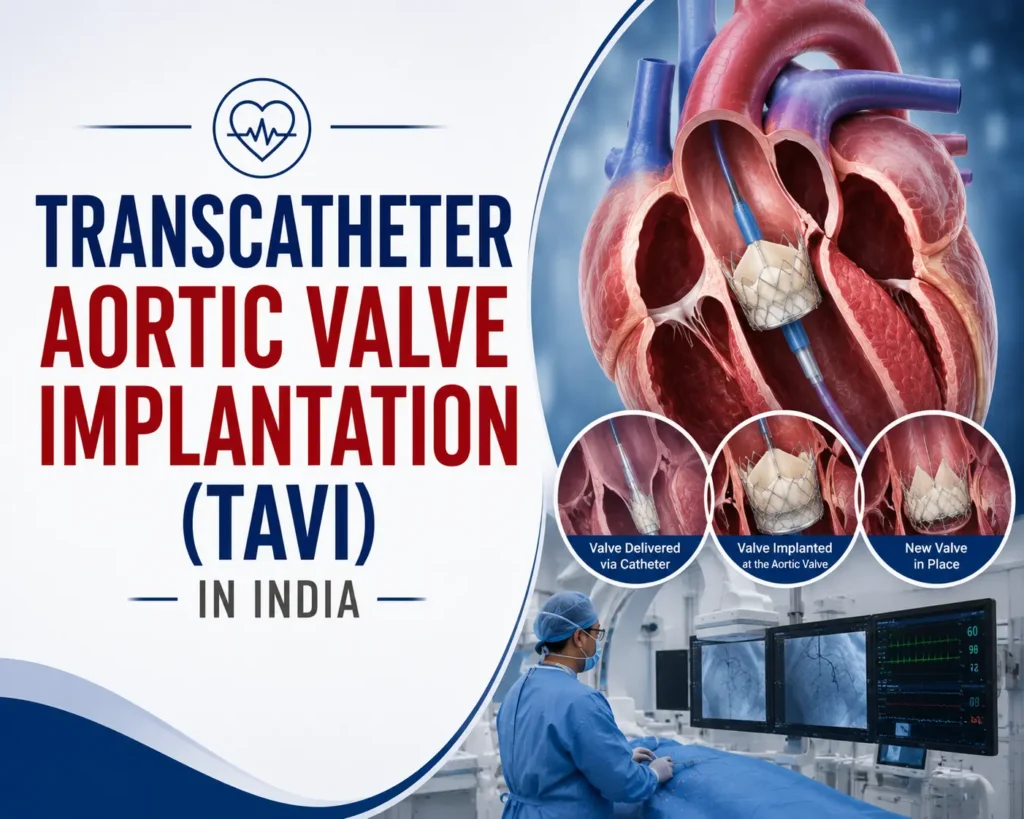
Transcatheter Aortic Valve Implantation (TAVI) in India is a minimally invasive approach, which entails replacing a diseased heart valve without undergoing major heart surgery. The professionals employ the TAVI technique to ensure normal functioning of valves with a desire to gain back the individual’s autonomy and help them lead a healthy life.
Get Free Consultation Now
What Is TAVI (Transcatheter Aortic Valve Implantation)?
TAVI therapy is a lifelong intervention in which specialists implant a new, artificial valve in place of the diseased one without having to open up the chest cavity. In this intervention, a new, artificial valve is inserted into the heart using a tube through an artery in the patient’s leg. As soon as the valve is in place, it starts working by replacing the diseased valve. While the valve is intended to last long-term, like all other implanted valves, it still needs to be monitored and possibly replaced after years.
Who Needs a TAVI Procedure in India
TAVI is usually the best option for patients with severe aortic valve disease who are at high risk for traditional open-heart surgery. It is often considered for:
- Older patients: Those with multiple other underlying health conditions.
- Non-surgical candidates: Patients whose anatomy is not suitable for open-heart surgery.
- Recovery risks: Cases where the physical demands of open-heart surgery may be too risky for the patient.
Symptoms of Severe Aortic Valve Disease
If the aortic valve gets narrowed or hardened, this will affect the pumping of blood from the heart to the other parts of the body. The following signs are the first step towards avoiding a system failure:
- Shortness of breath: Difficulty breathing in oxygen while performing an activity.
- Chest pain or tightness: An uncomfortable feeling in the chest.
- Dizziness: A loss of blood to the brain.
- Tiredness: Experiencing fatigue due to the difficulty the heart has pumping blood.
Causes of Aortic Valve Problems
The valve can deteriorate over time due to several factors:
- Age-related degeneration: The most common cause of valve wear and tear.
- Calcium buildup: Hard calcium deposits that make the valve stiff and narrow.
- Congenital defects: Structural valve abnormalities present from birth.
- Rheumatic heart disease: Still seen in some regional cases in India as a result of an old infection.
Tests and Diagnosis Before TAVI in India
Clinical experts use imaging to identify the exact severity of the valve disease and plan the right treatment approach:
- Echocardiography (Echo): The primary method used to see how the valve is functioning in real time.
- CT scan: Provides a detailed look at the heart’s structure to plan the procedure with precision.
- Coronary angiography: Checks the coronary arteries for any additional blockages.
- Blood tests: To check the patient’s overall health before the procedure.
TAVI Procedure Explained Step by Step
The surgery takes place in a dedicated laboratory under moderate sedation, where the defective valve will be replaced. The catheter is inserted into a blood vessel from the leg and pushed into the heart. The new valve is placed on this catheter and expanded in place, replacing the old and diseased valve. Once placed, the new valve will resume the normal flow of blood right away.
Benefits of Minimally Invasive Transcatheter Aortic Valve Implantation (TAVI) in India
TAVI offers several advantages by avoiding the need to open the chest:
- Closed-chest approach: No need to open the chest.
- Faster recovery: Shorter hospital stays and a quicker return to daily activities.
- Pain management: Significantly less discomfort during the healing phase.
- High-risk access: Offers a safe alternative for patients who cannot undergo major open-heart surgery.
Risks and Complications of TAVI
The procedure has the following risks, which are strictly controlled by the cardiologists working in this sphere:
- Local bleeding: Small problems at the site where the catheter was inserted.
- Damage to blood vessels: It happens rarely, but is still possible.
- Risk of stroke: There is a minimal risk of this side effect.
- Changes in rhythm: In some patients, it becomes necessary to install a pacemaker in order to restore the rhythm of the heart.
Also, almost all patients receive medications for antiplatelets or anticoagulants, which reduce the possibility of forming clots inside the new valve.
Recovery After TAVI Procedure
Recovery after this procedure is usually straightforward and speedy compared to traditional surgery. Many patients are up and walking within a day. The hospital stay is typically shorter, and most patients return to their regular activities within a few days. Follow-up visits are a mandatory requirement to monitor the new valve and ensure it continues functioning normally.
Transcatheter Aortic Valve Implantation (TAVI) in India Cost
Transcatheter Aortic Valve Implantation (TAVI) in India typically costs around $25,000 to $42,000. The cost varies depending on the type of transcatheter valve, hospital, cardiac team, patient’s anatomy and medical condition, diagnostic tests, catheterization-lab charges, hospital stay, medications, and any additional procedures required.
The exact cost depends on pre-procedure cardiac evaluation, echocardiography and other imaging, valve selection, the TAVI procedure, hospitalisation, post-procedure monitoring, medications, and follow-up care. These figures are general estimates, not fixed quotes. Medicsaz can provide a personalized cost estimate after a partner cardiac team reviews the patient’s medical records and treatment requirements.
How Medicsaz Supports Your Transcatheter Aortic Valve Implantation (TAVI) in India Journey
Medicsaz connects international patients with vetted partner hospitals and experienced interventional cardiologists and cardiac teams for Transcatheter Aortic Valve Implantation (TAVI) in India. The team assists with medical record review, hospital and specialist matching, treatment and cost estimates, travel and visa support, accommodation, and coordination throughout the patient’s treatment journey in India.
For patients exploring Transcatheter Aortic Valve Implantation (TAVI) in India, Medicsaz can help identify an appropriate cardiac specialist and treatment approach based on the patient’s medical records, while providing guidance on expected costs and the overall treatment process.
Conclusion
This procedure has revolutionized the treatment of aortic valve disease and has become particularly useful in cases where surgery is not recommended due to certain risk factors.
Transcatheter Aortic Valve Implantation (TAVI) in India is a well-established, minimally invasive procedure conducted by highly skilled professionals. With appropriate follow-up care, many patients are able to lead an active life after undergoing the procedure under expert supervision.
Frequently Asked Questions
How long does a TAVI valve last?
TAVI valves are designed for long-term durability, with data showing most valves still functioning well 6–10 years after the procedure. Because it’s a relatively newer procedure, doctors don’t yet have data beyond that window, but if a valve does wear out, it can often be treated with a second, smaller “valve-in-valve” TAVI procedure rather than open surgery.
Is TAVI painful?
No. The procedure is done under sedation or general anesthesia, so patients don’t feel pain during it. Some people notice mild pressure in the chest as the new valve is placed — this is normal and closely monitored by the team.
Will I need to take medication after TAVI?
Yes. Most patients are prescribed blood-thinning medication for a period after the procedure to reduce clot risk on the new valve, along with guidance on protecting against valve infection (including dental hygiene, since mouth bacteria are a common source). Your cardiologist will set the exact duration.
Will I need a pacemaker after TAVI?
Some patients develop a heart rhythm disturbance after TAVI that requires a permanent pacemaker. This isn’t common in every case, but it’s a recognized possibility your care team will monitor for before you’re discharged.
Is TAVI as effective as open-heart valve surgery?
For patients at intermediate, high, or prohibitive surgical risk, studies show TAVI offers comparable safety and effectiveness to open surgery, with a faster recovery. Your heart team will help determine which approach — TAVI or surgical valve replacement — is right for your specific case.
How long is the hospital stay and recovery after TAVI?
Most patients go home within 1–3 days. Light activity can usually resume within a week, while full recovery — including regaining energy lost to the valve disease itself — typically takes several weeks.
Medically Reviewed
This page on Transcatheter Aortic Valve Implantation (TAVI) in India has been medically reviewed by Dr. Rashid Ali, MBBS, a Delhi Medical Council–registered practitioner (Registration No. DMC/R/36289), to ensure it reflects accurate, current, and evidence-based medical information.
At Medicsaz, every treatment page is checked by a licensed doctor before publication, not written by a marketing team alone. Dr. Rashid Ali review covers the accuracy of procedures, terminology, and claims described on this page, so patients researching Transcatheter Aortic Valve Implantation (TAVI) in India can rely on what they read here to make informed decisions.
Last medically reviewed: 09/09/2026
You can independently verify Dr. Rashid Ali’s registration on the Delhi Medical Council’s official website using Registration No. DMC/R/36289, or read more about his role as Medicsaz’s medical reviewer on his reviewer profile page.