
Thoracentesis Treatment in India
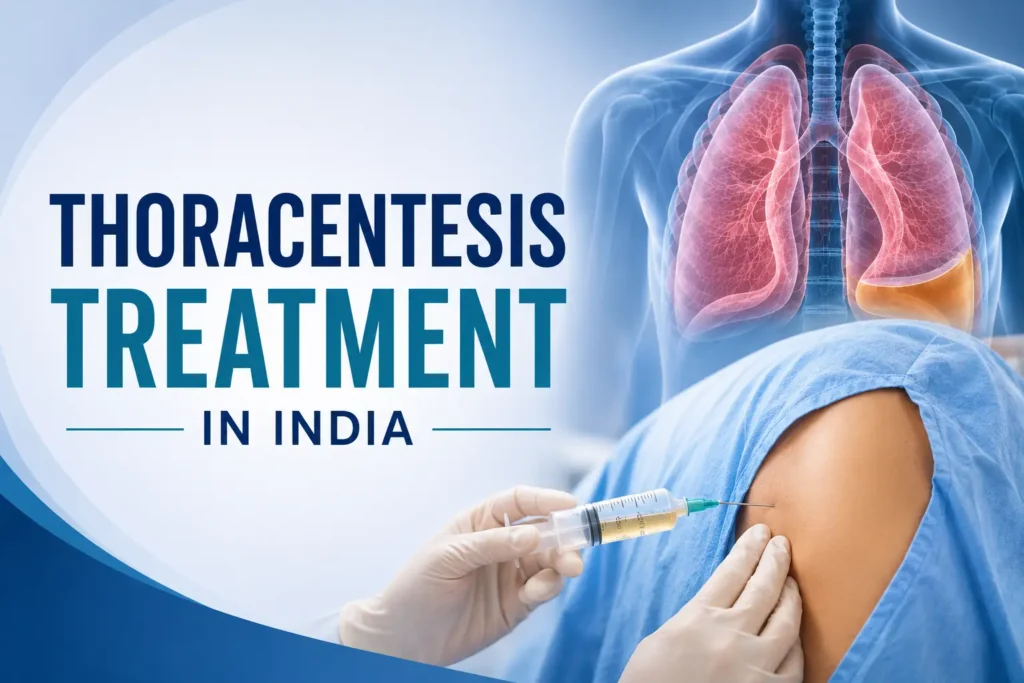
Collection of fluid in the lungs will result in feelings of chest heaviness and difficulty in breathing, sometimes accompanied by a dry cough or discomfort while lying down. This is an issue that should not be overlooked because it means there is physical strain on the lungs due to the collection of fluids.
Once the fluid collection starts affecting breathing, pulmonary experts may have to carry out a procedure to drain the fluid. Choosing Thoracentesis Treatment in India helps people to get ultrasound-guided fluid drainage procedures and laboratory testing for the causes of the fluid collection.
Get Free Consultation Now
What Is Thoracentesis?
It is a medical process in which fluid is removed from the space surrounding the lungs in a targeted manner. A needle or catheter is inserted into the chest cavity to drain the fluid so that the lungs have sufficient room to expand.
In doing so, the patient is relieved of the pressure in the chest, and at the same time, a sample of fluid is taken to determine the cause of the problem.
Why Fluid Builds Up Around the Lungs
Fluid doesn’t accumulate around the lungs without an underlying cause. Common causes include chronic heart failure, lung infections like pneumonia or tuberculosis, advanced liver cirrhosis, kidney disease, and cancers affecting the lungs or pleura. The fluid can vary in appearance depending on the cause. Identifying the underlying reason is important during Thoracentesis Treatment, since simply draining the fluid won’t prevent it from returning if the underlying condition isn’t also managed.
Symptoms That May Need Thoracentesis
Signs of fluid buildup around the lungs are often noticeable during daily activities. Common symptoms include persistent shortness of breath, chest pain or heaviness, a persistent cough, and difficulty breathing while lying down.
Patients often also experience fatigue due to reduced oxygen levels, as fluid buildup can prevent the lungs from expanding fully. Severe fluid accumulation can significantly limit normal breathing.
Conditions for Thoracentesis Treatment in India
This diagnostic procedure is performed by pulmonologists not only in emergencies but also on a regular basis. The following medical conditions can necessitate this procedure: large volume of pleural effusion, lung infection with accumulation of the liquid, pleural disease caused by tuberculosis, pleural effusion associated with cancer, pleural effusion caused by heart failure.
Tests and Diagnosis Before Thoracentesis
Before the procedure, the pulmonary team confirms the fluid’s location and assesses overall safety through imaging and blood tests. This typically involves a chest X-ray to confirm fluid presence, an ultrasound to guide safe drainage, and in some cases, a CT scan of the chest.
Blood tests are also done to check for signs of infection and confirm normal blood clotting, helping ensure the procedure can be performed safely.
Risks and Complications of Thoracentesis
Although this procedure is common and safe, every procedure that involves the chest region carries some risks as well. Such risks can be minimal bleeding, an infection in the puncture area, temporary pain, and partial collapse of the lungs due to the presence of air between the lungs and chest wall.
Other complications can involve a temporary cough due to re-expansion of the lung during the process of draining the fluid. Re-expansion pulmonary edema is another uncommon complication that is possible during the rapid removal of a large amount of fluid. Although it is uncommon and responsive to treatment, it is the only major complication of this procedure.
Preventing Recurrence of Pleural Effusion
How to stop the fluid from recurring mainly depends on the management of the underlying cause. Physicians will recommend that people continue managing their condition, such as heart and liver conditions, by taking medications regularly and visiting their physicians regularly for checkups.
It is not recommended to smoke when you have lung conditions because smoking may trigger inflammation. People who have a medical history of developing pleural effusion need to go for follow-ups regularly because they are likely to develop fluid in their lungs.
Thoracentesis Treatment in India Cost
Thoracentesis Treatment in India typically costs around $100 to $1,200. The cost varies depending on whether the procedure is diagnostic or therapeutic, ultrasound guidance, hospital and specialist charges, pleural-fluid analysis, anesthesia or local anesthetic, hospital observation, and the patient’s overall condition.
The exact cost depends on the patient’s treatment plan and the amount of pleural fluid requiring drainage. Ultrasound-guided procedures, laboratory analysis of the fluid, hospitalization, or additional treatment for the underlying condition may increase the overall cost. These figures are general estimates, not fixed quotes, and the final cost should be confirmed after evaluation by a pulmonologist or thoracic specialist.
How Medicsaz Supports Your Thoracentesis Treatment in India Journey
Medicsaz connects international patients with vetted partner hospitals and experienced pulmonologists and thoracic specialists for Thoracentesis Treatment in India. The team assists with medical record review, hospital and specialist matching, treatment and cost estimates, travel and visa support, accommodation, and coordination throughout the patient’s treatment journey.
For patients exploring Thoracentesis Treatment in India, Medicsaz can help identify an appropriate specialist and treatment approach based on the patient’s medical records, while providing guidance on expected costs and the overall treatment process.
Conclusion
Pleural effusion has been seen to be quite influential when it comes to the overall well-being of a person, which explains the relevance of the procedure called thoracentesis. Thoracentesis Treatment in India provides such services with the help of highly qualified physicians and advanced technology. With proper diagnosis, draining of the fluid, and treatment of the disease that causes it, most patients experience an improvement in their condition.
Frequently Asked Questions
Is thoracentesis painful?
The procedure is done under local anesthesia, so most patients feel pressure rather than sharp pain. Mild soreness at the insertion site is common afterward.
How much fluid can safely be removed during thoracentesis?
Doctors often limit removal to around 1 to 1.5 liters per session as a precaution against a rare complication called re-expansion pulmonary edema, though this can vary based on how the patient responds during the procedure.
Will the fluid come back after thoracentesis?
It can, especially if the underlying cause, such as heart failure, infection, or cancer, isn’t also being treated. Managing the root condition is key to preventing recurrence.
How long does thoracentesis take, and is it done under general anesthesia?
The procedure is typically quick, often 15 to 30 minutes, and is done using local anesthesia rather than general anesthesia, so patients are awake but numb at the insertion site.
What is re-expansion pulmonary edema, and how common is it?
It’s a rare complication where the lung can develop fluid buildup after re-expansion, usually linked to removing a large volume of fluid too quickly. It’s uncommon and generally manageable with supportive care like supplemental oxygen.
Can thoracentesis be used to figure out what's causing the fluid buildup?
Yes. In addition to relieving symptoms, the fluid removed is often sent for lab analysis to help identify infections, cancer cells, or other underlying causes.
Medically Reviewed
This page on Thoracentesis Treatment in India has been medically reviewed by Dr. Rashid Ali, MBBS, a Delhi Medical Council–registered practitioner (Registration No. DMC/R/36289), to ensure it reflects accurate, current, and evidence-based medical information.
At Medicsaz, every treatment page is checked by a licensed doctor before publication, not written by a marketing team alone. Dr. Rashid Ali review covers the accuracy of procedures, terminology, and claims described on this page, so patients researching Thoracentesis Treatment in India can rely on what they read here to make informed decisions.
Last medically reviewed: 09/09/2026
You can independently verify Dr. Rashid Ali’s registration on the Delhi Medical Council’s official website using Registration No. DMC/R/36289, or read more about his role as Medicsaz’s medical reviewer on his reviewer profile page.