
Teeth Whitening in India
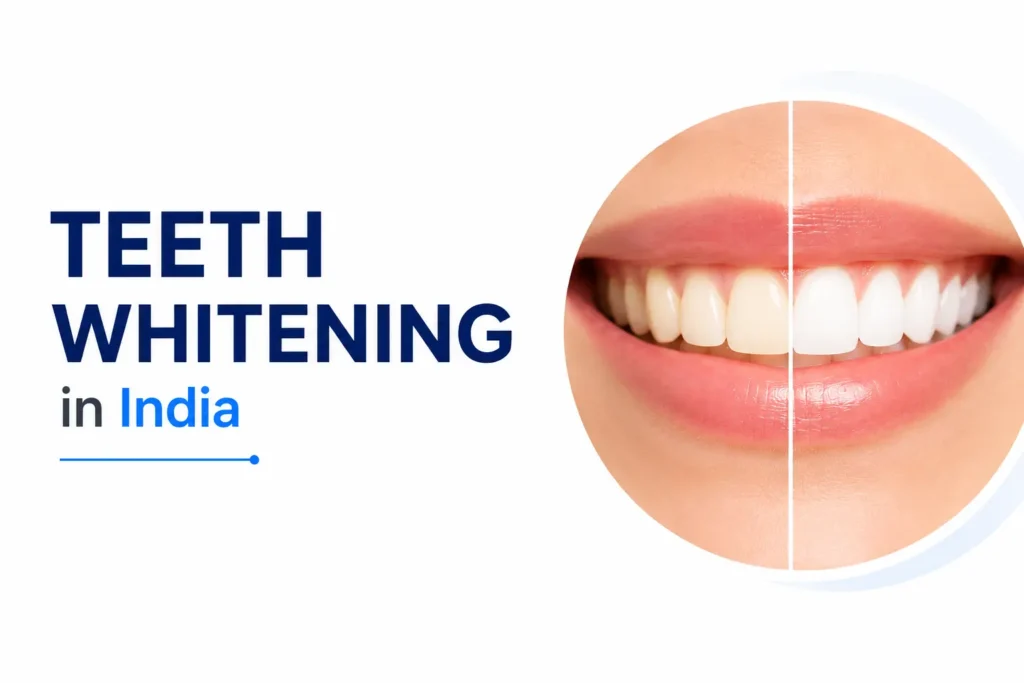
The smile of a person helps him/her to feel confident, and one of the elements that contributes to this is the color of his/her teeth. People whose teeth color looks good are always more confident than people whose teeth color looks dull or yellow. It may be difficult for them to interact socially and speak to other people.
The problem of tooth discoloration is fairly common in India, due to the nature of people’s lifestyles. As the field of dentistry advances and teeth whitening in India gets easier and cheaper to afford, this process becomes more widespread in India.
Get Free Consultation Now
What Is Teeth Whitening Treatment?
There are several types of dental procedures that are designed to help with whitening of the teeth through cleaning of the outer and inner teeth discoloration that may be caused by food and beverages, among other causes.
The procedure involves the use of a chemical oxidant such as hydrogen peroxide and carbamide peroxide, which reacts with the teeth and oxidizes the discolored molecules on the surface of the teeth. Teeth whitening is purely a color change procedure and hence does not alter the structure of the teeth.
Why Teeth Get Discoloured in India
Teeth discoloration happens gradually and is closely linked to everyday habits common in India:
- Regular tea and coffee consumption
- Use of tobacco in different forms
- Spicy and heavily pigmented foods
- Long-term poor oral hygiene
- Age-related changes in teeth
Over time, these habits cause teeth to lose their natural whiteness.
How Dentists Perform Teeth Whitening in India
To prevent any damage from occurring and achieve consistent results, dentists follow a systematic approach. This begins with a dental examination, which involves the dentist examining the teeth and gums in order to determine whether teeth whitening is appropriate for the patient. Gel is then used to protect the gums, and the whitening agent is applied to the teeth. Sometimes light or heat is used to assist the activation of the whitening agent. The dentist manages the whole process to ensure that it is safe.
In-Office vs. Take-Home Teeth Whitening in India
Dentists generally offer two approaches, both using the same active ingredients.
In-office whitening involves the use of a stronger concentration of the whitening substance, providing fast results that can be seen immediately during the procedure and is performed under the supervision of a professional. Take-home whitening is performed using a custom-made tray with a lower concentration of the substance, which is applied gradually over one or two weeks.
Does Teeth Whitening Harm Your Teeth?
This is a common worry, but when done properly by a dentist, teeth whitening does not harm teeth. Dentists use safe, approved materials and carefully control the application time. Problems usually arise from unsupervised home remedies or overusing whitening products without professional guidance.
How White Can Teeth Become After Whitening?
Teeth whitening enhances the natural whiteness of the teeth without whitening them unnaturally. The dentist will work to create a natural and balanced look in relation to the patient’s face. The end result depends on several factors, including the patient’s natural tooth color, the nature of stains, and oral hygiene practices.
The results are not permanent and will depend on how well they are taken care of after the process. Overall, they last longer when there is less consumption of tea, coffee, and tobacco.
After-Care Tips for Teeth Whitening in India
To help maintain results, patients are usually advised to:
- Avoid tea, coffee, and heavily pigmented foods for some time after treatment
- Brush and floss regularly
- Drink water after meals
Following the dentist’s instructions helps keep teeth bright for longer.
Who Should Not Get Teeth Whitening Done?
Teeth whitening is safe for many people, but it isn’t right for everyone. It’s usually best to avoid or postpone whitening if you have:
- Significant tooth sensitivity
- Untreated cavities or active gum disease
- Certain other dental conditions your dentist flags during a check-up
Whitening is also generally not recommended for children and younger teens, since their teeth are still developing, and most dentists advise pregnant women to wait until after delivery as a precaution. A dental check-up beforehand helps determine what’s actually safe for your teeth.
Teeth Whitening Cost in India
Professional in-office teeth whitening in India typically costs $100 to $300, depending on the technique and number of sessions. Take-home whitening kits provided by a dentist are generally more affordable, often around $50 to $150.
The exact figure depends on the severity of discoloration, the method chosen, and the clinic. These are general figures, not fixed quotes. Medicsaz can put together a personalized cost estimate once a partner dentist has reviewed your case.
How Medicsaz Supports Your Teeth Whitening Journey in India
Medicsaz connects you with vetted partner dentists experienced in cosmetic dental treatments, checked for clear communication, honest expectations about results, and modern, approved equipment. We coordinate everything around the process, cost estimates, dentist matching, travel and visa support, accommodation, and a point of contact throughout your stay in India.
If you’re ready to explore this, reach out for a free consultation and cost estimate. Most inquiries get a response within 30 minutes.
Is It Safe for Long-Term Use?
Teeth whitening is a safe procedure when done under expert supervision, and your dentist will advise you on how frequently it can be done in a safe manner. Teeth whitening is meant to be an occasional process, not a repetitive one.
Conclusion
Teeth whitening in India is a very easy and effective process that eliminates the stain on your teeth and gives you a radiant smile. In addition to the results, most people realize that there is much more to it than meets the eye as far as feeling more confident is concerned.
Frequently Asked Questions
What causes teeth to turn yellow or dull over time?
Common causes include regular tea and coffee consumption, tobacco use, spicy or heavily pigmented foods, poor oral hygiene over time, and natural age-related changes in tooth color.
How white can my teeth actually get from whitening?
Whitening improves your natural tooth color rather than making teeth artificially white, dentists aim for a brighter, balanced result that still looks natural on your face.
How long do teeth whitening results last?
Results aren’t permanent and depend heavily on habits afterward, reducing tea, coffee, and tobacco use, along with good oral hygiene, helps results last longer.
What's the difference between in-office and take-home teeth whitening?
In-office whitening uses a higher concentration of whitening agent and is completed faster under direct supervision, while take-home trays use a milder solution applied gradually over one to two weeks.
Is tooth sensitivity common after whitening?
Some temporary sensitivity is common, especially with higher-concentration treatments, but it typically settles down within a short period after treatment.
What should I avoid after getting my teeth whitened?
Dentists usually recommend avoiding tea, coffee, and heavily pigmented foods for a short period afterward, along with maintaining regular brushing and flossing to help results last.
Can teeth whitening fix all types of stains?
Not always, surface stains from food and drinks typically respond well, but deeper or structural discoloration may need other treatments like veneers for a fuller correction.
Medically Reviewed
This page on Teeth Whitening in India has been medically reviewed by Dr. Rashid Ali, MBBS, a Delhi Medical Council–registered practitioner (Registration No. DMC/R/36289), to ensure it reflects accurate, current, and evidence-based medical information.
At Medicsaz, every treatment page is checked by a licensed doctor before publication, not written by a marketing team alone. Dr. Rashid Ali review covers the accuracy of procedures, terminology, and claims described on this page, so patients researching Teeth Whitening in India can rely on what they read here to make informed decisions.
Last medically reviewed: 09/09/2026
You can independently verify Dr. Rashid Ali’s registration on the Delhi Medical Council’s official website using Registration No. DMC/R/36289, or read more about his role as Medicsaz’s medical reviewer on his reviewer profile page.