
Sacral Nerve Stimulation in India
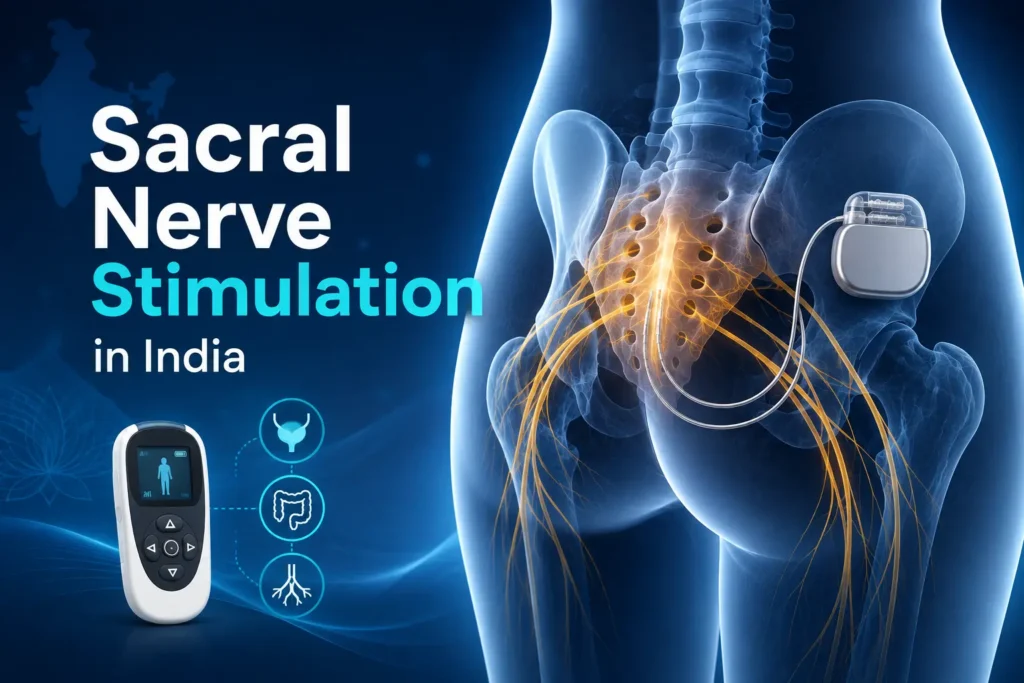
Bladder and bowel disorders cause significant problems for an individual in everyday life. Feeling the urge to urinate or pass stool with no control over it can be quite stressful and reduce the person’s self-confidence. In most cases, such problems do not disappear even when medications and changes in lifestyle are unable to provide any improvement.
If the patient does not find relief from using the above-mentioned methods, sacral nerve stimulation may be suggested by a doctor as an additional measure. It is an effective way of regulating the nerve impulses responsible for bladder and bowel control. Nowadays, Sacral Nerve Stimulation in India has become a minimally invasive procedure for people with pelvic and urinary disorders.
Get Free Consultation Now
What Is Sacral Nerve Stimulation?
Sacral nerve stimulation is a medical treatment that uses mild electrical pulses to regulate nerve signals in the lower back. These nerves carry communication between the brain and the pelvic floor. When this communication is disrupted, symptoms like urinary urgency or bowel control problems can develop. The therapy works by helping normalize the electrical signaling between the nerves and the brain that control these functions. It manages symptoms rather than curing the underlying nerve dysfunction, and it’s considered a reversible therapy, meaning the device can be removed if needed.
Conditions Treated with Sacral Nerve Stimulation
This therapy is commonly used for conditions affecting bladder and bowel control.
- Overactive Bladder: A condition causing frequent and sudden urges to urinate.
- Urinary Retention: Difficulty fully emptying the bladder.
- Pelvic Floor Disorders: Weakness or dysfunction in the pelvic floor muscles.
Symptoms That May Need Sacral Nerve Therapy
Some warning signs indicate that there might be issues in terms of bladder/bowel communication, and recognizing them is important for an assessment.
- Frequent Urge: Frequent urges that make it difficult to function normally.
- Incontinence: The inability to retain either urine or fecal matter.
- Incomplete Voiding: Not being able to completely void oneself.
How Sacral Nerve Stimulation Works
This therapy involves the delivery of electrical stimulation to the sacral nerves through an implantable device. This stimulation helps to regulate any abnormal nerve activity responsible for the dysfunction of the bladder and bowel. Over time, there have been many patients have benefited from the therapy in terms of symptom control.
Tests and Evaluation Before the Procedure
To ensure that a patient is eligible for sacral nerve stimulation, specialists carry out a thorough and structured process of testing before administering the treatment. The main steps of the pre-procedural evaluation include the following:
- Symptom Evaluation: A complete analysis of the patient’s medical history and an examination of the symptoms that affect the bladder or bowels of the individual.
- Functional Tests: Functional tests are carried out to assess the functioning of the bladder and bowels.
- Imaging: Specialists can use imaging tests to study the anatomy of the lower spine, sacrum, and the nerves around this area.
Sacral Nerve Stimulation Procedure Explained
The procedure is carried out in two stages. In the first stage, a temporary wire is placed near the sacral nerves to test whether the therapy is effective. If symptoms improve by at least 50 percent during this trial period, a small permanent stimulator is implanted under the skin near the upper buttock. This is a minimally invasive procedure designed to provide long-term support for bladder and bowel function.
Benefits of Sacral Nerve Stimulation in India
This therapy offers several benefits for patients who haven’t responded to medication.
- Improved Control: A significant improvement in daily bladder and bowel control for many patients.
- Symptom Reduction: Fewer episodes of urgency or accidental leakage.
- Adjustable Treatment: The device can be fine-tuned and reprogrammed as the body’s needs change over time.
Risks and Complications of the Procedure
This is an extensively used therapy; however, there is always some risk involved in the process of placing any kind of implant in the body.
- Infection: Infections at the implantation site, observed in a small number of patients.
- Lead Migration: Movement of the thin wire from its original position, which is a leading cause of revision surgery.
- Implantation Site Pain: Pain occurring around the site where the device is implanted.
- Nerve Irritation: Temporary irritation of the nerves while the body adjusts.
- Device Malfunction: Potential failure or improper functioning of the implanted device.
Recovery After Sacral Nerve Stimulation
Recovery is usually quick, since the procedure doesn’t involve major structural changes. Patients are advised to avoid heavy physical strain for a short period while the device settles. Mild soreness is common but typically fades as the body adjusts. Follow-up visits are important to ensure the electrical settings are properly calibrated for your symptoms.
Long-Term Results and Follow-Up Care
Many patients experience lasting improvement after successful treatment and recovery. Regular check-ups are important to confirm the device is functioning correctly and symptoms remain well controlled. Battery replacement is typically needed after several years, depending on the device type. It’s also worth knowing that some older device models aren’t compatible with MRI scans, while newer models are designed to allow safe MRI use; this is worth discussing with your specialist if future MRI imaging may be relevant to your health. With proper follow-up care, many patients see meaningful, lasting improvement in bladder and bowel control.
Sacral Nerve Stimulation in India Cost
Sacral Nerve Stimulation in India typically costs around $12,000 to $18,000. The cost varies depending on whether temporary trial stimulation and permanent implantation are required, the neuromodulation device selected, surgeon, hospital, anesthesia, diagnostic evaluation, hospital stay, device programming, and postoperative follow-up.
The exact cost depends on the patient’s condition and treatment plan, including preoperative testing, trial stimulation, permanent pulse-generator implantation, surgical and hospital charges, programming, medications, and follow-up care. These figures are general estimates, not fixed quotes. The final cost should be confirmed after evaluation by the appropriate specialist.
How Medicsaz Supports Your Sacral Nerve Stimulation in India Journey
Medicsaz connects international patients with vetted partner hospitals and experienced specialists for Sacral Nerve Stimulation in India. The team assists with medical record review, specialist and hospital matching, treatment and cost estimates, travel and visa support, accommodation, and coordination throughout the patient’s treatment journey.
For patients exploring Sacral Nerve Stimulation in India, Medicsaz can help identify an appropriate specialist and suitable neuromodulation approach based on the patient’s medical records, while providing guidance on expected costs and the overall treatment process.
Conclusion
Bladder and bowel control problems can significantly affect a person’s quality of life. Sacral nerve stimulation offers a well-established treatment option for managing these symptoms when other approaches haven’t worked. Sacral Nerve Stimulation in India offers this therapy through experienced specialists, helping many patients achieve meaningful, long-term symptom improvement with appropriate follow-up care.
Frequently Asked Questions
Is sacral nerve stimulation a permanent cure for bladder or bowel problems?
No. It manages symptoms by regulating nerve signals rather than curing the underlying cause. Most patients see significant, lasting improvement, but it’s considered ongoing management, and the device can be removed if it’s no longer needed or effective.
How do doctors decide if I'm a good candidate for a permanent implant?
You’ll first undergo a trial phase with a temporary wire. If your symptoms improve by at least 50 percent during this trial, you’re considered a good candidate for the permanent implant.
What are the main risks of sacral nerve stimulation?
The most commonly reported risks include infection at the implant site and lead migration, where the thin wire shifts position. Other possible issues include implant site pain and device malfunction, some of which may require a follow-up procedure.
How long does the device battery last?
This varies by device type, but battery replacement is typically needed after several years. Your specialist can advise on the expected lifespan of your specific device.
Can I get an MRI scan after having a sacral nerve stimulator implanted?
It depends on your device model. Newer devices are designed to be MRI compatible under certain conditions, while some older models aren’t. It’s important to discuss this with your specialist, especially if you may need MRI imaging in the future.
Is sacral nerve stimulation reversible if it doesn't work for me?
Yes. Unlike some other implanted nerve devices, sacral nerve stimulators can be removed if the therapy isn’t effective or is no longer needed.
Medically Reviewed
This page on Sacral Nerve Stimulation in India has been medically reviewed by Dr. Rashid Ali, MBBS, a Delhi Medical Council–registered practitioner (Registration No. DMC/R/36289), to ensure it reflects accurate, current, and evidence-based medical information.
At Medicsaz, every treatment page is checked by a licensed doctor before publication, not written by a marketing team alone. Dr. Rashid Ali review covers the accuracy of procedures, terminology, and claims described on this page, so patients researching Sacral Nerve Stimulation in India can rely on what they read here to make informed decisions.
Last medically reviewed: 09/09/2026
You can independently verify Dr. Rashid Ali’s registration on the Delhi Medical Council’s official website using Registration No. DMC/R/36289, or read more about his role as Medicsaz’s medical reviewer on his reviewer profile page.