
Rastelli Procedure in India
Some babies are born with heart problems that make it hard for blood to flow normally through the heart and to the lungs. At first, they might just breathe fast, not gain weight well, or have slightly blue skin. But inside, their hearts are working very hard.
For some of these heart problems, medicine alone can’t fix the structure. When this happens, doctors might suggest a special surgery called the Rastelli procedure. Nowadays, the Rastelli Procedure in India is done at top children’s hospitals using modern tools and expert care teams.
Get Free Consultation Now
What Is the Rastelli Procedure?
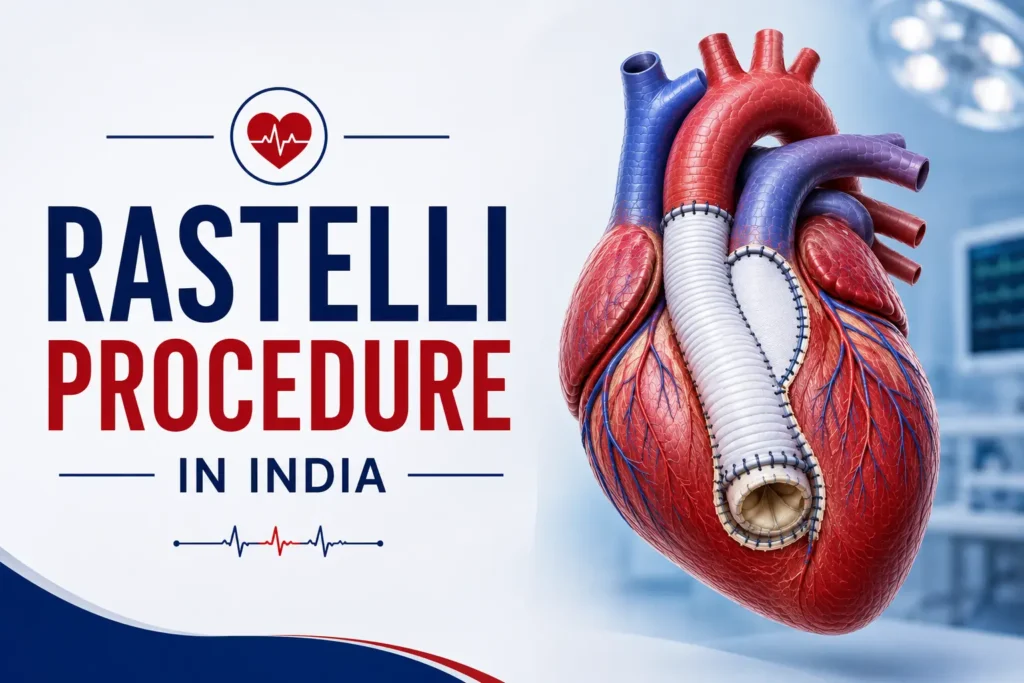
Rastelli Procedure is a highly complicated open-heart surgery that aims to mend certain congenital heart defects. The procedure assists in directing the flow of blood in such a way that oxygenated and deoxygenated blood passes through the correct channels. In the surgical procedure, the inner structure of the heart is mended, and a new passage between the heart and lungs is created using a tube or conduit graft.
Heart Conditions Treated with Rastelli Surgery
The Rastelli operation in India is commonly performed in cases of congenital heart disease where there is severe obstruction or blockage of blood flow. Such problems may include transposition of the great vessels accompanied by a ventricular septal defect or pulmonary stenosis with obstruction of the pulmonary artery. This operation is also done in cases of double outlet right ventricle and other complex types of heart diseases.
Symptoms of Complex Congenital Heart Defects
Children with these heart defects may show symptoms soon after birth or during infancy. One of the main signs is bluish skin or lips because oxygen levels in the blood are too low. You might also notice rapid breathing or difficulty feeding as the heart struggles to keep up. Other signs include poor weight gain and fatigue during simple activity.
How Doctors Diagnose These Heart Conditions
Doctors use several imaging tests to understand the structure of the heart and plan the surgery carefully:
- Echocardiography (Echo): The main imaging tool to view structural defects in the heart.
- Chest X-ray: Evaluates the overall condition of the heart and lungs.
- ECG: Checks the heart’s electrical activity to look for irregularities.
- Cardiac CT or MRI: Provides detailed 3D imaging for very complex cases.
Rastelli Surgery Procedure Explained
This surgical operation is done under general anesthesia by a pediatric cardiac specialist. In this procedure, surgeons close any holes within the heart and direct the blood flow through patches. Also, a tube containing a valve is fitted to link the right ventricle to the pulmonary artery. This will facilitate the movement of blood to the lungs.
Risks and Complications of Rastelli Surgery
As with any heart surgery, the Rastelli surgery does have some inherent risks. These include, but are not limited to, the possibility of experiencing bleeding, infection or heart rhythm abnormalities following surgery. The conduit will usually develop either a narrowing or occlusion over time as the child grows, as it does not grow in size with the rest of the body. As such, most children will require additional surgeries or catheterizations to either change or widen the conduit over their lifetime.
Recovery After Rastelli Procedure
Recovery usually begins in the intensive care unit, where the child is closely monitored. The hospital stay may last one to two weeks, depending on the child’s individual recovery. Gradually, feeding and breathing improve as the heart gets used to the newly repaired circulation. Follow-up visits are a mandatory part of recovery.
Long-Term Heart Monitoring After Surgery
It is necessary to monitor children who have had the Rastelli procedure done, as they continue to grow. This involves monitoring their heart function, valve function, and conduit status, which can be done using yearly echocardiography and MRI testing at certain intervals. It has been indicated earlier that the child will eventually grow out of the original conduit and further surgeries will become necessary.
Life After Rastelli Procedure in India
Most children show significant improvement in energy levels once they recover from surgery. Oxygen levels typically return to normal, supporting healthy growth. With proper follow-up and treatment, most patients can attend school and live active lifestyles, though ongoing cardiac monitoring and future conduit replacement procedures remain part of their long-term care. Parents are advised to keep up with regular cardiology follow-up for life.
Rastelli Procedure in India Cost
Rastelli Procedure in India typically costs around $6,000 to $15,000. The cost varies depending on the child’s congenital heart condition, complexity of the procedure, type of conduit required, surgeon and hospital, preoperative investigations, pediatric cardiac ICU stay, hospitalization, medications, and any additional procedures required.
The exact cost depends on the child’s medical condition and treatment plan, including cardiac evaluation, imaging and other diagnostic tests, surgical and hospital charges, ICU care, medications, and follow-up care. These figures are general estimates, not fixed quotes. Complex cases, additional procedures, prolonged ICU care, or complications may increase the final cost.
How Medicsaz Supports Your Rastelli Procedure in India Journey
Medicsaz connects international patients with vetted partner hospitals and experienced pediatric cardiac surgeons for Rastelli Procedure in India. The team assists with medical record review, hospital and surgeon matching, treatment and cost estimates, travel and visa support, accommodation, and coordination throughout the patient’s treatment journey in India.
For patients exploring Rastelli Procedure in India, Medicsaz can help identify an appropriate pediatric cardiac specialist and treatment approach based on the child’s medical records, while providing guidance on expected costs and the overall treatment process.
Conclusion
The Rastelli procedure is a vital surgery for children with complex heart defects that stop normal blood flow. Early diagnosis and timely surgery can greatly improve long-term outcomes for the child. Rastelli Procedure in India offers advanced pediatric heart care with experienced professionals and modern surgical facilities. Proper follow-up and monitoring, including planning for future conduit replacement, allow these children to lead healthier and more active lives.
Frequently Asked Questions
Will my child need more surgeries after the Rastelli procedure?
Most children will need at least one future surgery or catheter-based procedure to replace the conduit as they grow, since the conduit doesn’t grow with the child. This is a normal, expected part of long-term care rather than a rare complication.
How long is the hospital stay after Rastelli surgery?
Recovery typically involves one to two weeks in the hospital, starting with close monitoring in the intensive care unit, though this varies based on the child’s individual recovery.
Can a child live a normal, active life after the Rastelli procedure?
Yes, many children go on to attend school and live active lives after recovery, though they will need regular cardiology follow-up and monitoring for the rest of their lives.
What tests are used to diagnose the need for a Rastelli procedure?
Doctors typically use echocardiography, chest X-ray, ECG, and sometimes cardiac CT or MRI to fully understand the heart’s structure and plan the surgery.
What conditions does the Rastelli procedure treat?
It’s most commonly used for transposition of the great arteries with a ventricular septal defect and pulmonary stenosis, and also for double outlet right ventricle and similar complex heart defects.
How often will my child need follow-up checkups after this surgery?
Long-term monitoring typically includes annual echocardiograms and periodic MRI scans to check heart function, valve performance, and the condition of the conduit, continuing throughout the child’s life.
Medically Reviewed
This page on Rastelli Procedure in India has been medically reviewed by Dr. Rashid Ali, MBBS, a Delhi Medical Council–registered practitioner (Registration No. DMC/R/36289), to ensure it reflects accurate, current, and evidence-based medical information.
At Medicsaz, every treatment page is checked by a licensed doctor before publication, not written by a marketing team alone. Dr. Rashid Ali review covers the accuracy of procedures, terminology, and claims described on this page, so patients researching Rastelli Procedure in India can rely on what they read here to make informed decisions.
Last medically reviewed: 09/09/2026
You can independently verify Dr. Rashid Ali’s registration on the Delhi Medical Council’s official website using Registration No. DMC/R/36289, or read more about his role as Medicsaz’s medical reviewer on his reviewer profile page.