
Pulmonary Lobectomy in India
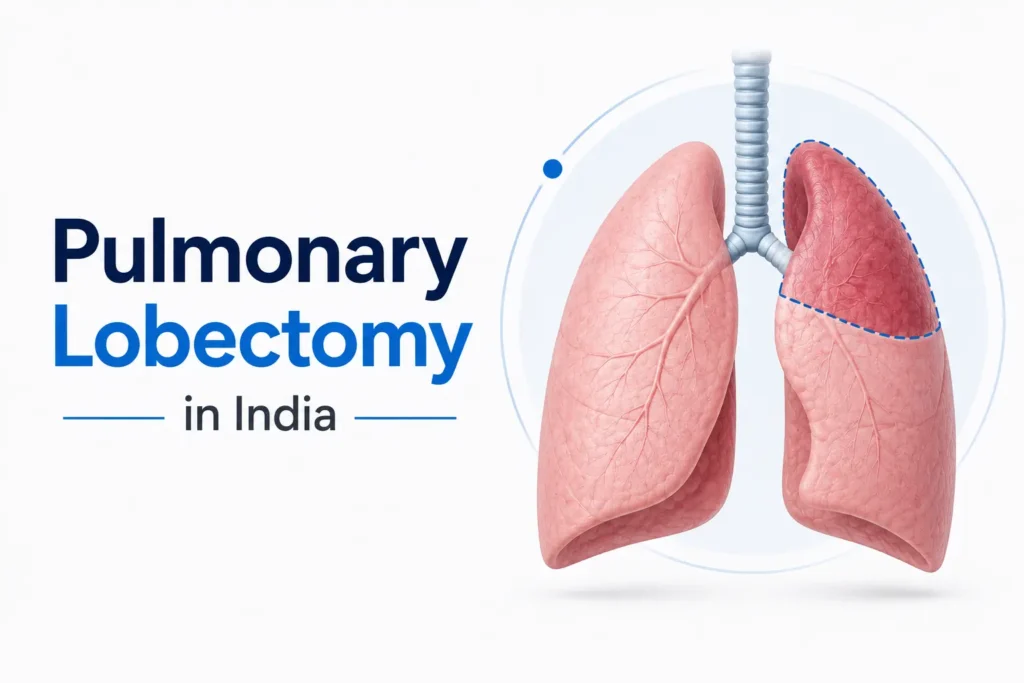
The challenge of dealing with lung damage on a more profound level is extremely stressful, both emotionally and physically. If there is any sort of malignancy in the lung tissue, or if the patient suffers from some form of infection that does not respond to drugs, the only viable option left is to remove the affected tissue surgically.
However, in the event of a localized failure, where you fail to maintain the healthiness of your respiratory channels, thoracic surgery pathways should be involved to conduct a very accurate mechanical cleaning process. Booking a Pulmonary Lobectomy in India is going to connect you with very skilled thoracic surgeons, top-quality video-assisted keyhole systems, and very aggressive pulmonary rehab team members.
Get Free Consultation Now
What Is Pulmonary Lobectomy Surgery?
View this procedure as a critical salvage operation for your respiratory system. Your thoracic anatomy is divided naturally: the right lung contains three lobes, and the left contains two, with each segment functioning through its own specific airway and blood supply.
This modular biological design allows surgeons to target and remove only the diseased boundary without sacrificing the whole organ. By resecting only the damaged lobe, the remaining healthy tissue is empowered to expand and compensate for your body’s oxygen demands.
Why Part of the Lung May Need Removal
You simply cannot leave a structural or malignant decay alone inside your chest wall because a failing lung segment will rapidly destabilize your entire circulatory framework. Doctors mandate a partial resection to completely isolate and remove cancerous tumors before mutant cells can migrate into your central lymph nodes, or to cut away segments that have become permanently scarred and useless from chronic, non-healing infections. Getting an early Pulmonary Lobectomy in India serves as a vital clinical shortcut to completely halt recurrent internal bleeding leaks and stop a localized pool of infection from poisoning your bloodstream.
Tests and Evaluation Before Pulmonary Lobectomy
To build a flawless structural roadmap of your internal chest plumbing before making a single cut, surgical teams put your body through intense imaging and physiological stress testing. They use high-resolution chest CT scans to build a literal 3D map of the tissue defects, alongside flexible bronchoscopy sessions to look directly inside your internal airways with a microscopic camera.
These are paired with intensive pulmonary function tests to measure your raw breathing volume, PET scans to track hyperactive cancer cells, and complete cardiac screens to verify that planning your upcoming Pulmonary Lobectomy will be managed with maximum safety margins.
VATS vs Open Lobectomy Surgery Explained
VATS Lobectomy (Video-Assisted Thoracoscopic Surgery)
This is the modern, minimally invasive keyhole route where the surgeon avoids cutting through your ribs entirely. Instead, they make two or three tiny punctures in your side to slide in a digital camera and specialized, ultra-long instruments, viewing the entire dissection on a high-definition monitor. This approach dramatically lowers post-op pain and gets you moving around days faster.
Open Lobectomy
The traditional thoracotomy approach requires a larger incision across the side of your chest wall and relies on a rib-spreading tool to give the surgeon a direct, physical view of the lung bed. This style remains absolutely necessary for highly complex, massive, or heavily scarred tumors that cannot be safely manipulated through a camera screen.
Modern thoracic care across major centers performing a Pulmonary Lobectomy in India heavily prioritizes the keyhole VATS approach whenever your specific tumor layout allows for it.
Risks and Complications of Lung Lobectomy
Let’s look at the hard facts—removing an entire section of an internal organ is a major surgical overhaul that carries baseline anatomical risks. You could face localized bleeding leaks, deep wound infections, postoperative pneumonia, or temporary air leaks where the raw edge of the remaining lung tissue takes a few extra days to seal against the chest wall.
There is also a baseline threat of blood clot formation in your legs due to early immobility, which is exactly why clinical teams use compression stockings and mandate early walking to keep your vascular system completely clear.
Recovery and Breathing Rehabilitation After Surgery
You will not be left resting flat in a hospital bed for long; your recovery protocol begins the moment you open your eyes in the monitoring ward. Most individuals require several days of inpatient tracking to manage the chest drainage tubes and ensure their background pain is completely controlled with basic blocks.
The real turning point relies on intensive chest physiotherapy, where you will be pushed to use an incentive spirometer device every hour to force the remaining sections of your lung to expand, fill the empty chest space, and clear out accumulated mucus.
Long-Term Lung Care and Follow-Up Care
True long-term success after a major chest operation depends entirely on how dedicated you remain to your respiratory rehabilitation once you leave the hospital gates. Your medical team will lay out a structured schedule of regular chest imaging scans to track your internal healing progress, combined with personalized pulmonary exercises to build back your stamina.
You will receive strict smoking cessation support to protect your remaining airways, routine cancer screening if a tumor was the original driver, and continuous lung capacity checks over time. Following through with this structured follow-up after your Pulmonary Lobectomy is what ultimately guarantees you regain a high quality of life.
Conclusion
Localized lung diseases such as cancer, infections, or severe lung damage may require surgical removal of the affected lung lobe to prevent further complications. Pulmonary lobectomy remains one of the most effective surgical treatments for selected lung conditions.
Pulmonary Lobectomy in India offers advanced thoracic surgical care through experienced specialists, minimally invasive VATS techniques, and structured pulmonary rehabilitation programs. With timely diagnosis, proper surgery, and long-term respiratory care, many patients are able to recover breathing function and improve their overall quality of life.
Medically Reviewed
This page on Pulmonary Lobectomy in India has been medically reviewed by Dr. Rashid Ali, MBBS, a Delhi Medical Council–registered practitioner (Registration No. DMC/R/36289), to ensure it reflects accurate, current, and evidence-based medical information.
At Medicsaz, every treatment page is checked by a licensed doctor before publication, not written by a marketing team alone. Dr. Rashid Ali review covers the accuracy of procedures, terminology, and claims described on this page, so patients researching Pulmonary Lobectomy in India can rely on what they read here to make informed decisions.
Last medically reviewed: 09/09/2026
You can independently verify Dr. Rashid Ali’s registration on the Delhi Medical Council’s official website using Registration No. DMC/R/36289, or read more about his role as Medicsaz’s medical reviewer on his reviewer profile page.