
Pulmonary Artery Banding Treatment in India
If a baby breathes very fast, sweats while feeding, or is not gaining weight properly, it can be frightening as a parent. Lots of families first think maybe the child is weak or recovering from a cold or infection. But when these problems continue week after week, doctors may advise heart tests. Sometimes they find out the reason is a heart condition present since birth.
In some situations, doctors suggest doing a procedure called pulmonary artery banding. The name sounds complicated, yes, but the purpose is actually simple. It is a supportive surgery that protects the baby’s heart and lungs until a major corrective operation can be done later on. Pulmonary artery banding treatment in India is performed in many pediatric cardiac centres with good safety and lots of experience.
Get Free Consultation Now
What is Pulmonary Artery Banding?
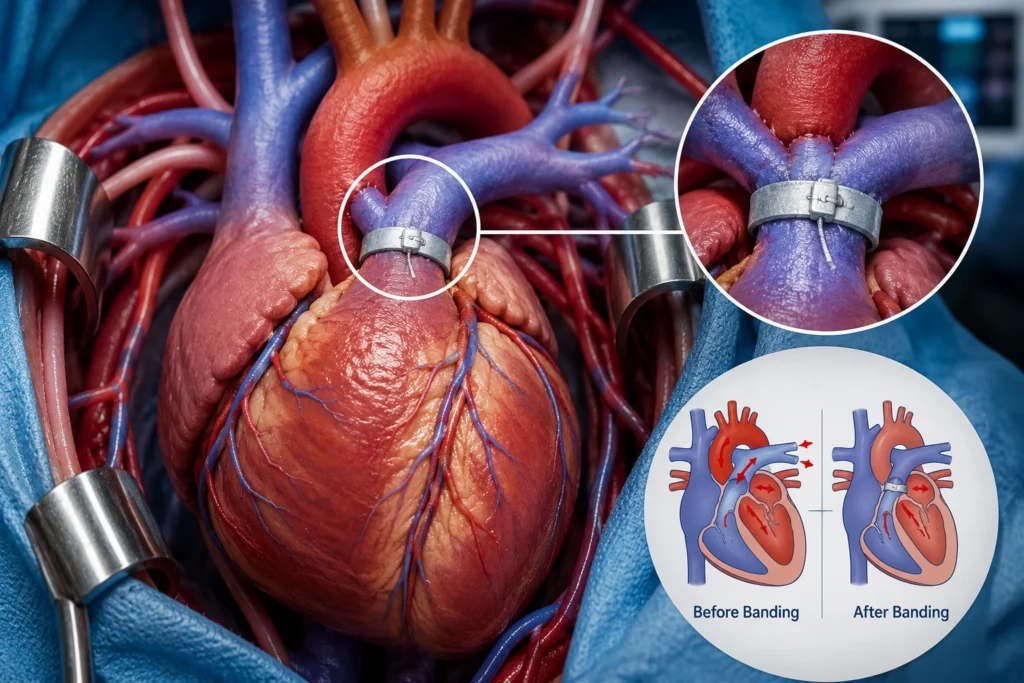
Pulmonary artery banding is a surgical procedure for babies. The treatment procedure involves placing a soft band around the pulmonary artery. The artery is the vessel carrying blood from the heart to the lungs. In certain heart defects, way too much blood flows into the lungs, and this extra flow increases pressure in the lungs, which makes the heart work much harder than normal.
Over time, both the heart and lungs can get damaged badly. The band gently tightens the artery so less blood reaches the lungs. This helps balance circulation and also reduces strain on the heart. It doesn’t permanently correct the defect. But it keeps the condition under control until definitive surgery becomes possible later.
Why is Pulmonary Artery Banding Done in Children?
For many babies, it’s hard for them to undergo full open-heart surgery right away. The reason can be that their congenital heart defects are too small or weak. Which is why waiting without treatment worsens breathing problems. As well as the lungs get harmed. Pulmonary artery banding acts like a temporary solution. It reduces symptoms quickly, improves feeding, and allows the child to grow stronger. Doctors recommend it when early full repair looks risky, yet delaying treatment would also be dangerous.
Heart Conditions Treated with Pulmonary Artery Banding in India
This procedure is used only for specific heart problems. Heart problems where excessive blood flows to the lungs. Doctors decide the treatment after doing a detailed heart evaluation.
- Large ventricular septal defect – A big hole between the lower chambers of the heart. It allows extra blood to pass into the lungs.
- Complex congenital heart defects – Structural problems involving multiple parts of the heart needing staged treatment.
- Single-ventricle physiology – Conditions where only one pumping chamber works effectively.
- Uncontrolled pulmonary overcirculation – Situations where lung blood flow is dangerously high must be reduced quickly.
Age and Eligibility for Pulmonary Artery Banding
Most children undergoing this procedure are infants, often below one year of age. Some babies need surgery within their first few months of life.
Eligibility depends on symptoms, body weight, oxygen levels, plus overall health condition. Heart imaging tests help doctors figure out whether the child will benefit from banding. Babies not strong enough for major surgery yet cannot safely wait without treatment — they’re considered suitable candidates.
Pre-surgery tests and evaluation in India
Before surgery, doctors do detailed tests to understand the heart defect. They plan the safest approach also.
- Echocardiography – An ultrasound scan showing the heart structure and blood flow patterns.
- Chest X-ray – Used for assessing lung condition and heart size.
- Blood tests – Check infection, organ function, plus general health.
- Cardiac catheterisation – Measures pressure inside the heart and lungs using a thin tube.
Doctors explain the results to the family. Parents understand the need for the procedure this way.
Procedure of Pulmonary Artery Banding Treatment in India
The surgery is done under general anaesthesia. This makes the treatment for the child asleep and pain-free. The surgeon makes an incision in the chest to reach the heart and pulmonary artery. A specially designed band gets placed around the artery, then tightened carefully. Tightness is adjusted to reduce excess blood flow without stopping it completely. Once heart function looks stable, the chest gets closed up. Compared to full corrective heart surgery, this operation is less complex. But it still needs specialised expertise.
ICU Care and Hospital Stay after Surgery
After the procedure, the child goes to the pediatric cardiac ICU for close monitoring. During monitoring, doctors check breathing, heart rate, oxygen levels, and blood pressure. Most children stay in the ICU for a few days before moving to the regular ward. Total hospital stay is usually around one to two weeks, depending on recovery.
Follow-Up Care After Banding
Regular follow-up visits are essential after discharge. These help doctors check if the band works properly and see if the child grows well. Heart scans get repeated to monitor blood flow. Parents receive guidance about feeding, activity, and medicines. Warning signs like breathing difficulty or poor weight gain — they also learn about these. Good follow-up care keeps the child stable till next treatment stage arrives.
Long-Term Outcome and Next Stage Treatment
Pulmonary artery banding treatment in India isn’t usually a permanent solution. As the child grows stronger, doctors plan definitive surgery to repair the heart defect properly. Many children undergo successful corrective procedures later, and then they lead active lives. Early banding protects lungs from permanent damage and improves long-term outcomes significantly.
Conclusion
Pulmonary artery banding treatment helps control excessive blood flow to the lungs of babies with certain congenital heart defects. They give time for the child to grow stronger before major surgery. Pulmonary artery banding treatment in India is provided by specialised pediatric cardiac centres. They provide experienced care, advanced monitoring, plus structured follow-up. With timely treatment and family support, lots of children go on to have successful corrective surgery and enjoy healthier futures.
Medically Reviewed
This page on Pulmonary Artery Banding Treatment in India has been medically reviewed by Dr. Rashid Ali, MBBS, a Delhi Medical Council–registered practitioner (Registration No. DMC/R/36289), to ensure it reflects accurate, current, and evidence-based medical information.
At Medicsaz, every treatment page is checked by a licensed doctor before publication, not written by a marketing team alone. Dr. Rashid Ali review covers the accuracy of procedures, terminology, and claims described on this page, so patients researching Pulmonary Artery Banding Treatment in India can rely on what they read here to make informed decisions.
Last medically reviewed: 09/09/2026
You can independently verify Dr. Rashid Ali’s registration on the Delhi Medical Council’s official website using Registration No. DMC/R/36289, or read more about his role as Medicsaz’s medical reviewer on his reviewer profile page.