
Primary Bone Cancer Treatment in India
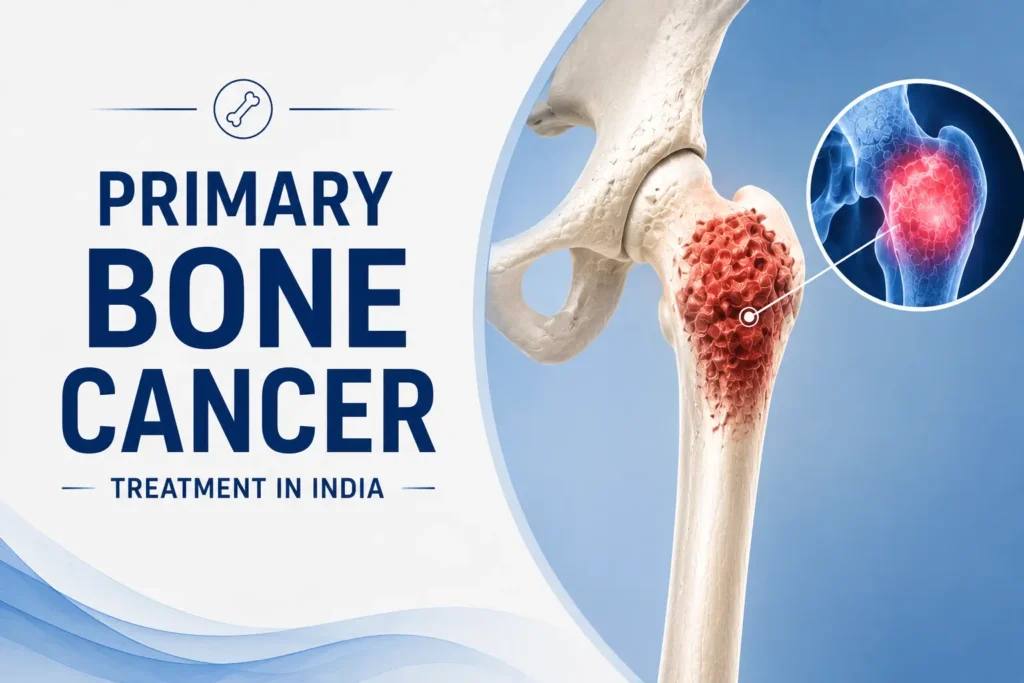
A diagnosis of a rare cancer such as primary bone cancer may be difficult to deal with. This cancer arises in the bone tissues themselves, which is why it is only diagnosed after exhibiting certain symptoms.
Primary bone cancer treatment in India has been seen to be a well-structured procedure for regaining one’s health. This particular cancer does not occur as a result of the spread of cancer from other body parts, but actually arises from the bone tissues themselves.
Get Free Consultation Now
What Is Primary Bone Cancer?
Primary bone cancer is cancer that begins directly in the cells of the bone. Common types include osteosarcoma, chondrosarcoma, and Ewing sarcoma. It can weaken the affected bone over time, which is why early diagnosis and treatment are important to prevent complications like fractures or spread to other parts of the body.
Why Early Symptoms Are Often Ignored
The symptoms usually present as normal problems such as muscle strain, leading patients to neglect them initially. It starts with some pain in the bones, thought to be due to old age or physical activities by the individual. Detecting the disease in its early stages and preventing bone degradation is the main objective of modern screening for oncology:
- Pain: Pains on the bones persisting even after proper rest and conventional medications.
- Swelling: Formation of a physical swelling within the affected part of the body.
- Inability to Move Around: Impaired movement of the joints because of the tumor.
- Fractures: Bone fractures experienced without any form of physical injury.
Risk Factors for Primary Bone Cancer
Several key factors may contribute to an increased risk of developing primary bone cancer:
- Genetic predispositions: Certain inherited genetic conditions can increase the likelihood of developing bone tumors.
- Radiation exposure: A past history of receiving high-dose radiation treatments is a recognized risk factor.
- Underlying bone diseases: Pre-existing bone conditions can sometimes predispose individuals to malignancy.
- Rapid growth spurts: Significant bone growth spurts in children and adolescents are sometimes associated with higher risk.
- Environmental or clinical factors: Specific environmental exposures or clinical background factors may play a role in disease development.
Early identification and evaluation through medical history reviews, clinical examinations, and specialized imaging tests are essential for early diagnosis and personalized treatment planning to prevent complications like fractures and protect mobility.
How Doctors Diagnose Primary Bone Cancer
The imaging technique adopted by medical specialists in India helps in determining the exact position of the tumor prior to treatment:
- Imaging Tests: MRI and CT scans help in determining the borders of the tumor.
- Biopsy: A small sample of the tissue undergoes microscopic analysis in order to diagnose the disease – biopsy continues to be considered the most reliable tool for diagnosing bone cancer.
- AI-Based Image Analysis: Studies concerning the application of the AI-based image analysis system (for example, a YOLOv8-based one) in detecting bone tumors continue in India and abroad, but it continues to be an experimental research instrument.
- Biomarker Sensor: An innovative portable biomarker sensor to detect the biomarker of bone cancer has been invented by Indian scientists, including those from IIT (BHU); although there is a patent application concerning this invention, it is not yet available on the market.
Treatment Approach for Primary Bone Cancer in India
Treatment depends on the stage of the cancer and the patient’s overall health. Doctors create a personalized plan to ensure the best possible outcome.
In Primary bone cancer treatment in India, multiple specialists orthopedic oncologists, medical oncologists, and radiation oncologists work together as a team to guide the patient’s care.
Surgical Treatment Options
Surgery is the primary treatment to remove the tumor and restore function to the affected limb or area.
- Limb-salvage surgery using implants and reconstruction techniques is preferred over amputation whenever clinically feasible.
- Modern reconstruction techniques in India, such as titanium implants and tissue grafts, support functional recovery.
Surgical risks include infection, implant complications, and the potential need for further surgery, which the surgical team will discuss beforehand.
Role of Chemotherapy and Radiation
These treatments are used for patients whose cancer requires more than surgery alone, and the specific approach depends on the type of bone cancer:
- Chemotherapy: Medication used to treat cancer cells throughout the body, often given before and after surgery. Side effects can include fatigue, nausea, and increased infection risk, which your care team will help manage.
- Radiation Therapy: High-energy rays used to destroy remaining cancer cells, particularly important for cancers like Ewing sarcoma, and used more selectively in others like osteosarcoma.
- Targeted Therapy: Focuses on specific molecular pathways in certain cases, used where appropriate based on tumor type.
Recovery and Rehabilitation Process
Recovery takes time and patience as the body adapts and heals. Regular follow-up is essential to monitor recovery and check for any signs of recurrence. Specialists provide a structured recovery plan:
- Physiotherapy: Helping the body’s movement and strength improve through guided gait training.
- Graft/Implant Monitoring: Checking that bone grafts or implants have successfully integrated.
- Regular Scans: Ongoing imaging to check for any new growth or recurrence.
Primary Bone Cancer Treatment in India Cost
Primary Bone Cancer Treatment in India typically ranges from around $5,000 to $30,000. The cost varies significantly depending on the type and stage of bone cancer, chemotherapy requirements, surgical approach, limb-salvage or amputation surgery, reconstruction or prosthetic implants, radiation therapy, hospital, and duration of treatment.
The exact cost depends on diagnostic tests, biopsy, imaging, chemotherapy, surgery, reconstruction, radiation therapy when required, hospitalisation, medications, and follow-up care. These figures are general estimates, not fixed quotes. Medicsaz can provide a personalized cost estimate after a partner oncology team reviews the patient’s medical records and treatment requirements.
How Medicsaz Supports Your Primary Bone Cancer Treatment in India Journey
Medicsaz connects international patients with vetted partner hospitals and experienced oncology and orthopedic cancer specialists for Primary Bone Cancer Treatment in India. The team assists with medical record review, hospital and doctor matching, treatment and cost estimates, travel and visa support, accommodation, and coordination throughout the patient’s treatment journey in India.
For patients exploring Primary Bone Cancer Treatment in India, Medicsaz can help identify an appropriate cancer specialist and treatment approach based on the patient’s diagnosis and medical records, while providing guidance on expected costs and the overall treatment process.
Conclusion
Waiting to see how long bone pain or swelling persists may cause the condition to advance. Primary bone cancer treatment in India provides you with safe, effective, scientifically proven treatment of these rare cancers.
Well-planned treatment along with regular monitoring is the best way to ensure that your future is healthy and mobile. Today’s modern medicine strives to make sure that your recovery goes as smoothly as possible.
Frequently Asked Questions
What are the early warning signs of primary bone cancer?
The most common early sign is persistent bone pain that doesn’t improve with rest or over-the-counter medication, sometimes along with swelling, a noticeable lump, or reduced movement in the area. A fracture that happens without significant trauma is also a red flag and should be evaluated promptly.
How is primary bone cancer different from cancer that has spread to the bone?
Primary bone cancer starts in the bone cells themselves, while secondary (metastatic) bone cancer spreads to the bone from a tumor elsewhere in the body, such as the breast, lung, or prostate. These are treated differently, so an accurate diagnosis — usually confirmed by biopsy — is essential before starting treatment.
Will I need an amputation, or can the limb be saved?
Limb-salvage surgery, which removes the tumor while preserving the limb, is possible for the majority of patients with extremity bone tumors when caught before extensive spread — amputation is now reserved for specific cases where salvage isn’t safely possible. Your surgical team will assess feasibility based on tumor size, location, and response to any pre-surgical chemotherapy.
Is chemotherapy always needed for bone cancer?
It depends on the type of bone cancer — chemotherapy is a standard part of treatment for osteosarcoma and Ewing sarcoma, usually given both before and after surgery, but is less commonly used for some other bone cancer types like chondrosarcoma. Your oncology team will tailor the plan to your specific diagnosis.
Is primary bone cancer hereditary?
Most cases are not directly inherited, though certain genetic conditions and a history of high-dose radiation exposure can increase risk. If there’s a relevant family or medical history, it’s worth discussing with your doctor as part of your evaluation.
What does recovery and follow-up look like after treatment?
Recovery typically involves physiotherapy to rebuild strength and mobility, along with monitoring of any surgical grafts or implants. Regular follow-up scans continue for years afterward, since checking for recurrence or new growth is a standard and important part of long-term care.
Medically Reviewed
This page on Primary Bone Cancer Treatment in India has been medically reviewed by Dr. Rashid Ali, MBBS, a Delhi Medical Council–registered practitioner (Registration No. DMC/R/36289), to ensure it reflects accurate, current, and evidence-based medical information.
At Medicsaz, every treatment page is checked by a licensed doctor before publication, not written by a marketing team alone. Dr. Rashid Ali review covers the accuracy of procedures, terminology, and claims described on this page, so patients researching Primary Bone Cancer Treatment in India can rely on what they read here to make informed decisions.
Last medically reviewed: 09/09/2026
You can independently verify Dr. Rashid Ali’s registration on the Delhi Medical Council’s official website using Registration No. DMC/R/36289, or read more about his role as Medicsaz’s medical reviewer on his reviewer profile page.