
Pancreatic Cancer Treatment in India
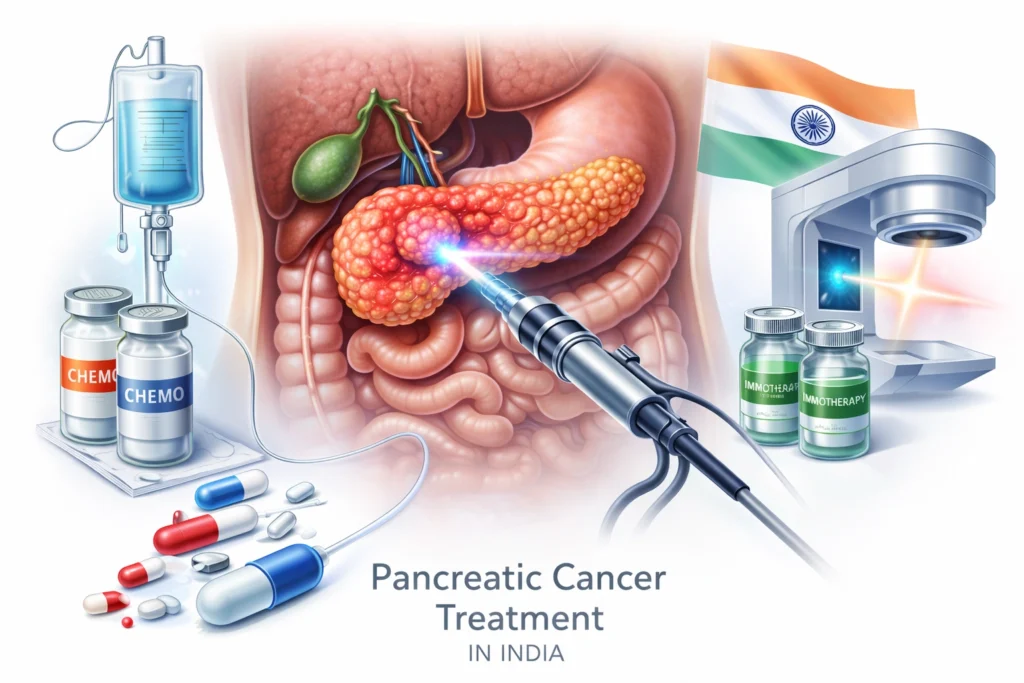
Pancreatic cancer is not something people think about normally. Most don’t even know what the pancreas does, so it never feels important. In the beginning, life feels okay, work goes on, and food is normal. Then small things start, such as a little pain, less hunger, and some weight loss. People ignore it again and again, until the same problems keep coming back, and daily life just doesn’t feel right anymore.
Get Free Consultation Now
What Is Pancreatic Cancer?
The pancreas is a small body part in the human body that assists with digestion and sugar regulation. When cancer begins in the pancreas, some of the cells begin to grow abnormally. This does not happen immediately. It takes time for the abnormal growth to occur. Since the pancreas is located deep within the body, it is difficult to notice any issues at first. This is why some individuals do not know that anything is wrong.
Who Needs Pancreatic Cancer Treatment?
The problem with pancreatic cancer is that it is not easily detectable in the early stages. The initial stages are such that nothing is serious enough to immediately go to a hospital. There is some discomfort, but that is pushed aside, and life goes on. Days pass, work continues, meals happen, sleep happens. Treatment usually comes into the picture only when the same issues keep coming back, and life stops feeling normal.
People usually start thinking about pancreatic cancer treatment when problems occur, such as:
- A dull pain in the upper stomach or back that stays for many days and doesn’t fully settle.
- Weight is going down without trying, even though food habits haven’t changed much.
- Appetite is slowly reducing, food feels heavy, and eating doesn’t feel enjoyable.
- Yellow colour in the eyes or skin, often noticed by family members first.
- Digestion problems that keep returning again and again.
Common Symptoms People Notice
The symptoms are not the same for all people, and this creates confusion. Most symptoms appear harmless at the start and do not seem serious. Gradually, they begin to hamper the normal functioning of life. Some of the symptoms that are commonly observed are:
- Ongoing stomach pain that spreads to the back and feels different from usual pain.
- Feeling full very quickly, even after eating a small amount.
- Constant tiredness that doesn’t improve with rest.
- Digestive issues that disturb routine again and again.
- Weakness that slowly increases without a clear reason.
Types of Pancreatic Cancer
Doctors usually explain the types in simple language, not medical terms. They focus on where the cancer started and how it’s behaving. According to that, they describe the situation like this:
- Exocrine pancreatic cancer: This is the most common type. It starts in the digestive part of the pancreas. Digestion problems and weight loss are common here.
- Neuroendocrine pancreatic cancer: This begins in cells that have to do with hormones. It tends to grow a bit slower, but the symptoms can be confusing.
- Early-stage cancer: The cancer remains within the pancreas, and there are more treatment choices available.
- Advanced-stage cancer: The cancer has captured nearby regions, and the goal of treatment is to manage the disease.
How Pancreatic Cancer Is Diagnosed
Diagnosis is not done in a hurry. Doctors first try to understand the full situation. They look at symptoms, reports, and overall health before deciding anything. Usually, a diagnosis includes:
- Blood tests are done to check liver and pancreatic function.
- CT or MRI scans to clearly see the pancreas.
- Special scans to understand size and spread.
- Tissue testing, in some cases, is to confirm cancer.
This helps plan pancreatic cancer treatment properly.
Pancreatic Cancer Treatment Process
Doctors don’t jump straight into treatment. They first talk to the patient and family and explain what’s happening. Everything is done step by step. Treatment usually includes:
- Medicines to manage digestion, pain, and weakness.
- Surgery is only performed in selected cases where doctors feel it will help.
- Supportive care for eating problems and low energy.
- Regular follow-ups so treatment can be adjusted.
This careful approach is common in pancreatic cancer treatment in India.
Benefits of Starting Treatment Early
Early treatment doesn’t make things easy, but it gives better control. It helps people manage symptoms and daily life better. Some benefits include:
- Better control over pain and stomach discomfort
- More strength for daily activities
- Lower risk of sudden complications later
- More treatment options are available
- Families feel less helpless
Risks and Safety
Pancreatic cancer treatment is serious, and fear is natural. Doctors explain risks clearly before starting. Some challenges include:
- Weakness during treatment days
- Digestive discomfort that needs food changes
- Emotional stress for patients and families
- Medicine side effects that doctors monitor closely
Safety in pancreatic cancer treatment in India has improved a lot over the years.
Daily Challenges With Pancreatic Cancer
Slowly affect daily life, and many struggles are not visible to others. Small things start feeling difficult. Common challenges include:
- Low energy even without heavy work
- Difficulty eating normal meals or keeping weight stable
- Mood changes due to stress and uncertainty
- Depending on others for daily support
- Anxiety while waiting for reports
Recovery and Long-Term Care
Recovery often means stability, not a full cure. Long-term care becomes part of life. Care usually involves:
- Taking medicines regularly without skipping
- Eating food that supports digestion and strength
- Managing pain so daily life feels easier
- Emotional support is needed from family
- Regular visits to doctors
Why People Choose India for Pancreatic Cancer Treatment
Many families choose pancreatic cancer treatment in India because things feel more manageable. Doctors handle these cases often, so patients don’t feel lost. Hospitals follow a clear routine, which reduces confusion. Long-term care is easier to continue without breaks. Treatment costs are also more manageable for long-term care. Family members stay involved, which helps emotionally.
Conclusion
Pancreatic cancer can remain unseen at the start and can be easily missed. The symptoms are of little concern at the start, but when they keep recurring, they become important. Early detection makes treatment easier and provides more choices. The treatment of pancreatic cancer in India has become better due to improved planning and attention. With regular treatment, follow-ups, and family support, many people manage life better. Acting on time really makes a difference.
Medically Reviewed
This page on Pancreatic Cancer Treatment in India has been medically reviewed by Dr. Rashid Ali, MBBS, a Delhi Medical Council–registered practitioner (Registration No. DMC/R/36289), to ensure it reflects accurate, current, and evidence-based medical information.
At Medicsaz, every treatment page is checked by a licensed doctor before publication, not written by a marketing team alone. Dr. Rashid Ali review covers the accuracy of procedures, terminology, and claims described on this page, so patients researching Pancreatic Cancer Treatment in India can rely on what they read here to make informed decisions.
Last medically reviewed: 09/09/2026
You can independently verify Dr. Rashid Ali’s registration on the Delhi Medical Council’s official website using Registration No. DMC/R/36289, or read more about his role as Medicsaz’s medical reviewer on his reviewer profile page.