
Pancreas Transplant Surgery in India
Severe diabetes can slowly become exhausting to live with. Many people struggle every day with a constant fear of complications. And deal with blood sugar control, repeated injections, and sudden sugar drops. Over time, this affects not only physical health but also confidence and emotional well-being.
For a small group of patients, medicines and insulin no longer provide enough control. In such cases, doctors may explain a pancreas transplant as a treatment option. Today, Pancreas Transplant Surgery in India is performed in a few specialised centres with trained transplant teams and strict medical protocols. It is not a common surgery. But for selected patients, it can bring long-term relief from severe diabetes and its complications.
Get Free Consultation Now
What Is Pancreas Transplant Surgery?
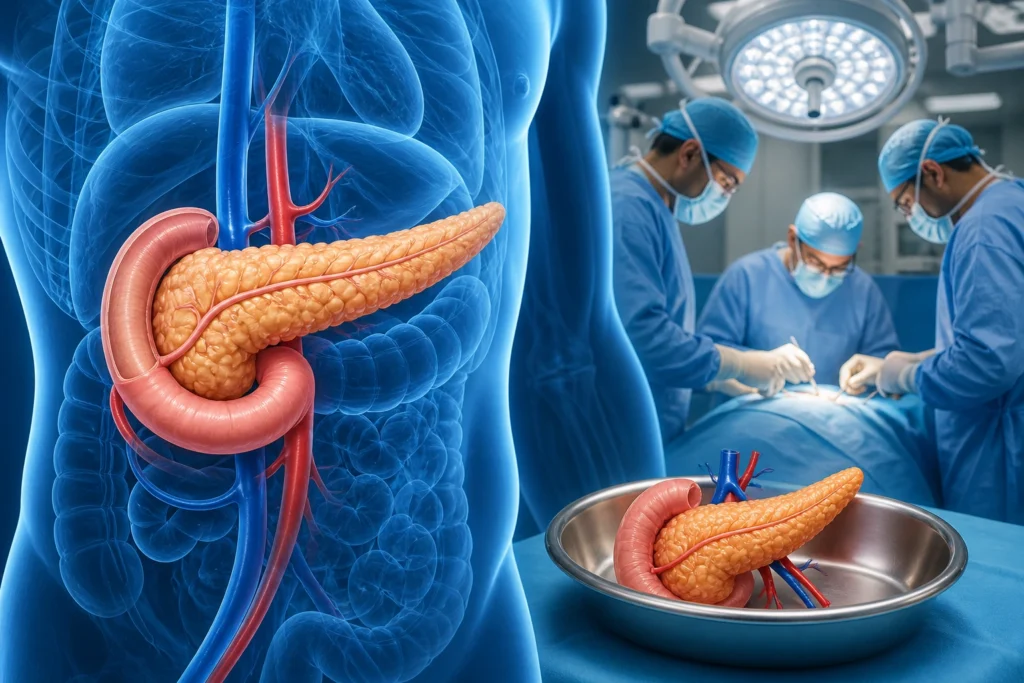
In pancreas transplant surgery, doctors place a healthy pancreas from a donor into a patient whose own pancreas cannot control blood sugar properly. The new pancreas starts producing insulin inside the body. This helps maintain natural blood sugar balance without the need for daily insulin injections in many cases. Doctors usually leave the patient’s original pancreas inside the body and place the donor pancreas in the lower abdomen.
The main purpose of this surgery is to restore normal insulin production and reduce serious diabetes-related problems.
Who Needs a Pancreas Transplant in India?
Pancreas transplants are not advised by doctors for every person with diabetes. They usually recommend it only for patients with very severe and difficult-to-control diabetes.
Pancreas transplant is mainly considered for people who suffer from frequent and unpredictable low blood sugar attacks, even after proper insulin treatment. It is also considered for patients who already have serious diabetes-related complications and poor quality of life.
Doctors evaluate the benefits of a transplant, whether they are greater than the risks, before suggesting this treatment.
Diseases and Conditions Treated with Pancreas Transplant
Pancreas transplant mainly treats problems related to insulin production and blood sugar control. It is commonly considered for:
Type 1 diabetes with severe hypoglycaemia – Patients experience dangerous low blood sugar episodes without warning.
Advanced diabetes with kidney damage – Many patients develop kidney failure along with long-standing diabetes.
Poor glucose control despite best medical care – Blood sugar remains unstable even with insulin and monitoring.
Doctors recommend a transplant only when other treatments fail to control the condition safely.
Pancreas Transplant with Kidney Transplant in India
A combined pancreas-kidney transplant is something that doctors perform commonly in India. This is a form of pancreas transplant. When people have diabetes, it can damage their kidneys after a while. When the kidneys also fail, doctors suggest doing a pancreas transplant and a kidney transplant at the same time. They do both pancreas transplant and kidney transplant because it helps the patient. This single surgery helps the patient control diabetes and improve kidney function at the same time
Donor Availability and Waiting List for Pancreas Transplant
Living donation of a pancreas is extremely rare. Pancreas transplants usually use organs from deceased donors. Patients who are approved for transplant are placed on a waiting list. Which depends on blood group, body size matching, and the availability of suitable donors.
Waiting periods can be long, as centres where pancreas transplants are performed are limited. Doctors continue medical treatment and close monitoring during this time. This waiting phase is an important part of the pancreas transplant.
Tests Required Before Pancreas Transplant Surgery
Before approving a pancreas transplant surgery in India, doctors perform detailed medical tests to ensure the patient can safely undergo the surgery. Doctors usually perform:
- Blood group and cross-match tests to check donor compatibility.
- Heart and lung tests to confirm surgical fitness.
- Infection screening to reduce post-transplant risks.
- An evaluation of kidney function and diabetes history.
The tests help doctors decide whether a transplant is the right and safe option.
Pancreas Transplant Surgery Process Step by Step
During surgery, the patient is given general anaesthesia. The patient remains asleep during the entire procedure.
The surgeon places the donor pancreas in the lower part of the abdomen. The surgeon connects the blood vessels and attaches the intestine of the donor pancreas to the patient’s intestine so that digestive fluids can drain properly.
Doctors usually do not remove the patient’s original pancreas. After blood flow starts, the transplanted pancreas begins producing insulin gradually.
Hospital Stay and Recovery After Pancreas Transplant
After surgery, patients are moved to the intensive care unit for close monitoring by doctors. The patient is generally checked for blood sugar levels and organ function. They are checked carefully for signs of any infection or rejection.
Once patients become stable, they are shifted to a regular hospital room. Most patients stay in the hospital for two to three weeks. It mostly depends on recovery and complications. Recovery continues at home for several weeks. Patients slowly return to normal daily activities under medical guidance.
Medicines and Rejection Prevention After Pancreas Transplant
The body can treat the new pancreas as a foreign organ and try to reject it. It means taking special medicines after the transplant so that the body does not attack the new pancreas. Anti-rejection medicines help protect the transplanted pancreas.
Patients should follow:
- Medicines must be taken every day at the correct time.
- Regular blood tests are needed to check how the pancreas is working.
- Good hygiene is important to avoid infections.
- Fever, pain, or unusual blood sugar should be reported to the doctor quickly.
This routine plays a key role in long-term success after Pancreas Transplant Surgery in India.
Life After Pancreas Transplant in India
After pancreas transplants, some patients no longer require daily insulin injections. And others may still need small doses, but with better control than others. Fear of sudden sugar drops reduces.
Energy levels improve, and daily activities become easier. Quality of life usually improves. However, patients need to regularly follow up to protect the transplanted pancreas. And continue lifelong medicines as prescribed.
Conclusion
A pancreas transplant for selected patients with severe diabetes, it can truly be a life-changing treatment. Pancreas transplant is a specialised and carefully selected treatment. That helps patients with severe diabetes and related complications.
With specialised centres and trained transplant teams, Pancreas Transplant Surgery in India is becoming more structured and reliable. It can significantly improve blood sugar control and overall quality of life for the right patient.
Medically Reviewed
This page on Pancreas Transplant Surgery in India has been medically reviewed by Dr. Rashid Ali, MBBS, a Delhi Medical Council–registered practitioner (Registration No. DMC/R/36289), to ensure it reflects accurate, current, and evidence-based medical information.
At Medicsaz, every treatment page is checked by a licensed doctor before publication, not written by a marketing team alone. Dr. Rashid Ali review covers the accuracy of procedures, terminology, and claims described on this page, so patients researching Pancreas Transplant Surgery in India can rely on what they read here to make informed decisions.
Last medically reviewed: 09/09/2026
You can independently verify Dr. Rashid Ali’s registration on the Delhi Medical Council’s official website using Registration No. DMC/R/36289, or read more about his role as Medicsaz’s medical reviewer on his reviewer profile page.