
Nasopharyngeal Cancer Treatment in India
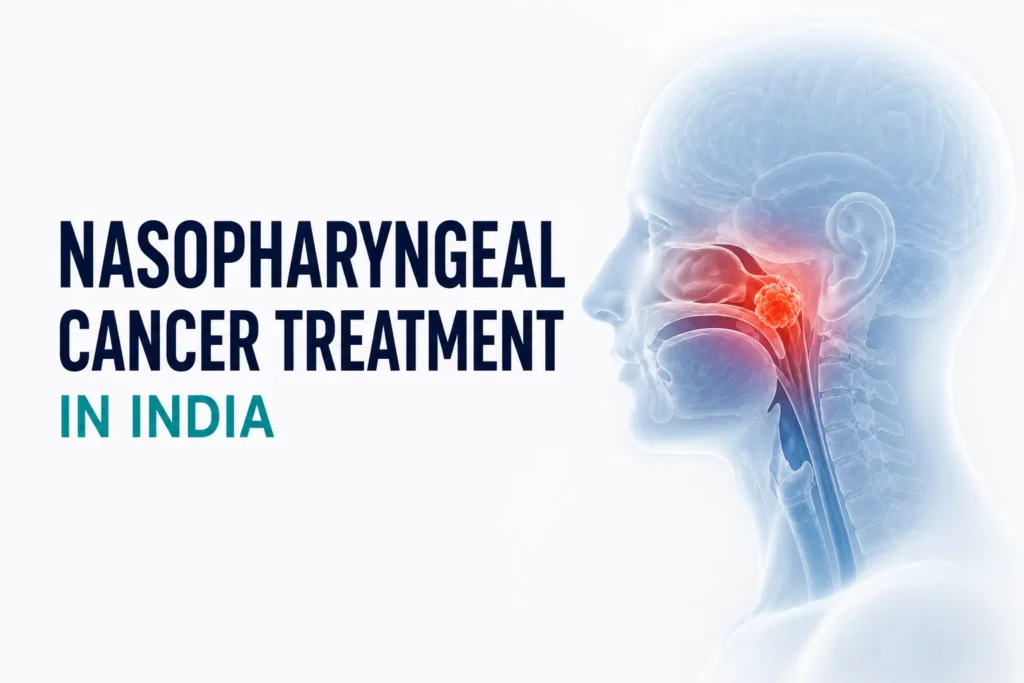
In the case of a rare cancer of the head and neck region, diagnosis can be a challenging experience. Nasopharyngeal cancer is a type of cancer that starts developing from a concealed position within the nose.
Nasopharyngeal Cancer Treatment in India has proved to be an efficient method of achieving wellness. The reason for this is because of the concealed location of this form of cancer.
Get Free Consultation Now
What Is Nasopharyngeal Cancer?
Nasopharyngeal cancer is a cancerous growth that originates in the hard-to-reach area at the back of the nose and above the throat. Due to this hard-to-access location, the growth often remains undetected when it first appears.
Experts rely on sophisticated imaging techniques to access this hidden area in order to detect nasopharyngeal cancer before it starts to affect adjacent nerves, skull base, or neck areas. Detecting the cancer early is currently the only way to prevent it from spreading into the brain or neck areas.
Early Symptoms That May Be Overlooked
Specialists watch for these specific red flags to catch the disease early:
- Nasal Blockage: Persistent stuffiness or frequent nosebleeds.
- Hearing Changes: Hearing loss or ringing in the ears as the tumor affects nearby structures.
- Lump in the Neck: Swollen lymph nodes indicating the cancer may be spreading.
- Persistent Pain: Chronic headaches as the tumor puts pressure on surrounding structures.
Causes and Risk Factors
EBV infection and some genetic characteristics have been identified as primary risk factors for nasopharyngeal cancer. In India, diet- specifically the consumption of preserved, salt-cured foods and traditional dietary habits- and environmental air pollution are significant additional factors that increase these overall risks. Furthermore, exposure to smoked or smokeless tobacco and industrial substances can contribute to cellular damage and elevate the likelihood of head and neck cancers.
Recognizing these risks through a comprehensive professional evaluation is the crucial first step toward obtaining a correct diagnosis and developing a proper, tailored treatment program. Modern clinical medicine concentrates on recognizing these risk factors early and conducting detailed evaluations to preserve the health and structural integrity of the throat and surrounding tissues. Early detection through timely clinical mapping significantly improves prognosis, helping prevent the spread of malignant cells to adjacent nerves, the skull base, or deep neck structures.
How Nasopharyngeal Cancer Is Diagnosed
These diagnostic tests allow doctors to examine the area and identify the exact stage of the cancer:
- Endoscopy: A tiny camera examines the nasal and throat passages closely.
- Imaging: MRI and PET-CT scans map the tumor’s boundaries with precision.
- Biopsy: A small tissue sample is taken to confirm the diagnosis.
- Viral Testing: Checking for EBV markers to help confirm and monitor the disease.
Planning for Nasopharyngeal Cancer Treatment in India
Treatment depends on the stage of the cancer and the patient’s overall health. Doctors create a personalized plan to ensure the best possible outcome and manage the disease effectively.
In India, multiple specialists work together as a team to guide the patient’s care. This coordinated approach ensures every step of treatment is handled with precision across different medical disciplines.
Radiation Therapy as a Primary Treatment
Intensity Modulated Radiation Therapy (IMRT) is the technique used to kill cancerous cells within this region. IMRT works on the target tumor without exposing other critical organs around the brain and eyes to the risk of radiation damage. Advanced planning techniques for accurate targeting have increasingly become common in Indian hospitals as a way to further safeguard healthy tissues during therapy sessions. Dry mouth, mucositis, and irritation of the skin where radiation was done are among the common side effects of radiation therapy.
Role of Chemotherapy and Targeted Therapy
Sometimes, the chemotherapy drugs are administered together with the radiation therapy or even before it in order to better control the cancer and reduce the size of the tumor. The use of chemotherapy helps target the cancer cells that might have spread to other parts of the body; however, it might lead to some temporary side effects such as fatigue and nausea. Targeted therapy targets certain molecular pathways when it is applicable.
Life After Nasopharyngeal Cancer Treatment
Specialists provide a structured recovery plan to help the body heal and regain strength:
- Nutritional Support: Proper nutrition to help the body recover.
- Speech Therapy: Helping restore normal speech and swallowing if radiation caused any stiffness.
- Regular Scans: Ongoing imaging to check for any new growth.
Cost of Nasopharyngeal Cancer Treatment in India
Nasopharyngeal Cancer Treatment in India typically ranges from around $2,700 to $3,300. The cost can vary depending on the stage of cancer, treatment approach, hospital, specialist team, and the therapies required for the individual patient.
The exact cost depends on factors such as diagnostic tests, radiation therapy, chemotherapy, medications, hospital stay, follow-up care, and any additional treatment required. These figures are general estimates, not fixed quotes. Medicsaz can help arrange a personalized cost estimate after a partner specialist reviews the patient’s medical records and treatment requirements.
How Medicsaz Supports Your Nasopharyngeal Cancer Treatment in India Journey
Medicsaz connects international patients with vetted partner hospitals and cancer specialists experienced in head and neck cancer care, and coordinates everything around the process: cost estimates, medical records review, hospital and doctor matching, travel and visa support, accommodation, and a point of contact throughout your stay in India.
If you’re ready to explore Nasopharyngeal Cancer Treatment in India, reach out for a free consultation and cost estimate. Most inquiries get a response within 30 minutes
Conclusion
Waiting until symptoms have worsened is an unwise tactic, since this can lead to the illness advancing to a very serious level. The clinical facilities for nasopharyngeal cancer treatment in India have developed methods of diagnosis and treatment that take away most of the guesswork when diagnosing a patient with nasopharyngeal carcinoma.
Government schemes such as the PMJAY could be of assistance to cover the cost of treatment, but this is dependent on the particular hospital and the type of treatment chosen by the family; therefore, it would be wise to inquire about this directly from the hospital.
Frequently Asked Questions
What is nasopharyngeal cancer, and why is it often caught late?
Nasopharyngeal cancer forms behind the nose, in an area that’s hard to see or feel, so early tumors often cause vague symptoms like nasal stuffiness or ringing in the ears that get mistaken for a cold or minor ear issue. This is why persistent symptoms lasting more than a few weeks should be evaluated by a specialist.
Is nasopharyngeal cancer linked to a virus?
Yes — Epstein-Barr virus (EBV) infection is strongly associated with nasopharyngeal cancer, and EBV testing is often used both to support diagnosis and to monitor treatment response. Genetic susceptibility and certain dietary or environmental exposures are also recognized risk factors.
What is the main treatment for nasopharyngeal cancer?
Radiation therapy, specifically Intensity-Modulated Radiation Therapy (IMRT), is the primary treatment because it targets the tumor precisely while sparing nearby structures like the brainstem and eyes. Chemotherapy is frequently combined with radiation for more advanced stages, and targeted therapy may be used in specific cases.
Will radiation therapy affect my ability to eat or speak?
Radiation to this area can cause temporary side effects like dry mouth, throat soreness, or stiffness that affects swallowing or speech. Most patients recover function over time with support from speech therapy and nutritional guidance, and side effects are actively managed throughout treatment.
How often do I need follow-up scans after treatment?
Regular follow-up imaging and clinical exams are essential after treatment to monitor for recurrence, since nasopharyngeal cancer can return even after successful initial treatment. Your oncology team will set a personalized follow-up schedule based on your stage and treatment response.
Medically Reviewed
This page on Nasopharyngeal Cancer Treatment in India has been medically reviewed by Dr. Rashid Ali, MBBS, a Delhi Medical Council–registered practitioner (Registration No. DMC/R/36289), to ensure it reflects accurate, current, and evidence-based medical information.
At Medicsaz, every treatment page is checked by a licensed doctor before publication, not written by a marketing team alone. Dr. Rashid Ali review covers the accuracy of procedures, terminology, and claims described on this page, so patients researching Nasopharyngeal Cancer Treatment in India can rely on what they read here to make informed decisions.
Last medically reviewed: 09/09/2026
You can independently verify Dr. Rashid Ali’s registration on the Delhi Medical Council’s official website using Registration No. DMC/R/36289, or read more about his role as Medicsaz’s medical reviewer on his reviewer profile page.