
Myocardial Infarction Treatment in India
When chest pain strikes, most people tend to ignore it. They assume that it is nothing but a symptom of excess gas or acidity due to their hard day. But in some cases, such sensations could be an indication of much more dangerous processes occurring inside the heart. This situation occurs when a person has a heart attack.
A heart attack should be immediately treated by professionals in order to preserve the heart muscles. Fast action is required to reduce any permanent injury and save a person’s life. Currently, myocardial infarction treatment in India is highly systematic.
Get Free Consultation Now
What Is a Myocardial Infarction (Heart Attack)?
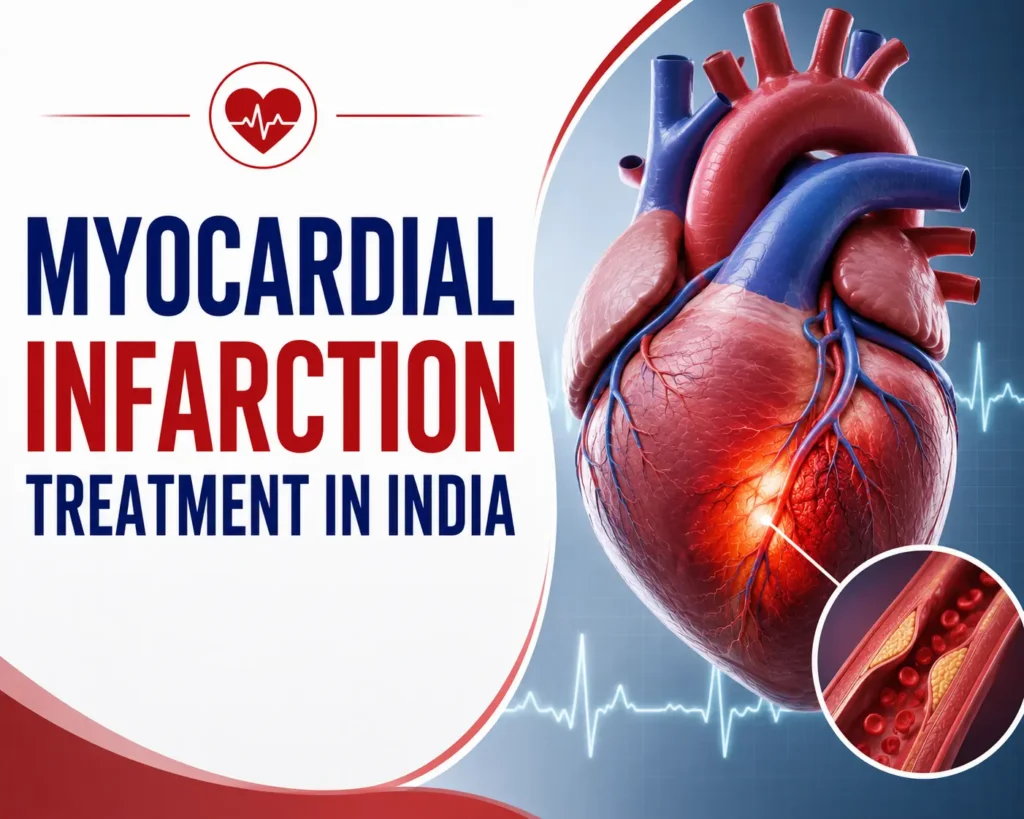
Myocardial Infarction, more commonly known as a heart attack, occurs when there is an abrupt interruption of the blood supply to the heart muscles due to a clot in one of the coronary arteries. Lack of oxygen results in injury to the cardiac muscles, the effects of which become worse as time passes.
Early Warning Signs of a Heart Attack
The body usually sends out certain signals before an attack occurs in the heart. In the case of knowing the signs, one should be aware of the fact that these signs can vary for people suffering from heart attacks. Some signs of a heart attack are:
- Chest pressure: A pressure sensation in the chest
- Radiating Pain: Pain sensation from the chest that spreads to the arms, neck, or jaws
- Difficult Breathing: Difficult breathing without physical activities
- Cold Sweating: Sweating and nausea
Important facts on the symptoms in women: In case of a heart attack, women will experience less of the typical chest pain compared to men. Up to 30 percent of women will not experience any significant chest pain; however, they might be experiencing other unusual symptoms like extreme fatigue, nausea or vomiting, jaw or back pain, dizziness, and breathing difficulties. The above symptoms make it easy for women to mistake the symptoms for stomach upset, stress, or the flu.
Common Causes of Heart Attack in India
A heart attack happens because of a blockage of the coronary arteries. The common reason is atherosclerosis, where fatty deposits form within the walls of the artery, causing them to narrow. Other significant causes are hypertension and cigarette smoking.
When to See a Doctor Immediately
It is very important to get immediate attention in order to minimize the extent of damage to the heart. In case of chest pain that lasts more than a few minutes or comes in waves, it is better not to wait for the situation to resolve itself but to go immediately for medical assistance.
Tests and Diagnosis for Myocardial Infarction
The following tests are conducted for diagnosis and evaluation of the heart muscle damage:
- ECG Monitoring: Used to detect any abnormal electrical activity in the heart
- Troponin Blood Test: Conducted to check the protein level released by damaged heart muscles
- Echocardiogram: Imaging technique to visualize the working ability of the heart
- Coronary Angiography: Imaging test for identifying blocked arteries
Emergency Myocardial Infarction Treatment in India
Treatment starts once the patient gets to the hospital, and the primary aim is to restore the circulation of blood as fast as possible:
- Oxygen Therapy: It aids in increasing oxygen in the blood
- Clot-dissolving drug: Administered to help dissolve the clot, especially when angioplasty cannot be performed immediately
- Stabilization: This involves alleviation of pain and other forms of support that reduce stress to the heart.
- Angioplasty: A process of opening up the blocked artery; it is usually preferred when done promptly.
Role of Angioplasty and Stent Placement
Angioplasty is one of the most effective ways to treat a blocked coronary artery during a heart attack. A thin tube is guided into the blocked artery, and a small balloon is used to widen it. A stent, a small mesh tube, is then placed to help keep the artery open.
Medicines Used After a Heart Attack
Following the initial emergency procedure, there are several drugs that may be administered to aid in healing and prevent heart attacks:
- Anticoagulants: Prevent formation of any new blood clots
- Beta-blockers: Make the heart work less so that it can heal itself
- Statins: Reduce the cholesterol content to prevent future artery blockage
- ACE inhibitors: Aid in lowering blood pressure and reducing the workload of the heart
Recovery and Cardiac Rehabilitation
Recovery doesn’t stop once you leave the hospital. It’s important to give the body time to heal, and structured cardiac rehabilitation, combined with dietary changes, plays a major role in long-term recovery.
Lifestyle Changes After Heart Attack
Daily activities can help prevent heart attacks from happening again in the future:
- Healthy Diet: Consuming healthy foods that have less saturated fats
- Exercise: Exercising as directed by your doctor for a healthy heart
- Stopping Smoking: It is very important to stop smoking for a healthy heart
- Relieving Stress: Relieving stress can help reduce stress on the hear
Myocardial Infarction Treatment in India Cost
Myocardial Infarction Treatment in India can cost around $3,500 to $14,000. The cost varies depending on the severity of the heart attack, emergency angioplasty and stenting, number and type of stents, CABG surgery, ICU stay, diagnostic tests, medications, hospital, and possible complications.
The exact cost depends on the patient’s condition and treatment required, including cardiac evaluation, coronary angiography, angioplasty with stenting, bypass surgery when necessary, hospitalisation, medications, and follow-up care. These figures are general estimates based on commonly used treatment interventions, not a fixed myocardial infarction treatment package.
How Medicsaz Supports Your Myocardial Infarction Treatment in India Journey
Medicsaz connects international patients with vetted partner hospitals and experienced cardiologists and cardiac surgeons for Myocardial Infarction Treatment in India. The team assists with medical record review, hospital and specialist matching, treatment and cost estimates, travel and visa support, accommodation, and coordination throughout the patient’s treatment journey in India.
For patients exploring Myocardial Infarction Treatment in India, Medicsaz can help coordinate appropriate cardiac care based on the patient’s medical records and treatment requirements, while providing guidance on expected costs and the overall treatment process.
Conclusion
A heart attack is a serious emergency, but acting fast can save a life. Recognizing the symptoms early, including symptoms that may look different in women, is one of the most important things you can do. Myocardial Infarction Treatment in India offers the advanced emergency care and follow-up support needed for a strong recovery.
Frequently Asked Questions
Do heart attack symptoms look the same in men and women?
Not always — women are significantly more likely to have a heart attack without prominent chest pain, instead experiencing fatigue, nausea, jaw or back pain, or shortness of breath, which can lead to delayed diagnosis.
How quickly should I seek help if I think I'm having a heart attack?
Immediately — if chest pain or other concerning symptoms last more than a few minutes or keep coming back, seek emergency care right away, since every minute of delay increases the risk of permanent heart damage.
What's the difference between clot-busting medication and angioplasty?
Clot-busting medication dissolves the blockage chemically and is typically used when immediate angioplasty isn’t available, while angioplasty physically opens the blocked artery and is generally preferred when it can be performed quickly.
What causes a heart attack?
The leading cause is atherosclerosis, where fatty deposits build up inside artery walls over time, along with major risk factors like high blood pressure and smoking.
Will I need to take medication for the rest of my life after a heart attack?
Often, yes — medications like blood thinners, beta-blockers, statins, and ACE inhibitors are commonly prescribed long-term to reduce the risk of another heart attack and support heart function.
What tests confirm a heart attack diagnosis?
Doctors typically use an ECG to check heart rhythm, troponin blood tests to detect heart muscle damage, an echocardiogram to assess pumping function, and coronary angiography to locate the blockage.
Medically Reviewed
This page on Myocardial Infarction Treatment in India has been medically reviewed by Dr. Rashid Ali, MBBS, a Delhi Medical Council–registered practitioner (Registration No. DMC/R/36289), to ensure it reflects accurate, current, and evidence-based medical information.
At Medicsaz, every treatment page is checked by a licensed doctor before publication, not written by a marketing team alone. Dr. Rashid Ali review covers the accuracy of procedures, terminology, and claims described on this page, so patients researching Myocardial Infarction Treatment in India can rely on what they read here to make informed decisions.
Last medically reviewed: 09/09/2026
You can independently verify Dr. Rashid Ali’s registration on the Delhi Medical Council’s official website using Registration No. DMC/R/36289, or read more about his role as Medicsaz’s medical reviewer on his reviewer profile page.