
Multiple Sclerosis Treatment in India
Multiple sclerosis can be rather discreet in its initial stages. A patient may experience unpredictable fatigue, mild numbness, or even temporary vision problems, which might not be recognized as something serious for quite some time. At the initial stage, such symptoms will be easily ignored since they tend to disappear by themselves from time to time. This rather unpredictable and recurring nature of MS explains why it takes a while to find out the right way for Multiple Sclerosis Treatment in India.
MS is a condition of the central nervous system, including the brain and spinal cord. The condition may cause changes in sensation, movement, and mobility. Currently, there are various ways to deal with Multiple Sclerosis in India, such as using medications, physical therapy, and monitoring.
Get Free Consultation Now
What Is Multiple Sclerosis (MS)?
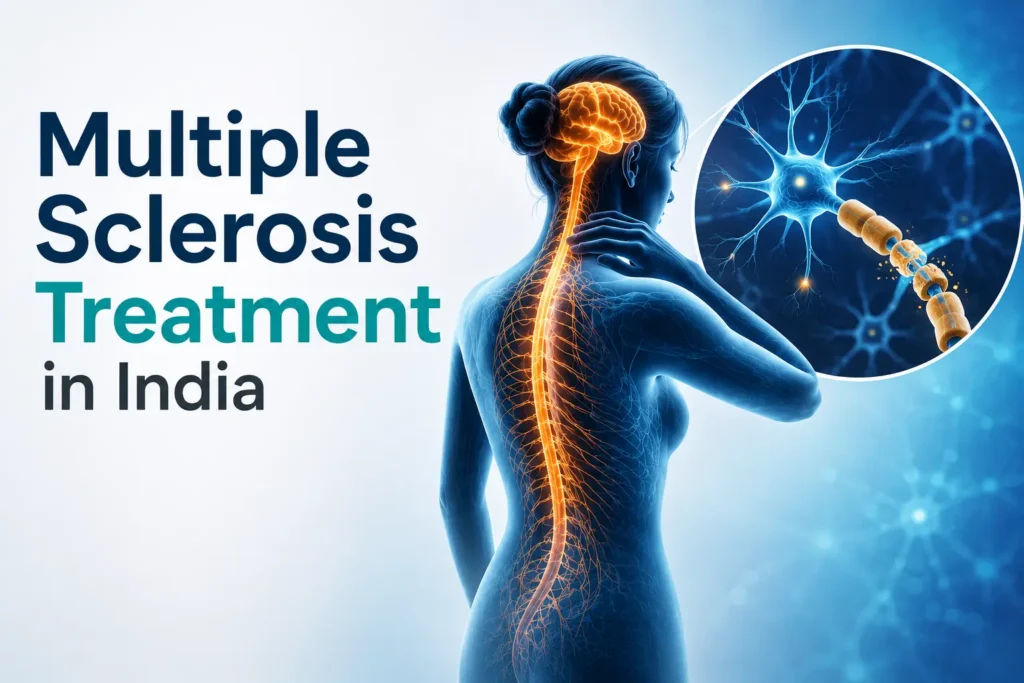
It is an autoimmune disorder in which the body’s immune system turns against the myelin sheath, which surrounds the nerves. Damage to the myelin sheath affects the flow of electrical signals from the brain to other parts of the body. This is because the progression of multiple sclerosis is unpredictable; hence, the reason for early Multiple Sclerosis Treatment in India is to concentrate on protective treatments.
Early Warning Signs of Multiple Sclerosis
Signs in a relapse vary depending on the actual pathway that is affected. Recognizing these symptoms early is essential to ensure proper care. They include:
- Numbness or Tingling: An ongoing sensation felt all over the limbs due to nerve damage.
- Weakness: The occurrence of weakness leading to the loss of strength.
- Vision Disturbances: Blurred or double vision because of inflammation affecting the optic nerve.
Why Multiple Sclerosis Happens
Specialists still don’t know the exact cause of MS. What is known is that a combination of genetic factors and immune system abnormalities increases baseline risk. Environmental factors, such as low vitamin D levels, smoking, and past viral exposure (particularly Epstein-Barr virus), can also influence risk. Women are affected by MS considerably more often than men.
Different Types of Multiple Sclerosis Explained
Different types of MS can be defined depending on the nature of the course of the disease, and the treatment approach is usually determined based on the type of MS:
- Relapsing-Remitting MS (RRMS): Most common type of MS characterized by definite relapses and remissions.
- Secondary Progressive MS (SPMS): Phase of the disease when it progressively gets worse, typically preceded by relapses.
- Primary Progressive MS (PPMS): Progressive worsening from the onset of the disease without relapses or remissions.
How Multiple Sclerosis Is Diagnosed in India
Neurologists use several diagnostic tools to confirm MS and rule out other conditions with similar symptoms:
- MRI Scans: The main tool used to detect scarring (lesions) in the brain and spinal cord.
- Neurological Exam: A physical exam testing coordination, muscle strength, and reflexes.
- Lumbar Puncture: Cerebrospinal fluid is tested for specific immune markers associated with MS.
Latest Treatment Options for Multiple Sclerosis in India
A cure for MS does not exist; however, with proper management, the progress of the disease can be controlled, and the occurrence of flare-ups can be reduced for many individuals. Modern multiple sclerosis treatment in India utilizes DMTs to control the immune system response, in addition to administering high doses of steroids for dealing with acute relapses.
Medicines and Advanced Therapies for MS
DMTs affect the immune response through manipulation of the immune system’s function to minimize the occurrence and the severity of relapse episodes and limit disease progression over time. This is very crucial since DMTs being used are based on modification of immune function and, therefore, the possibility of developing infections and even PML in a few cases exists. The neurologist will explain the specific risks associated with the particular drug you’ve been recommended to use. Muscle relaxants and other drugs are used by doctors for management of MS stiffness, nerve pain, and bladder dysfunction.
Role of Physiotherapy and Rehabilitation in MS Recovery
Physiotherapy and physical rehabilitation can play an integral role in helping patients manage their illness on a long-term basis. Physical therapy can increase the strength of muscles, improve one’s balance, and facilitate walking. Speech and occupational therapy can also be used in some cases in order to adjust everyday activities to accommodate changes in health.
Managing Fatigue and Daily Life with Multiple Sclerosis
There are some simple practices that can be done on a day-to-day basis for keeping the symptoms more controlled:
- Moderating Activity: This includes staying active without becoming overly fatigued.
- Balanced Nutrition: A good diet not only keeps one healthy but also helps maintain nerve function.
- Heat and Stress Control: Most people who have MS are heat sensitive, which temporarily increases their symptoms (as is well documented by the so-called Uhthoff’s phenomenon).
Long-Term Monitoring and Supportive Care
Because MS behaves unpredictably, ongoing monitoring is an essential part of managing the condition long-term. Neurologists use repeat MRI scans to track disease activity, including changes that may not yet cause noticeable symptoms. Regular follow-up visits allow for timely adjustments to treatment, helping protect long-term function.
Multiple Sclerosis Treatment in India Cost
Multiple Sclerosis Treatment in India typically costs around $4,000 to $20,000. The cost varies depending on the type and severity of MS, disease-modifying therapy, diagnostic tests, treatment of relapses, rehabilitation, hospitalisation, and duration of treatment.
The exact cost depends on the patient’s condition and treatment plan. MS is a chronic condition that may require long-term medication and regular neurological monitoring, so overall expenses can vary significantly over time. Advanced treatments or prolonged rehabilitation may increase the cost. These figures are general estimates, not fixed quotes. Medicsaz can provide a personalized estimate after a partner neurologist reviews the patient’s medical records and treatment requirements.
How Medicsaz Supports Your Multiple Sclerosis Treatment in India Journey
Medicsaz connects international patients with vetted partner hospitals and experienced neurologists for Multiple Sclerosis Treatment in India. The team assists with medical record review, hospital and specialist matching, treatment and cost estimates, travel and visa support, accommodation, and coordination throughout the patient’s treatment journey.
For patients exploring Multiple Sclerosis Treatment in India, Medicsaz can help identify an appropriate neurologist and treatment approach based on the patient’s medical records, while providing guidance on expected costs and the overall treatment process.
Conclusion
Multiple sclerosis is a significant, lifelong neurological condition, but effective treatment can make a real difference in a person’s quality of life. Multiple Sclerosis Treatment in India combines specialist expertise with disease-modifying therapies and dedicated rehabilitation programs. With personalized treatment and consistent monitoring, many people are able to significantly slow disease progression and maintain a good quality of life.
Frequently Asked Questions
Is multiple sclerosis curable?
No, there is currently no cure for MS, but disease-modifying therapies can significantly reduce relapse frequency and slow long-term disease progression for many patients. Early diagnosis and treatment generally lead to better long-term outcomes.
What are the earliest signs of MS that people often miss?
Common early signs include numbness or tingling in the limbs, unexplained muscle weakness, and blurred or double vision, often caused by inflammation of the optic nerve. Because these symptoms can come and go on their own, they’re often dismissed at first rather than promptly evaluated.
Do MS medications have serious side effects?
Some disease-modifying therapies carry a real risk of increased infections, and rare but serious risks like progressive multifocal leukoencephalopathy (PML) with certain medications. Your neurologist will discuss the specific risk profile of your recommended treatment and any monitoring needed to catch problems early.
Why does heat make MS symptoms worse?
Many people with MS are sensitive to heat due to a well-documented effect called Uhthoff’s phenomenon, where higher body temperature temporarily impairs nerve signal conduction. Symptoms usually improve again once the body cools down, and this doesn’t indicate the disease is getting permanently worse.
Is MS hereditary?
MS isn’t directly inherited, but genetic factors do increase baseline risk, especially if a close family member has the condition. Environmental factors like vitamin D levels, smoking, and viral exposure also play a meaningful role alongside genetic risk.
What's the difference between relapsing-remitting and progressive MS?
Relapsing-remitting MS (RRMS), the most common form, involves distinct relapses followed by periods of recovery, while progressive forms (secondary progressive and primary progressive) involve a steadier, ongoing worsening of symptoms over time. The type of MS a person has significantly influences their treatment plan.
Medically Reviewed
This page on Multiple Sclerosis Treatment in India has been medically reviewed by Dr. Rashid Ali, MBBS, a Delhi Medical Council–registered practitioner (Registration No. DMC/R/36289), to ensure it reflects accurate, current, and evidence-based medical information.
At Medicsaz, every treatment page is checked by a licensed doctor before publication, not written by a marketing team alone. Dr. Rashid Ali review covers the accuracy of procedures, terminology, and claims described on this page, so patients researching Multiple Sclerosis Treatment in India can rely on what they read here to make informed decisions.
Last medically reviewed: 09/09/2026
You can independently verify Dr. Rashid Ali’s registration on the Delhi Medical Council’s official website using Registration No. DMC/R/36289, or read more about his role as Medicsaz’s medical reviewer on his reviewer profile page.