
Lung Cancer Treatment in India
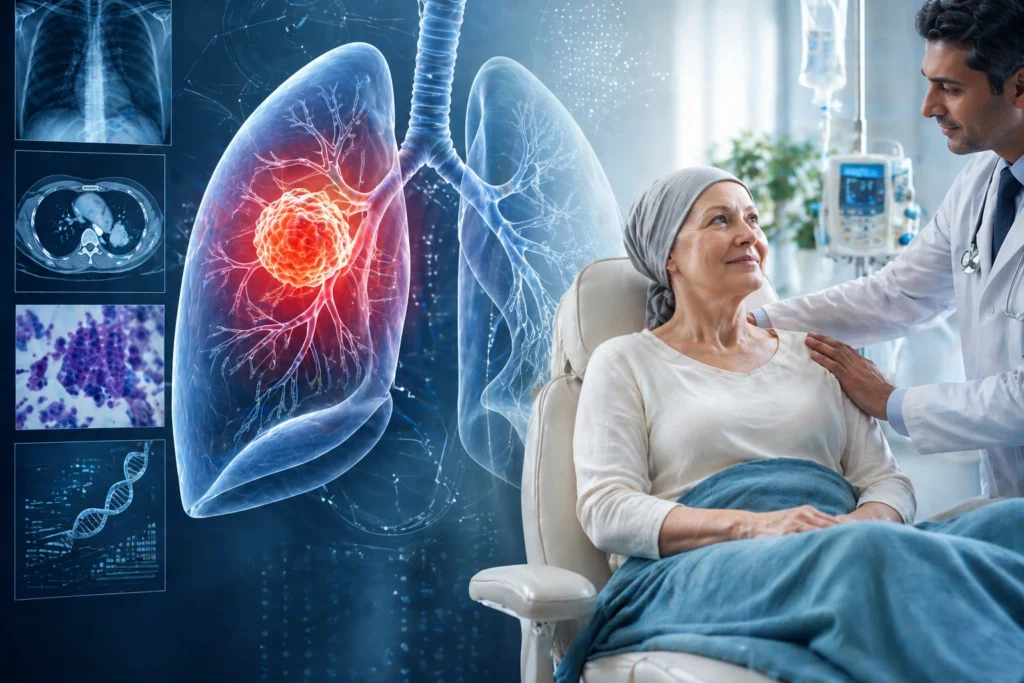
A cough is something most people in India live with. Dust in the air, pollution, smoking, changing weather — these things make coughing common. No one feels worried in the beginning. Even mild chest discomfort is ignored. Lung cancer often starts in this quiet way. They don’t stop their daily work and don’t cause sudden pain. Because of this, many people delay checking. Only when breathing becomes difficult, or weakness increases, do families begin searching for lung cancer treatment.
Lung cancer treatment in India is now treated with trained cancer specialists, advanced medicines, and scanning machines. With proper diagnosis and a clear treatment plan, many patients are able to control the disease.
Get Free Consultation Now
What is lung cancer?
Lung cancer occurs when lung cells grow abnormally and multiply rapidly. These cells form a tumor and can spread or obstruct air passages. The uncontrolled growth of these harmful cells disrupts the lungs’ function of taking in oxygen and removing carbon dioxide. This creates problems related to breathing.
Early signs and symptoms of lung cancer
The early signs are often confused with common respiratory problems. This is why diagnosis is delayed in many patients. People usually notice:
- A cough that does not settle for weeks
- Chest discomfort while breathing deeply
- Breathlessness during simple activities
- Ongoing tiredness without a clear reason
- Occasional blood in the cough
None of these symptoms may feel alarming alone. But when they continue, they should not be ignored.
Types of lung cancer treated in India
Doctors first identify the exact type of lung cancer. Then they make and choose the correct treatment plan.
- Non-Small Cell Lung Cancer: The most common type, it usually grows slowly. When detected early, treatment options are wider.
- Small Cell Lung Cancer: Grows faster and spreads quickly. Treatment here focuses on controlling the disease and symptoms.
Understanding the type gives direction to treatment.
Risk factors for lung cancer in India
Smoking is the most significant risk factor for lung cancer. But not every patient with lung cancer is a smoker. Common risk factors include:
- Exposure to chemicals – Such as asbestos or industrial fumes.
- Second-hand smoke – Regular exposure to smoke from others.
- Active smoking – Long-term cigarette or bidi use.
- Air pollution – High pollution levels in many cities.
- Family history – Close relatives with lung cancer.
Tests and diagnosis for lung cancer in India
First, doctors start with a chest X-ray. After any abnormalities are found, a CT scan is done for a clearer view of the lungs. Then, to check whether cancer is present and to identify its type, a biopsy is done. Also, tests such as a PET scan can be done. It helps to check if the cancer has spread. These investigations help doctors understand the stage and plan treatment safely.
Treatment options for lung cancer in India
Treatment depends on the type of lung cancer, the stage, and the patient’s overall health. Most hospitals follow a team-based approach, where specialists plan treatment together. Treatment may include:
- Surgery to remove the tumour
- Chemotherapy to destroy cancer cells
- Radiation therapy to target specific areas
- Targeted medicines that act on cancer cell changes
- Immunotherapy to support the body’s defence system
The aim is to control the disease while maintaining quality of life.
Surgery for lung cancer in India
Surgery is usually advised when the cancer is detected early and has not spread widely. The surgeon sometimes removes an entire lobe or only the affected part of the lung. Many hospitals are now using surgical methods that require smaller cuts. These smaller cuts help in recovery to be quicker.
After surgery, patients are monitored closely. Doctors monitor their breathing function and signs of infection. The fitness test is done, which includes evaluation of heart health and lung capacity.
Recovery and follow-up after lung cancer treatment
After surgery, patients can have weakness and breathlessness. Lung recovery time varies by treatment. This can be helped with breathing exercises and physiotherapy. Therapies can cause tiredness, nausea, or minor infections, which can be managed with medicines. Follow-ups are required, which include scans and blood tests that are done to detect any early recurrence.
Life after lung cancer treatment in India
Many families choose anal cancer treatment in India because the process feels more manageable. Doctors here treat these cases regularly and explain things patiently. Hospitals follow clear treatment steps, and long-term care is easier to continue. Treatment is also more affordable over time. Family involvement is encouraged, which gives emotional strength to patients.
- Regular check-ups – Help detect problems early.
- Breathing exercises – Improve lung capacity.
- Quitting smoking completely – Protects remaining lung function.
- Healthy diet and proper rest – Support recovery.
Conclusion
Lung cancer starts quietly, and the symptoms feel small at first, so people delay checking. This delay can make treatment much harder later on. Early checkup gives you more choices and better control. Lung cancer treatment in India is now well-organized and equipped with advance failities. When patients get medical help quickly and have their family by their side, they can manage the disease better and move forward with courage and optimism.
Medically Reviewed
This page on Lung Cancer Treatment in India has been medically reviewed by Dr. Rashid Ali, MBBS, a Delhi Medical Council–registered practitioner (Registration No. DMC/R/36289), to ensure it reflects accurate, current, and evidence-based medical information.
At Medicsaz, every treatment page is checked by a licensed doctor before publication, not written by a marketing team alone. Dr. Rashid Ali review covers the accuracy of procedures, terminology, and claims described on this page, so patients researching Lung Cancer Treatment in India can rely on what they read here to make informed decisions.
Last medically reviewed: 09/09/2026
You can independently verify Dr. Rashid Ali’s registration on the Delhi Medical Council’s official website using Registration No. DMC/R/36289, or read more about his role as Medicsaz’s medical reviewer on his reviewer profile page.