
Limb Lengthening Surgery in India
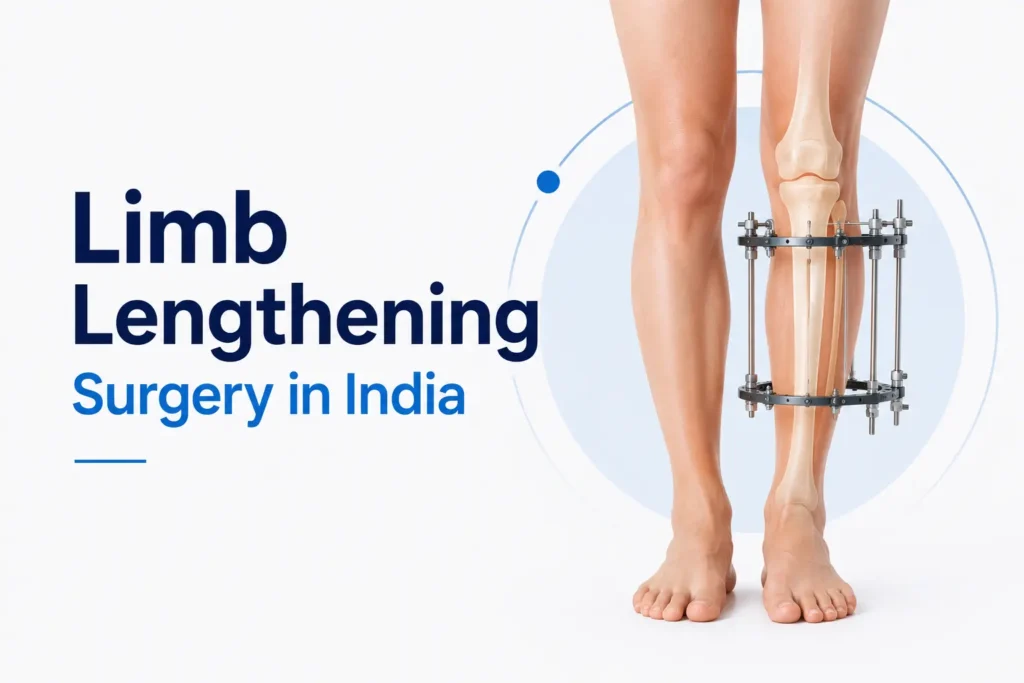
Differences in leg length or unusually short limbs can cause a major biological crash in your physical movement and confidence. Some people are born with these structural alignment failures, while others develop them after childhood trauma, bone infections, or growth plate injuries. In severe cases, the skeletal infrastructure struggles to maintain balance properly, turning basic activities like walking or standing into an exhausting theft of stamina.
Limb lengthening surgery operates as an advanced orthopedic engineering procedure designed to gradually increase bone length and correct joint alignment. Today, Limb Lengthening Surgery in India utilizes advanced internal motorized devices, precision tracking software, and intensive physical rehabilitation to rebuild lower limb mechanics.
Get Free Consultation Now
What Is Limb Lengthening Surgery?
Limb lengthening is a highly specialized orthopedic modification used to systematically extend the length of a bone, typically inside the legs or arms. The mechanical overhaul works by creating a clean, surgical cut in the bone infrastructure to initiate a controlled separation over an extended timeline. As an adjustable device slowly widens the gap day by day, the body’s natural healing network triggers new bone formation to fill the empty space.
Who May Need Limb Lengthening Surgery?
This deep structural reset is deployed when a discrepancy in the skeletal layout creates severe load-bearing imbalances across the body. Common triggers requiring a mechanical overhaul include:
- Asymmetric Layouts: Significant length differences between the left and right legs.
- Congenital Shortening: Structural birth anomalies where a limb fails to develop its full architectural height.
- Post-Traumatic Theft: Bone loss or growth plate closures resulting from severe accidents or past bone infections.
For patients seeking long-term structural solutions, Limb Lengthening Surgery in India provides access to state-of-the-art orthopedic technology and expert clinical care.
Causes of Limb Length Difference
A total failure in uniform limb growth can stem from multiple production line glitches during early skeletal development. Childhood fractures that cross the active growth plate layer can permanently stall the bone-making machinery prematurely. Secondary triggers include localized bone infections, genetic diseases, or neurological disorders like polio that disrupt normal nerve-to-muscle signaling logistics during growth.
Symptoms and Problems Caused by Unequal Limb Length
The body’s effort to function under conditions of imbalance creates an immediate logistical failure in the whole structure of the skeletal system:
- Gait Irregularities: The development of a continuous limp while walking, which results in depletion of physical energy.
- Bone Stress: Persistent low back, knee, and hip joint pains due to unbalanced loading of weight.
- Spinal Misalignment: The unequal distribution of the pelvic bones results in a fully off-balance spine.
How Limb Length Problems Are Diagnosed in India
To prepare for Limb Lengthening Surgery in India, orthopedic specialists use precise mechanical stress testing and digital imaging mapping to calculate the exact depth of the structural failure:
- Long-Bone X-Rays: Full-length structural scans to measure exact bone lengths and joint angles.
- Digital Gait Analysis: Computerized pressure tracking lines to evaluate walking patterns and mechanical strain.
- Advanced CT Scanography: Precision 3D mapping used to rule out rotational twists within the bone architecture.
Limb Lengthening Surgery Procedure Explained
The structural overhaul takes place under anesthesia inside advanced orthopedic suites. The surgeon divides the dense outer bone layer to create two separate, adjustable segments while carefully preserving the surrounding blood supply infrastructure. Next, they attach a high-tech fixation device to control the mechanical gap generation. Over the next few months, the patient adjusts the device to pull the bone ends apart at a precise velocity—typically one millimeter per day—allowing fresh bone to solidify in the gap.
Types of Devices Used in Limb Lengthening
The selected hardware framework depends entirely on the patient’s age, bone quality, and overall mobility goals:
- External Fixators: An open structural metal frame secured outside the body via pins that pass through the skin into the bone architecture.
- Internal Lengthening Nails: An internal telescopic rod inserted directly into the marrow cavity that extends gradually using an external magnetic controller.
Risks and Complications of Limb Lengthening Surgery
Since the procedure will take some time before the system is fully reconstructed, there are certain risks associated with the procedure that are purely technical and biological in nature. For instance, the pins going through the skin increase the chances of developing infections in the track; the muscles and nerves in the area become overly tight as they get stretched. Structural anomalies are quite rare and may involve delayed bone healing or joint tightness.
Long-Term Results and Follow-Up Care
This process will involve a series of follow-up checks for many months to make sure that the structural adjustment remains in perfect sync. Through constant monitoring through X-rays, orthopedic experts will keep an eye on the density of bone growth and determine when the fixation devices should be removed. Once the structure is properly stabilized, patients get tremendous support to bear loads effectively and enjoy improved mobility.
Conclusion
A severe limb length discrepancy represents a major breakdown of the body’s structural alignment, but executing a timely mechanical reset completely shifts the long-term outcome. Limb Lengthening Surgery in India combines world-class orthopedic craftsmanship with advanced internal magnetic engineering to rebuild failed skeletal architecture. Committing to the structured distraction timeline and rehabilitation roadmap allows patients to successfully bypass the biological crash and walk with perfect balance.
Medically Reviewed
This page on Limb Lengthening Surgery in India has been medically reviewed by Dr. Rashid Ali, MBBS, a Delhi Medical Council–registered practitioner (Registration No. DMC/R/36289), to ensure it reflects accurate, current, and evidence-based medical information.
At Medicsaz, every treatment page is checked by a licensed doctor before publication, not written by a marketing team alone. Dr. Rashid Ali review covers the accuracy of procedures, terminology, and claims described on this page, so patients researching Limb Lengthening Surgery in India can rely on what they read here to make informed decisions.
Last medically reviewed: 09/09/2026
You can independently verify Dr. Rashid Ali’s registration on the Delhi Medical Council’s official website using Registration No. DMC/R/36289, or read more about his role as Medicsaz’s medical reviewer on his reviewer profile page.