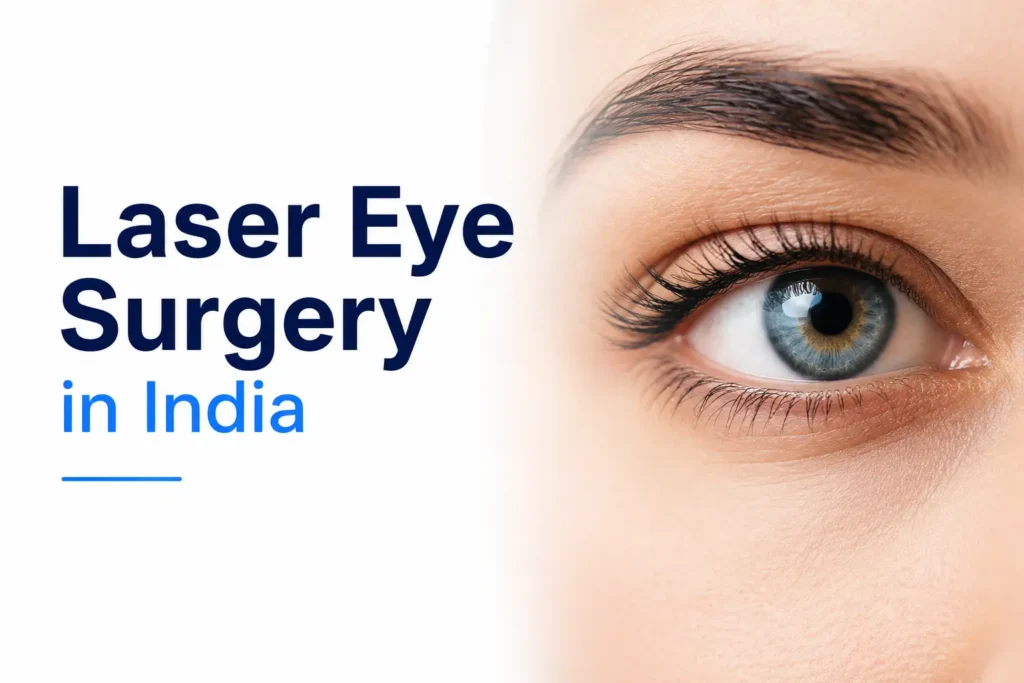
Laser Eye Surgery in India
Most people are just plain tired of the “smudge and fog” that comes with wearing glasses every single day. Laser eye surgery in India has turned into the go-to fix for anyone wanting to dump their optical prescriptions for good. It isn’t just about being able to see; it’s about that sudden, weirdly great feeling of waking up and actually seeing the alarm clock clearly.
India’s medical scene has moved fast, and the tech in top clinics now easily rivals what you’d find in London or New York. Because the costs stay low here, patients are flying in from everywhere to get their vision sorted. It’s transformed the country into a massive hub for people who want elite surgery without the staggering price tag.
Get Free Consultation Now
What Is Laser Eye Surgery?
Laser eye surgery can be described as a high-precision renovation for the front of the eye, which doctors call the cornea. The surgeon uses a cool light beam to microscopically reshape the eye’s surface, correcting focus so light hits the retina precisely. This small adjustment often eliminates the need for glasses.
Who Is Suitable for Laser Eye Surgery?
Not everyone can just walk in and get lasered, because the eyes have to meet some strict health rules first. People generally need to be at least 18, and the vision prescription shouldn’t have changed much in the last year. Doctors want a “stable target” so the fix provided today actually lasts for the next decade.
- Cornea thickness: the tissue must be thick enough to handle the microscopic reshaping process safely.
- Stable prescription: vision should not have shifted significantly for at least twelve consecutive months.
- General health: conditions like uncontrolled diabetes or severe dry eye might disqualify a patient temporarily.
Types of Laser Eye Surgery in India
India offers everything from the classic LASIK to the much newer, flapless method called “SMILE.” LASIK involves making a tiny flap on the eye, while PRK treats the surface directly, which is great for people with thinner corneas. Every method has its own set of pros depending on how the eye is built and what a person’s daily life looks like.
- LASIK: the most common method, involves a thin corneal flap for quick visual recovery.
- PRK/Surface Laser: best for patients with thinner corneas or those involved in high-impact sports.
- ReLEx SMILE: a minimally invasive, flapless procedure that reduces the risk of long-term dry eyes.
Common Vision Problems Treated
Laser surgery is most famous for tackling the “big three” issues that force people into contacts or glasses. Whether struggling with road signs or phone text, these procedures hit the target:
- Nearsightedness: laser flattens the cornea to focus distant objects (for long eyes).
- Farsightedness: laser steepens the curve to help with close-up vision (for short eyes).
- Astigmatism: laser smoothes the irregular, football-shaped corneal curve.
Tests Before Laser Eye Surgery in India
A good result is heavily dependent on the data the medical team pulls during pre-op exams. They use topography to build a 3D map of the “hills and valleys” on the eye’s surface so the laser knows exactly where to go. They also check things like pupil size and tear levels to make sure the eyes stay comfortable after the fix.
- Topography: creating a detailed visual map of the corneal surface and curvature.
- Pachymetry: measuring the exact thickness of the cornea to ensure surgical safety.
- Tear Analysis: checking natural moisture levels to predict post-operative comfort.
Benefits of Laser Eye Surgery
The obvious win is finally killing off the “glasses tax,” no more expensive frames or losing a contact lens at the beach. For active people, it opens up a whole new life where you can swim or play sports without worrying about gear. It’s a real upgrade to daily convenience that’s noticed every single morning.
Risks and Side Effects
Like any medical procedure, laser surgery has a few small risks, such as temporary dry eye or seeing “starbursts” around bright lights at night. Serious issues like infections are incredibly rare if patients go to a top-tier clinic and follow the post-op rules.
- Dry eyes: a temporary decrease in tear production while corneal nerves recover.
- Night glare: halos/starbursts around lights, typically stabilizing over time.
- Under-correction: may require a minor enhancement touch-up for optimal clarity.
Laser Eye Surgery Cost in India
Laser eye surgery in India typically costs $700 to $1,500 for standard LASIK, $900 to $1,700 for PRK or LASEK (recommended for thinner corneas), and $1,400 to $2,100 for the newer flapless ReLEx SMILE technique. Bladeless LASIK (IntraLase) typically runs $1,100 to $1,900.
The exact figure depends on the procedure, technology used, and the clinic. These are general figures, not fixed quotes. Medicsaz can put together a personalized cost estimate once a partner ophthalmologist has reviewed your case.
How Medicsaz Supports Your Laser Eye Surgery Journey in India
Medicsaz connects you with vetted partner hospitals and ophthalmologists experienced in laser eye surgery in India, and coordinates everything around the procedure, cost estimates, medical records review, hospital and doctor matching, travel and visa support, accommodation, and a point of contact throughout your stay in India.
If you’re ready to explore this, reach out for a free medical opinion and cost estimate. Most inquiries get a response within 30 minutes.
Life After Laser Eye Surgery in India
Once a person is fully healed, life feels a lot different when they don’t have to reach for a pair of glasses first thing in the morning. Regular eye check-ups are still needed as a person gets older, but for most, the “glasses phase” is officially done.
Conclusion
Laser eye surgery in India is a world-class chance to fix sight without spending a fortune to do it. By pairing global technology with some of the best surgeons in the business, the results are consistently reliable and well-regarded. If people are ready to stop viewing life through a lens, this is a strong path toward that goal.
Frequently Asked Questions
Is laser eye surgery painful?
No, the procedure itself is not painful, as anesthetic eye drops numb the eye beforehand; most patients feel only mild pressure during the treatment.
Are the results of laser eye surgery permanent?
The corneal reshaping itself is permanent, but natural age-related vision changes like presbyopia (needing reading glasses in your 40s and beyond) can still occur over time, regardless of the surgery.
What's the difference between LASIK, PRK, and SMILE?
LASIK creates a thin corneal flap for quick recovery, PRK treats the surface directly without a flap and suits thinner corneas, and SMILE is a newer flapless technique that reduces long-term dry eye risk.
Am I too old or too young for laser eye surgery?
You generally need to be at least 18 with a stable prescription for a year, and while there’s no strict upper age limit, most surgeons recommend re-evaluating options like lens-based procedures after your 40s due to natural aging changes.
What tests are done before laser eye surgery?
Standard pre-op tests include corneal topography to map the eye’s surface, pachymetry to measure corneal thickness, and tear film analysis to check moisture levels.
What are the most common side effects of laser eye surgery?
Temporary dry eyes and night glare (halos or starbursts around lights) are the most common side effects, both of which typically improve within the first few months.
Medically Reviewed
This page on Laser Eye Surgery in India has been medically reviewed by Dr. Rashid Ali, MBBS, a Delhi Medical Council–registered practitioner (Registration No. DMC/R/36289), to ensure it reflects accurate, current, and evidence-based medical information.
At Medicsaz, every treatment page is checked by a licensed doctor before publication, not written by a marketing team alone. Dr. Rashid Ali review covers the accuracy of procedures, terminology, and claims described on this page, so patients researching Laser Eye Surgery in India can rely on what they read here to make informed decisions.
Last medically reviewed: 09/09/2026
You can independently verify Dr. Rashid Ali’s registration on the Delhi Medical Council’s official website using Registration No. DMC/R/36289, or read more about his role as Medicsaz’s medical reviewer on his reviewer profile page.