
Intrathecal Baclofen Pump in India
Muscle stiffness and uncontrolled spasticity can have a considerable effect on one’s quality of life. Performing simple actions, such as walking, sitting, or speaking, can be challenging when a person’s muscles feel constantly stiff or locked. Muscle stiffness and spasticity are usually caused by disorders that impact the nervous system’s ability to regulate muscle tone.
If a person cannot control their symptoms using conventional medicine, a neurosurgeon can recommend an intrathecal baclofen pump to treat muscle stiffness. An intrathecal baclofen pump is an implantable device that releases drugs directly into the spinal fluid to decrease muscle tone. The Intrathecal Baclofen Pump in India can now be inserted only in specialized clinics for neurosurgery.
Get Free Consultation Now
What Is an Intrathecal Baclofen Pump?
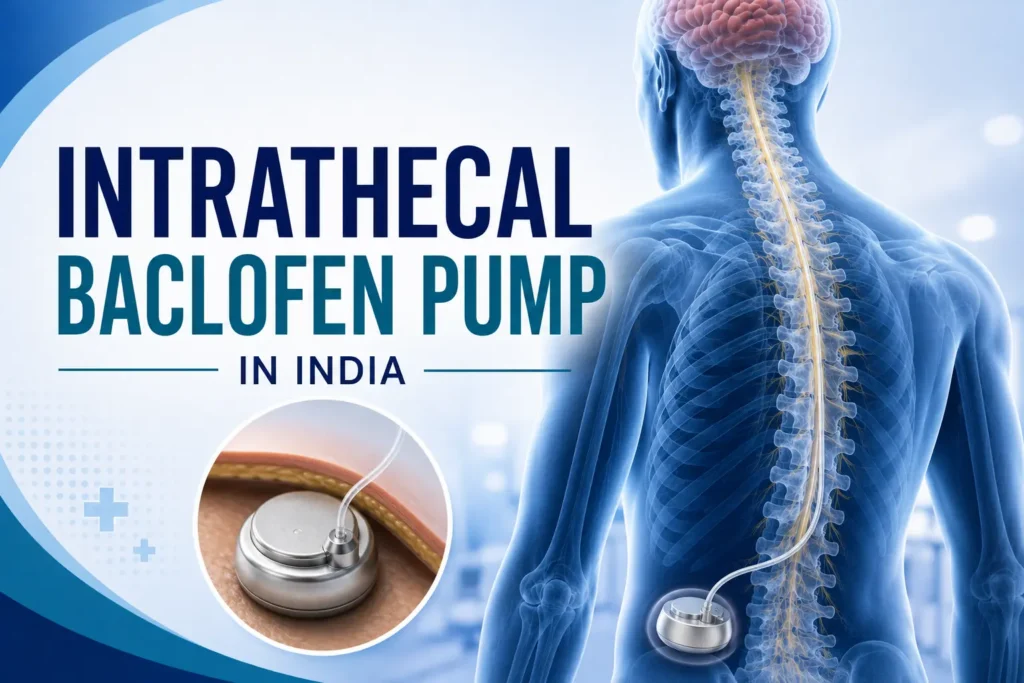
An intrathecal baclofen pump is an implantable pump that infuses baclofen directly into the cerebrospinal fluid of the spine. Baclofen is a muscle relaxant that relieves tightness in the muscles of the body. Since the drug is infused directly into the nervous system, only small amounts of the drug need to be delivered, thus reducing the systemic side effects and fatigue associated with oral baclofen. It has the following three major components:
- Pump/Reservoir: A round pump that is surgically implanted in the abdominal region and is filled with medication.
- Intrathecal Catheter: Small catheter that carries the medication to the spinal fluid.
- External Programmer: Device that allows your clinical team to change the drug delivery schedule externally without undergoing surgery.
Conditions Treated with Intrathecal Baclofen Pump in India
These are some treatments for when spasticity becomes overly severe to the extent that it makes mobility and quality of life a problem:
- Cerebral Palsy: This is a neurological condition present at birth characterized by stiffness of muscles that impacts body posture.
- Multiple Sclerosis: A neurological condition that causes spasms that are erratic and hard to control.
- Spinal cord injury, stroke, or brain injury: An injury that changes nerve signals, leading to spasticity.
Symptoms That May Need Baclofen Pump Therapy
If oral medications have failed to alleviate symptoms, extreme cases of spasticity may result in problems of comfort and functionality. Here are the first steps in determining whether or not this treatment will be considered:
- Stiff Muscles: Stiff muscles that hinder movement of the joints.
- Uncontrollable Muscle Spasms: Uncontrollable muscle spasms causing disruption of sleep and seating position.
- Difficulty Functioning: Difficulty with basic personal care or physiotherapy due to stiff muscles.
How Intrathecal Baclofen Therapy Works
The pump delivers baclofen directly into the fluid surrounding the spinal cord, where it acts on the nerve pathways responsible for muscle tone. Because the medication is delivered right where it’s needed, much smaller doses are required compared to oral baclofen, which helps reduce the drowsiness and other systemic side effects that can come with higher oral doses.
Tests and Evaluation Before Pump Implantation
Before surgery, experts perform a full assessment to determine whether the patient will respond well to this procedure:
- Clinical Assessment: Full assessment of tone, resistance, and movement of muscles.
- Trial Injection: Giving a patient an injection of baclofen through a temporary lumbar puncture to test his/her response.
- Response Assessment: Testing the response of the patient for a significant decrease in muscle tone that can be helpful in determining whether he/she will benefit from the procedure.
Intrathecal Baclofen Pump in India Procedure Explained
The procedure is performed under general anesthesia in a neurosurgical operating theater. The surgeon makes an incision over the lower back to place the catheter into the spinal fluid space. The other end of the catheter is then tunneled under the skin around the waistline to connect to the pump, which is placed in a pocket under the skin of the abdomen. The clinical team then uses the external programmer to set the initial dosing schedule.
Benefits of Intrathecal Baclofen Pump Treatment
This treatment offers several potential benefits for patients with severe spasticity:
- Reduced Muscle Stiffness: A significant, ongoing reduction in baseline muscle tone.
- Fewer Painful Spasms: A noticeable drop in the frequency of muscle spasms.
- Improved Mobility: Better seating balance, easier transfers, and improved walking mechanics where applicable.
- Lower Oral Medication Needs: A significant reduction in the need for high-dose oral muscle relaxants, and in some cases, oral medication may be reduced substantially or stopped, though this varies by patient and is decided with your care team.
Risks and Complications of the Procedure
Although this procedure has proven to be highly effective and safe, one needs to know about the actual dangers associated with it. The first two types of risks are local infection around the abdominal reservoir or cerebrospinal fluid leak around the catheter insertion site. Other dangers include mechanical complications such as catheter kinking, blockage, or displacement.
However, there are two more dangers that need to be specifically highlighted as they are among the worst ones. They are baclofen withdrawal and baclofen overdose – the latter being a medical emergency situation. The former happens when the baclofen pump stops delivering the drug because of either malfunctioning, being empty, or the catheter becoming kinked, blocked, or dislodged. Symptoms of withdrawal include a high fever, intense spasticity rebound, a change in mental state, and, in some very rare but extreme cases, the situation can become life-threatening. On the other hand, overdose occurs due to a programming error and can result in drowsiness, weakness, respiratory depression, and even loss of consciousness.
Long-Term Monitoring and Pump Refills
Maintenance is important in order for the pump to operate safely and for a prolonged period of time. Every few months, the reservoir should be refilled with the drug by simply inserting the needle into the skin. In addition, when these appointments occur, the battery level of the pump is checked, whether the catheter is functioning properly, and the dosages are adjusted based on the changes in the patient’s state. Scheduling the refill appointments is critical, as not doing so is among the most common reasons for baclofen withdrawal.
Intrathecal Baclofen Pump in India Cost
Intrathecal Baclofen Pump in India typically costs around $5,000 to $17,000. The cost varies depending on the pump model, device price, baclofen trial, implantation surgery, surgeon, hospital, anesthesia, ICU and hospital stay, pump programming, and postoperative care.
The exact cost depends on the patient’s condition and treatment plan, including preoperative evaluation, trial procedure, pump and catheter selection, surgical and hospital charges, medications, programming, refills, and rehabilitation. These figures are general estimates, not fixed quotes. Complex cases, imported devices, prolonged hospitalization, or additional rehabilitation may increase the final cost.
How Medicsaz Supports Your Intrathecal Baclofen Pump in India Journey
Medicsaz connects international patients with vetted partner hospitals and experienced neurosurgeons for Intrathecal Baclofen Pump in India. The team assists with medical record review, hospital and specialist matching, treatment and cost estimates, travel and visa support, accommodation, and coordination throughout the patient’s treatment journey.
For patients exploring Intrathecal Baclofen Pump in India, Medicsaz can help identify an appropriate neurosurgeon and suitable treatment approach based on the patient’s medical records, while providing guidance on expected costs and the overall treatment process.
Conclusion
Severe muscle spasticity can significantly affect quality of life, and for patients who don’t respond well to oral medications, an intrathecal baclofen pump can offer meaningful improvement in comfort and mobility. An intrathecal baclofen pump in India combines specialized neurosurgical care with programmable medical technology to help manage this condition effectively. Staying consistent with long-term monitoring and refill appointments, and knowing the warning signs of withdrawal or overdose, are essential parts of using this therapy safely.
Frequently Asked Questions
How is the right dose of baclofen determined?
Before permanent implantation, a trial dose is given through a temporary lumbar puncture to see how well the patient responds, which helps confirm they’re a good candidate. After the pump is implanted, your care team fine-tunes the dose over time using an external programmer, based on how your symptoms respond.
What happens if the pump runs out of medication or malfunctions?
This can cause baclofen withdrawal, which is a medical emergency that can include high fever, severe rebound spasticity, and altered mental state if not treated promptly. This is why keeping scheduled refill appointments and knowing the warning signs is so important.
Can a baclofen pump cause an overdose?
Yes, though it’s uncommon. An overdose can happen due to a pump programming error or device malfunction and can cause drowsiness, weakness, breathing difficulty, or in severe cases, loss of consciousness. This also requires immediate emergency medical attention.
Will I still need oral muscle relaxants after getting a baclofen pump?
Many patients are able to significantly reduce or, in some cases, stop oral muscle relaxants, but this varies from person to person and is managed carefully by your care team. It isn’t guaranteed that oral medication will be eliminated entirely for every patient.
How often does the pump need to be refilled?
The reservoir typically needs to be refilled every few months through a simple needle injection, and the exact schedule depends on your prescribed dose and pump reservoir size. Your care team will set up a regular schedule and will also check the pump’s battery and catheter function at these visits.
Is intrathecal baclofen pump surgery safe?
It’s a well-established, generally safe procedure, but like any implanted device, it carries risks, including infection, catheter problems, and rare but serious risks of baclofen withdrawal or overdose if the system malfunctions. Your neurosurgical team will walk you through your specific risk profile and what warning signs to watch for.
Medically Reviewed
This page on Intrathecal Baclofen Pump in India has been medically reviewed by Dr. Rashid Ali, MBBS, a Delhi Medical Council–registered practitioner (Registration No. DMC/R/36289), to ensure it reflects accurate, current, and evidence-based medical information.
At Medicsaz, every treatment page is checked by a licensed doctor before publication, not written by a marketing team alone. Dr. Rashid Ali review covers the accuracy of procedures, terminology, and claims described on this page, so patients researching Intrathecal Baclofen Pump in India can rely on what they read here to make informed decisions.
Last medically reviewed: 09/09/2026
You can independently verify Dr. Rashid Ali’s registration on the Delhi Medical Council’s official website using Registration No. DMC/R/36289, or read more about his role as Medicsaz’s medical reviewer on his reviewer profile page.