
Intra-Aortic Balloon Pump (IABP) in India
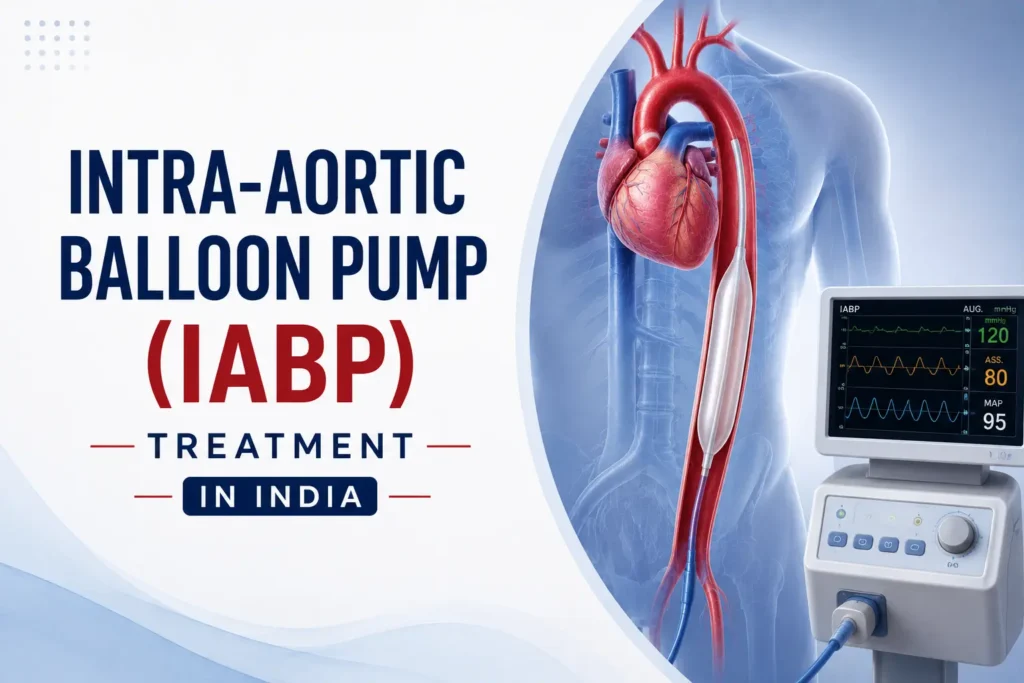
Sometimes, when heart complications are very serious, there occurs a significant decline in the heart’s pumping capacity. This leads to a lack of adequate supply of oxygen and thus poses life-threatening consequences. This issue becomes a big worry when someone suffers from a heart attack or following complicated cardiac surgery.
Doctors use equipment called an intra-aortic balloon pump, which is not a permanent solution to the problem, but only serves the purpose of supporting the heart in difficult situations until the heart becomes capable of doing its job properly again. Intra-Aortic Balloon Pump (IABP) in India still plays an important role in advanced cardiac treatment.
Get Free Consultation Now
What Is an Intra-Aortic Balloon Pump (IABP)?
The intra-aortic balloon pump is a medical device used for temporary assistance to the heart. It is a long, thin tube with a small balloon at its tip, inserted into the body’s main artery called the aorta. This balloon inflates and deflates with a regular timing corresponding to the heartbeats.
When Is IABP Support Needed in Heart Patients
Doctors opt for the IABP procedure in cases where the heart is unable to pump blood properly on its own. Some typical situations are the following:
- Heart Failure or Cardiac Strain: It is used when the heart cannot pump blood on its own
- Surgical Purpose: It is used to provide temporary assistance before and after difficult cardiac surgery
- Stabilization: It is used to buy time for the heart while stabilizing the condition
It should be mentioned that the use of the IABP has evolved in recent years. Large-scale clinical trials have revealed no survival advantage in using routine IABP in cases of cardiogenic shock due to a myocardial infarction, and current guidelines in the field of cardiology do not recommend IABP as a standard intervention in this particular situation anymore.
Conditions Where IABP May Be Used
This device can offer temporary support in several serious heart conditions, though its use depends on the specific case:
- Cardiogenic Shock: A condition where the heart fails to send enough blood to the rest of the body; IABP is now used selectively here rather than routinely, based on current medical evidence
- Severe Heart Attack: Providing extra support to the heart tissue while it recovers, in select cases
- High-Risk Surgery: Used during complex procedures where the heart needs extra support to maintain stable blood pressure
- Advanced Heart Failure: Providing temporary support for patients awaiting more permanent treatment options
How IABP Helps Improve Heart Function
The balloon works in sync with the heartbeat to improve blood flow. When it inflates, it helps push more blood toward the heart and other vital organs. When it deflates, it reduces pressure in the artery, making it easier for the heart to pump without extra strain.
Procedure of IABP Insertion Explained
The insertion is usually done in a specialized procedure room. A thin tube is guided through an artery in the leg and up into the aorta. Doctors use imaging to make sure the balloon is positioned correctly. Once in place, it is connected to a machine that controls the precise timing of each inflation and deflation.
Monitoring and Care During IABP Support
Patients using this device need close monitoring in an intensive care setting:
- Constant Tracking: Doctors check heart rate and blood pressure regularly to watch for any changes
- Ongoing Adjustments: Machine settings are adjusted as needed to match the patient’s condition
- Movement Limits: Patients need to stay still to prevent the tube from shifting out of position
Risks and Complications of Intra-Aortic Balloon Pump (IABP)
While the device is a valuable support tool, there are some risks involved:
- Bleeding or Reduced Blood Flow: There is a risk of bleeding at the insertion site or reduced blood flow to the leg
- Infection Risk: As with any device entering the body, there is a small risk of infection
- Device Malfunction: Mechanical issues with the balloon or machine are rare but closely monitored by the clinical team
Duration and Removal of IABP Device
The IABP is meant only for short-term support and is usually removed after a few days, once the heart’s function improves. The removal process is simple and is done once doctors confirm the patient is stable enough for the heart to work without support.
Recovery After IABP Treatment in India
Recovery largely depends on the underlying heart condition that required the device in the first place. Once the device is removed, patients still need adequate rest along with medication to prevent blood clots. Patients should gradually return to normal activity rather than resuming everything at once.
Life After IABP Support
After IABP support, many patients need to make long-term changes to protect their heart health. Lifestyle adjustments, daily medication, and regular checkups often become part of the routine going forward. With the right care, many people stabilize and see significant improvement in their quality of life over time.
Intra-Aortic Balloon Pump (IABP) in India Cost
Intra-Aortic Balloon Pump (IABP) treatment in India typically ranges from around $3,000 to $8,500. The cost can vary depending on the patient’s condition, duration of IABP support, device type, hospital, ICU requirements, and whether additional cardiac procedures are required.
The exact cost depends on the device used, cardiac procedure, ICU stay, medications, diagnostic tests, and overall hospital care. These figures are general estimates, not fixed quotes. Medicsaz can arrange a personalized cost estimate after a partner cardiac specialist reviews the patient’s medical records and treatment requirements.
How Medicsaz Supports Your Intra-Aortic Balloon Pump (IABP) in India Journey
Medicsaz connects international patients with vetted partner hospitals and experienced cardiac specialists for Intra-Aortic Balloon Pump (IABP) Treatment in India, while coordinating the key steps of the treatment journey. This includes medical records review, hospital and doctor matching, cost estimates, travel and visa support, accommodation, and assistance throughout the patient’s stay in India.
If you’re ready to explore Intra-Aortic Balloon Pump (IABP) in India, reach out for a free consultation and cost estimate. A partner cardiac specialist can review your medical records and help determine the appropriate treatment approach and expected costs.
Conclusion
The intra-aortic balloon pump is a valuable short-term support tool used to manage serious heart problems. It helps support the heart during a crisis and gives it time to recover. While its use has become more selective based on current medical evidence, the Intra-Aortic Balloon Pump (IABP) in India remains an important option in advanced cardiac care for the right patients.
Frequently Asked Questions
Is IABP still commonly used for cardiogenic shock?
Its use has become more selective. Major clinical trials found no survival benefit from routine IABP use in cardiogenic shock after a heart attack, so current guidelines reserve it for specific situations based on a specialist’s judgment.
How does an intra-aortic balloon pump actually help the heart?
The balloon inflates and deflates in sync with the heartbeat, improving blood flow to the heart muscle during relaxation and reducing the heart’s workload during each pump.
How is the IABP device inserted?
It’s inserted through an artery in the leg and guided up into the aorta using imaging guidance, typically in a specialized cardiac procedure room.
How long does a patient typically need IABP support?
IABP is meant only for short-term support, usually removed after a few days once the heart’s function improves enough to work without it.
What are the risks of using an intra-aortic balloon pump?
Common risks include bleeding or reduced blood flow at the insertion site, a small risk of infection, and rare mechanical issues with the device itself.
Does removing the IABP device require another surgery?
No, removal is a simple procedure done once the heart is stable enough, without needing another major surgical intervention.
Medically Reviewed
This page on Intra-Aortic Balloon Pump (IABP) in India has been medically reviewed by Dr. Rashid Ali, MBBS, a Delhi Medical Council–registered practitioner (Registration No. DMC/R/36289), to ensure it reflects accurate, current, and evidence-based medical information.
At Medicsaz, every treatment page is checked by a licensed doctor before publication, not written by a marketing team alone. Dr. Rashid Ali review covers the accuracy of procedures, terminology, and claims described on this page, so patients researching Intra-Aortic Balloon Pump (IABP) in India can rely on what they read here to make informed decisions.
Last medically reviewed: 09/09/2026
You can independently verify Dr. Rashid Ali’s registration on the Delhi Medical Council’s official website using Registration No. DMC/R/36289, or read more about his role as Medicsaz’s medical reviewer on his reviewer profile page.