Hyperthyroidism Treatment in India
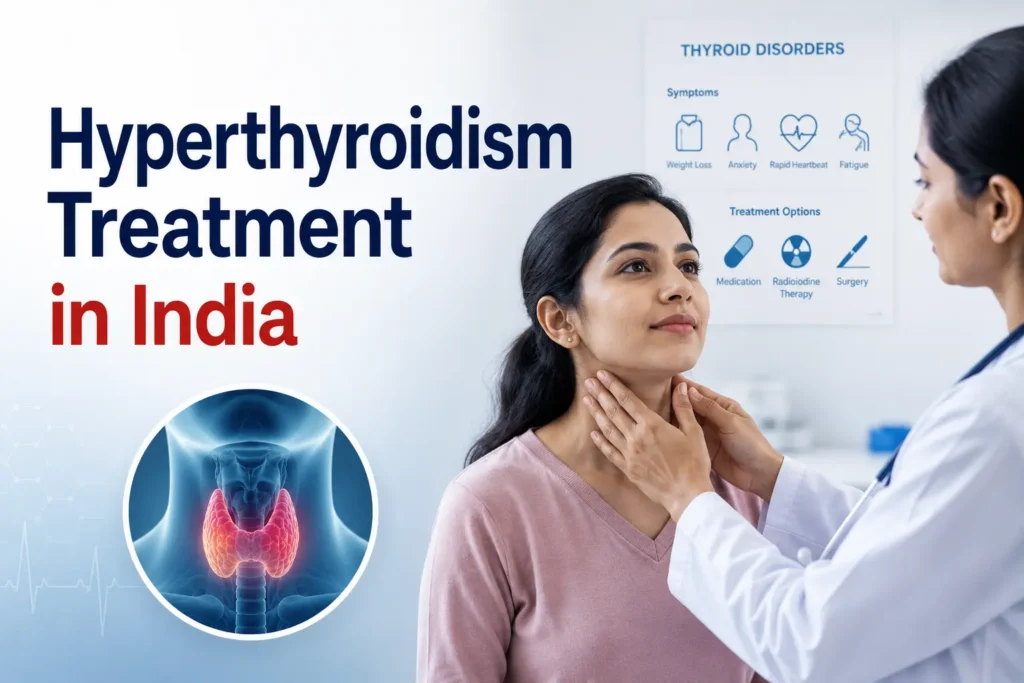
Living with hyperthyroidism can be tiring, as one has heart palpitations, tremors, and rapid weight loss. Patients usually ignore these symptoms by saying that they result from stress or excessive consumption of coffee.
Hyperthyroidism influences sleep and mental well-being in a substantial way. If symptoms do not get better despite certain changes in lifestyle, it becomes urgent to see a specialist. By opting for Hyperthyroidism Treatment in India, one works with professional endocrinologists and nuclear medicine specialists.
Get Free Consultation Now
What Is Hyperthyroidism?
Hyperthyroidism occurs when the thyroid gland overproduces thyroid hormones, well beyond what the body needs. This excess of hormones speeds up your metabolism, putting significant strain on the body’s organs. If left untreated, this can lead to loss of muscle strength, high blood pressure, and reduced bone density.
Early Signs and Symptoms of Hyperthyroidism
These symptoms of hyperthyroidism occur in an intrusive manner through everyday activities. You will realize that your body is overworking itself, even when at rest:
- Unintentional Weight Loss: The loss of body weight in a rapid way, even with increased hunger and increased consumption of food.
- A Rapid Pace of Heartbeat: The feeling of having a fast heartbeat in one’s body.
- Restlessness: Being jittery in one’s hands and mood swings.
Common Causes of Hyperthyroidism
Hyperthyroidism can typically be attributed to an autoimmune problem or tumors developing in the thyroid gland. Identifying what the root cause may be helps determine how hyperthyroidism will be treated.
- Graves’ Disease: Hyperthyroidism resulting from the body’s immune system attacking the thyroid and forcing the gland to produce more hormones than normal.
- Toxic Multinodular Goiter: This refers to hyperthyroidism that develops due to nodules forming in the gland, causing it to produce hormones excessively.
- Thyroiditis: Thyroid inflammation caused by an inflammatory process that allows stored thyroid hormones to escape the thyroid.
How Hyperthyroidism Affects the Body
Allowing this hormonal imbalance to continue unchecked affects multiple organ systems. Blood pressure can become unstable, muscles can weaken, and calcium is lost from the bones more aggressively than normal. Timely treatment helps prevent these effects from progressing.
Tests and Diagnosis for Hyperthyroidism in India
Before commencing treatment, the medical team conducts a complete set of tests for diagnosis to understand the reason behind it. This is often done through a blood test for TSH levels, thyroid hormone levels (T3 or T4), a neck ultrasound, and a scan for radioactive iodine uptake. Additionally, a test of TSH receptors may also be done to detect Graves’ disease. This thorough assessment ensures your Hyperthyroidism Treatment in India plan is based on accurate diagnostic information.
Treatment Options for Hyperthyroidism in India
Endocrine specialists use a few standard approaches to bring an overactive thyroid back under control, depending on age, health history, and patient preference. Many patients start with daily anti-thyroid medication to reduce excess hormone production. If medication isn’t effective or suitable long-term, your doctor may recommend radioactive iodine therapy or surgical removal.
Medicines, Radioactive Iodine, and Surgery Explained
Antithyroid drugs
Oral prescription tablets serve as an effective first-line therapy to cut down the thyroid’s secretion of hormones.
Radioactive Iodine Treatment
This is an oral therapy aimed at decreasing hyperactivity of the thyroid gland within a few months without the need for surgery. The fact that radioactive iodine cannot be administered during pregnancy and breastfeeding because it may transfer through the placenta to the fetus and impact the development of its thyroid gland; therefore, a pregnancy test should be performed prior to the therapy. Patients are recommended to abstain from pregnancy in the following few months after undergoing the therapy.
Thyroid Surgery
The procedure could be performed in multiple cases such as an excessively large goiter, suspicion of the presence of cancer in the nodule, being pregnant, personal preferences, and failure of other treatment forms. As in the case with other surgeries, there are a number of risks you need to be aware of, including injury to the nerve that controls the voice box, hypoparathyroidism that disrupts the body’s ability to manage the amounts of calcium levels, and standard surgery-related complications such as blood loss and infections. Opting for a Hyperthyroidism Treatment in India’s center ensures that your surgery will be done by professional endocrine surgeons who perform operations through minimal incisions.
Managing Thyroid Hormone Levels After Treatment
A condition known as hypothyroidism tends to happen after therapy, especially if radioiodine or surgery was performed to treat overactivity of the gland. This is expected during the course of the therapy process and will be managed through:
- Blood Work: Testing free T3 and T4 levels to maintain a balance of hormones in your body.
- Replacement Hormones: Taking an extra thyroid pill on a daily basis if the gland was taken out during treatment.
- Heart Monitoring: Observing one’s weight, fatigue levels, and heart activity to regulate the metabolic rate.
Long-Term Monitoring and Follow-Up Care
Long-term success depends on consistent follow-up after initial treatment. Your doctor will schedule regular tests to confirm your hormone levels and medication dosage remain well-balanced. This ongoing monitoring helps keep you feeling well and helps catch any complications early.
Hyperthyroidism Treatment in India Cost
Hyperthyroidism Treatment in India typically costs around $200 to $4,500, depending on the cause and severity of hyperthyroidism and the treatment approach. Medication-based treatment and radioactive iodine therapy are generally more affordable, while thyroid surgery may cost more.
The exact cost depends on the patient’s condition, diagnostic tests, medications, radioactive iodine therapy, surgeon, hospital, anesthesia, hospital stay, and postoperative care. More complex cases requiring surgery, additional investigations, or prolonged care may increase the overall cost. These figures are general estimates, not fixed quotes. Medicsaz can provide a personalized estimate after a partner endocrinologist or thyroid specialist reviews the patient’s medical records and treatment requirements.
How Medicsaz Supports Your Hyperthyroidism Treatment in India Journey
Medicsaz connects international patients with vetted partner hospitals and experienced endocrinologists and thyroid specialists for Hyperthyroidism Treatment in India. The team assists with medical record review, hospital and specialist matching, treatment and cost estimates, travel and visa support, accommodation, and coordination throughout the patient’s treatment journey.
For patients exploring Hyperthyroidism Treatment in India, Medicsaz can help identify an appropriate specialist and treatment approach based on the patient’s medical records, including medication, radioactive iodine therapy, or surgery where clinically appropriate.
Conclusion
An overactive thyroid can be genuinely disruptive, causing insomnia, cardiovascular strain, and persistent fatigue. Thanks to modern endocrinology, restoring hormone balance through medication, radioactive iodine, or surgery is generally very effective, though each option comes with its own considerations worth discussing with your doctor.
Choosing Hyperthyroidism Treatment in India gives you access to experienced thyroid specialists, modern diagnostic testing, and quality hospital care. With proper diagnosis, an honest understanding of your treatment options, and consistent follow-up, most patients regain their energy and long-term health.
Frequently Asked Questions
Can I have radioactive iodine therapy if I'm pregnant?
No, radioactive iodine cannot be used during pregnancy or breastfeeding, since it can cross the placenta and affect a developing baby’s thyroid. A pregnancy test is required before treatment, and doctors generally recommend avoiding pregnancy for several months afterward.
What are the risks of thyroid surgery?
The main risks include damage to the nerve controlling the voice box, which can cause temporary or, less commonly, permanent voice changes, and hypoparathyroidism, which affects the body’s calcium regulation. General surgical risks like bleeding and infection also apply, and your surgical team will walk you through your specific risk profile beforehand.
Will my thyroid become underactive after treatment?
It’s quite common, especially after radioactive iodine therapy or surgery, since these treatments are designed to reduce or remove overactive thyroid tissue. If this happens, you’ll typically take a daily thyroid hormone replacement pill, and your levels will be monitored regularly to keep them balanced.
What are the most common symptoms of hyperthyroidism?
Common symptoms include unexplained weight loss despite increased appetite, a rapid or pounding heartbeat, and nervousness, anxiety, or difficulty sleeping. Because these symptoms can be mistaken for stress or too much caffeine, persistent symptoms are worth discussing with a doctor.
What causes hyperthyroidism?
The most common cause is Graves’ disease, an autoimmune condition, followed by toxic multinodular goiter and thyroiditis. Identifying the specific underlying cause helps guide which treatment approach is most appropriate.
Is radioactive iodine therapy safe?
For most non-pregnant adults, it’s considered a safe and effective, well-established treatment, though it does carry some risks like temporary throat discomfort, dry mouth, and a near-certain chance of eventually needing thyroid hormone replacement. Your doctor will explain the full risk profile and necessary precautions based on your specific situation.
Medically Reviewed
This page on Hyperthyroidism Treatment in India has been medically reviewed by Dr. Rashid Ali, MBBS, a Delhi Medical Council–registered practitioner (Registration No. DMC/R/36289), to ensure it reflects accurate, current, and evidence-based medical information.
At Medicsaz, every treatment page is checked by a licensed doctor before publication, not written by a marketing team alone. Dr. Rashid Ali review covers the accuracy of procedures, terminology, and claims described on this page, so patients researching Hyperthyroidism Treatment in India can rely on what they read here to make informed decisions.
Last medically reviewed: 09/09/2026
You can independently verify Dr. Rashid Ali’s registration on the Delhi Medical Council’s official website using Registration No. DMC/R/36289, or read more about his role as Medicsaz’s medical reviewer on his reviewer profile page.