
Heart Transplant Surgery in India
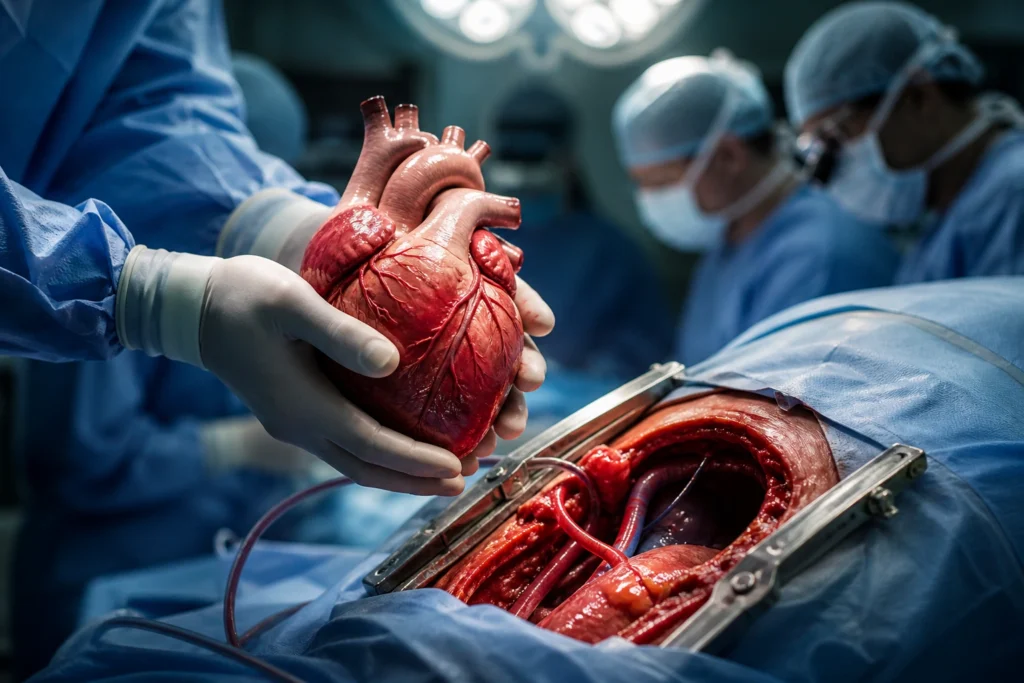
When a person is told that their heart is failing, life changes suddenly. Simple activities or even talking for a few minutes can become tiring. Many patients feel breathless and weak. Families feel confused and worried because medicines stop giving enough relief after a stage. In such serious situations, doctors may suggest a heart transplant.
Patients need to have careful planning, patience, and long-term follow-up for a heart transplant. Today, medical facilities have improved across the country. Heart transplant surgery in India is now performed in selected hospitals that have trained transplant teams and strong intensive care support. It is not a quick treatment. It becomes the only way to survive for many patients and live better.
Get Free Consultation Now
What Is Heart Transplant Surgery?
Heart transplant surgery helps to replace a damaged heart. In which a weak or damaged heart is replaced with a healthy heart from a donor. This surgery is done when the patient’s heart cannot pump enough blood to the body. And even after the best medicines and devices. The donor heart usually comes from a person who has been declared brain-dead. And also whose family has agreed to organ donation.
The main goal of this surgery is to restore proper blood flow. It helps the patient return to a more stable and active life.
Eligibility Criteria for Heart Transplant in India
Not every heart patient can undergo a transplant. Doctors follow strict medical rules before approving the surgery. They look at how advanced the heart failure is and how well the other organs are working. Evaluation of organs like the kidneys, lungs, and liver is conducted. Age, infection history, and other preexisting diseases of the patient are also considered. The ability of the patient to follow up on treatments and post-operative care is also assessed.
Heart Transplant Waiting List and Allocation System in India
After approval, the patient’s name is added to an official waiting list. Hearts are not given on a first-come basis. The availability of organs depends on medical emergencies, blood compatibility, and body size. In some cases, individuals may have to wait weeks or even months before being able to acquire the same donor heart.
This period is very emotional for the family members and also one of the most stressful periods during heart transplantation surgery.
How Does Donor Heart Matching Work in India?
Matching the donor heart properly is very important for a successful transplant. A better match lowers the risk of complications and improves recovery. Doctors mainly look at:
- Blood group compatibility between donor and patient.
- Body size and heart size match.
- Overall condition of the donor heart.
- How critical the patient’s condition is.
Pre-Transplant Evaluation and Medical Clearance
Before transplant, detailed testing is done to confirm that the patient is fit for surgery. This usually includes heart scans, blood tests, lung tests, and infection screening. Doctors also review the patient’s medical history. And also review current medicines.
Patients and families are clearly informed about the surgery, hospital stay, long-term medicines, and possible risks. Mental and emotional readiness is also checked before giving final clearance.
Role of Mechanical Heart Support Before Transplant in India
Some patients become very unstable while waiting for a donor heart. In such cases, special mechanical devices may be used to support heart function. These devices help the heart pump blood. And it keeps the patient stable until a suitable donor becomes available. This support is temporary and is used only when doctors feel it is medically necessary.
Medicines and Rejection Prevention After Heart Transplant
After the transplant, the immune system may try to attack the new heart. This is called rejection. To prevent this, patients must take special medicines for life. Doctors closely monitor patients and adjust medicines. These are based on blood tests and heart function. Patients are usually advised to:
- Take all medicines exactly on time every day.
- Never stop medicines without medical advice.
- Attend regular follow-up visits.
- Inform the doctor immediately if fever or unusual symptoms appear.
A strict medicine routine is a very important part of heart transplant surgery in India.
Lifestyle, Diet, and Activity After Heart Transplant in India
With proper guidance, many patients slowly return to daily activities and work. Life after transplant requires discipline and healthy habits. Most patients are guided to follow:
- Less salt and a balanced diet in order to protect the heart and kidneys.
- To make oneself physically active, do regular walking or light exercise.
- To ensure no harmful habits, avoid smoking and alcohol.
- To improve health, eat healthy food and avoid unhealthy food.
- To reduce stress on the heart, maintain proper sleep and stress control.
Long-Term Survival and Quality of Life After Heart Transplant
People who have a heart transplant can get good results that last a long time. Many heart transplant patients are able to live lives and take care of themselves on their own. Heart transplant patients can do lots of things.
Regular medical examinations must be carried out because of rejection and infections that can be identified during such tests. It is important to follow the doctor’s instructions and take medication so that the patient’s quality of life can improve.
Conclusion
Heart transplant surgery gives hope to patients. That helps patients with advanced heart failure. Heart transplant surgery in India is a reliable option due to better facilities and expert specialists. It is reserved for end-stage patients, demanding intensive care. Success relies on precise patient selection, perfect donor compatibility, and strict medication adherence. It brings health and happiness back to people who have to undergo a complicated process just to breathe normally.
Medically Reviewed
This page on Heart Transplant Surgery in India has been medically reviewed by Dr. Rashid Ali, MBBS, a Delhi Medical Council–registered practitioner (Registration No. DMC/R/36289), to ensure it reflects accurate, current, and evidence-based medical information.
At Medicsaz, every treatment page is checked by a licensed doctor before publication, not written by a marketing team alone. Dr. Rashid Ali review covers the accuracy of procedures, terminology, and claims described on this page, so patients researching Heart Transplant Surgery in India can rely on what they read here to make informed decisions.
Last medically reviewed: 09/09/2026
You can independently verify Dr. Rashid Ali’s registration on the Delhi Medical Council’s official website using Registration No. DMC/R/36289, or read more about his role as Medicsaz’s medical reviewer on his reviewer profile page.