
Gallbladder Cancer Treatment in India
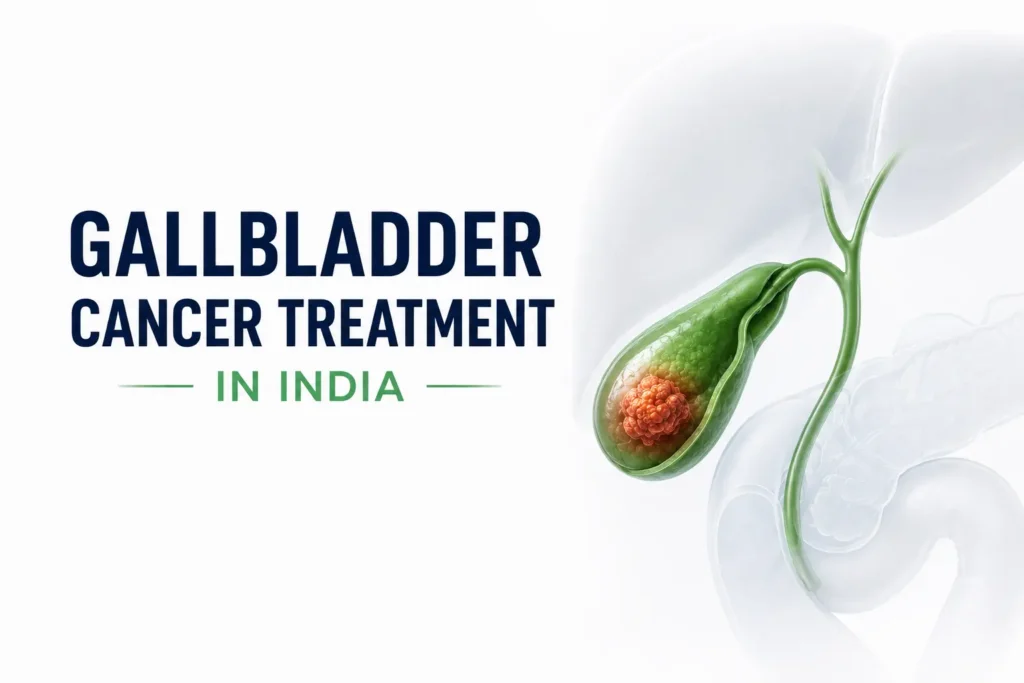
The health of the digestive system often ends up being overlooked amid our current lifestyle trends, where any form of slight stomach ache or nausea is simply brushed off as an uncomfortable experience from having eaten the wrong food. In most cases, however, these symptoms point to a very real danger to one’s well-being.
Gallbladder Cancer Treatment in India provides special surgical and oncology treatments for those suffering from such a dangerous form of cancer. Through special oncology treatment teams, patients are provided with all-round treatment solutions.
Get Free Consultation Now
What Is Gallbladder Cancer?
In Gallbladder Cancer, abnormal cells grow uncontrollably within the gallbladder. This disease normally occurs gradually without any clear signs being evident before it spreads to other parts such as the liver and bile ducts.
Because of this silent growth, it is necessary for those suffering from chronic inflammation and recurrent gallstones to have frequent checkups to detect the condition. This will increase their chances of undergoing surgery to cure the illness.
This type of cancer. Through the use of oncological experts, the disease will be treated, and patients’ quality of life improved.
Early Signs and Symptoms of Gallbladder Cancer
Specialists monitor these warning signs to catch the disease before it progresses:
- Abdominal Pain: A steady ache in the upper right side of the abdomen.
- Nausea: Persistent nausea and difficulty tolerating meals.
- Weight Loss: Unintentional weight loss and loss of appetite.
- Jaundice: Yellowing of the skin and eyes, indicating blockage of the bile duct.
Causes and Risk Factors of Gallbladder Cancer in India
The exact cause cannot always be pinpointed; however, chronic inflammation of the gallbladder (due to gallstones) is one of the major risk factors. Chronic inflammation and obesity are among other risk factors that increase the chances of getting gallbladder cancer.
Ageing, family history, gallbladder polyps, and porcelain gallbladder (hardened walls of the gallbladder) are other factors that might increase the likelihood of getting gallbladder cancer. Recognizing these risks via proper medical assessment is the first step towards proper diagnosis and treatment.
When to Seek Gallbladder Cancer Treatment in India
It is important not to neglect any ongoing digestive complaints, as this may delay the diagnosis and allow the cancer to become more advanced and harder to treat. In case of continuing symptoms like jaundice or sudden abdominal pain, it is necessary to go to the doctor right away. This way, the disease can be diagnosed earlier and will have no time to spread further.
Tests and Diagnosis for Gallbladder Cancer in India
Clinical experts use advanced imaging and testing to identify the exact stage of the cancer and plan appropriate treatment:
- Ultrasound: A simple method used to detect masses or stones in the gallbladder.
- Imaging Scans: CT or MRI scans provide detailed views of the tumor and whether it has spread to the liver, bile ducts, or other organs.
- Blood Screening: Checking liver function and tumor markers to assess disease extent.
- Biopsy: Taking a tissue sample to confirm the diagnosis, though often the diagnosis is made during or after surgical removal.
- Staging: Gallbladder cancer is staged from I to IV based on tumor size, spread to nearby structures, lymph node involvement, and distant metastasis. Early-stage disease (I-II) has a better prognosis, while advanced disease (III-IV) is more difficult to treat and often incurable.
Treatment Options for Gallbladder Cancer in India
Management will be determined by the stages of the illness and the general health status of the person. This can include the combination of different methods of management, including surgery, chemotherapy, and supportive therapy, to ensure that the best is done for the patient.
The multidisciplinary method ensures that all angles of the illness are covered. Management will ensure that the illness is cured if possible or managed if the illness is at an advanced stage. It is worth noting that the diagnosis of gallbladder cancer is made at an advanced stage, where the majority of the cancers are found to be unresectable as a result of metastasis to other organs such as the liver.
Surgery for Gallbladder Cancer in India
The most promising treatment option for curing the disease is surgery if it is detected early on and the cancer has not spread past the gallbladder. The procedure entails excision of the gallbladder (cholecystectomy) and sometimes a portion of the liver and lymph nodes to obtain clear surgical margins.
It is important to remove the entire cancer with clear surgical margins (R0 resection). Palliative surgery can be performed in advanced cases to relieve bile duct obstruction (stenting and bypass surgery) if cure is no longer an option. Complications of surgery include: hemorrhage, infection, bile leakage, liver failure, and general anesthesia complications.
Chemotherapy and Radiation Therapy
These therapies are administered to patients whose cancer has metastasized or to decrease the chances of recurrence after surgery:
- Chemotherapy: Administering chemicals that can destroy or inhibit the proliferation of cancer cells, usually administered as adjuvant chemotherapy after surgery. Gemcitabine and Cisplatin are common chemotherapeutic protocols.
- Radiation Therapy: Administration of beams of high energy to destroy cancer cells, used palliatively or in conjunction with chemotherapy in some selected cases.
- Targeted Therapy: Chemically inhibiting specific molecular changes in the cancer cells, used in some selected cases depending upon the characteristics of tumors and biomarker testing.
- Side effects of chemotherapy may include: nausea, tiredness, hair fall, low blood count, increased risk of infections, and neuropathy.
Recovery After Gallbladder Cancer Treatment
The time taken for recovery depends upon the mode of therapy. There could be some patients who would take more time to recover from the treatment through surgery or chemotherapy. Recovery from surgery requires a patient to remain at the hospital for a few days up to a week.
It is important to have follow-ups regularly through imaging and blood tests to check whether the disease has relapsed. Imaging (CT/MRI) is carried out every 3–6 months if there is no relapse.
Life After Gallbladder Cancer Treatment in India
Life after treatment involves dietary adjustments and regular monitoring. Patients are encouraged to follow a healthy routine that supports digestive health and overall well-being.
- Dietary Adjustments: Eating smaller, more frequent meals and limiting high-fat foods, as bile flow may be altered after gallbladder removal.
- Activity Levels: Gradual return to physical activity as tolerated after surgery.
- Mental Support: Addressing the emotional challenges of a cancer diagnosis and treatment through counseling, support groups, or mental health services.
Prognosis: Five-year survival rates vary significantly by stage:
- Early-stage (confined to gallbladder wall): 50–80%
- Regional spread (liver, lymph nodes): 10–30%
- Distant metastasis: less than 5%
Many patients with gallbladder cancer are diagnosed at advanced stages, which limits curative options. Palliative care plays an important role in managing symptoms and maintaining quality of life.
Gallbladder Cancer Treatment Cost in India
Gallbladder Cancer Treatment in India typically ranges from around $7,000 to $11,000. The cost can vary depending on the stage of cancer, type of treatment required, hospital, specialist team, and whether surgery, chemotherapy, radiation therapy, or other treatments are included.
The exact cost depends on factors such as diagnostic tests, the type and complexity of surgery, hospital stay, medications, chemotherapy or radiation sessions, and the patient’s individual treatment plan. These figures are general estimates, not fixed quotes. Medicsaz can help arrange a personalized cost estimate after a partner specialist reviews the patient’s medical records and treatment requirements.
How Medicsaz Supports Your Gallbladder Cancer Treatment Journey in India
Medicsaz connects international patients with vetted partner hospitals and cancer specialists experienced in gallbladder and hepatobiliary cancer care, and coordinates everything around the process: cost estimates, medical records review, hospital and doctor matching, travel and visa support, accommodation, and a point of contact throughout your stay in India.
If you’re ready to explore Gallbladder Cancer Treatment in India, reach out for a free consultation and cost estimate. Most inquiries get a response within 30 minutes.
Conclusion
When persistent digestive symptoms go unnoticed, there is an increased risk of developing advanced stages of gallbladder cancer. India’s oncology facilities have all-inclusive treatments involving surgical and chemical methods as well as support therapy according to a patient’s stage of cancer and health status.
It is the most promising way to cope with the condition and improve the quality of life. Early diagnosis guarantees the best results. Modern medicine concentrates on a combination of treatments, symptom control, and support of patients and their families.
Frequently Asked Questions
Is gallbladder cancer curable, and what are the chances of survival?
Gallbladder cancer is curable only if detected very early (stage I) and completely removed surgically. However, most cases are diagnosed at advanced stages due to vague early symptoms. Five-year survival rates drop significantly from 50–80% for early-stage disease to under 5% once it metastasizes to distant organs. Early detection is key but remains challenging.
Why is gallbladder cancer often found at a late stage?
It typically causes no early symptoms. By the time symptoms like abdominal pain, jaundice, or weight loss appear, the cancer has usually spread to the liver, bile ducts, or lymph nodes. Additionally, the gallbladder is a small, hidden organ rarely included in routine imaging. Many cases are discovered incidentally during scans or surgeries for other conditions, like gallstones.
Can gallbladder cancer come back after surgery, and how is recurrence monitored?
Yes, it can recur, especially if it was advanced or if microscopic disease remained. Recurrence is monitored via regular follow-up visits every 3–6 months initially, involving physical exams, blood tests (liver function and CA 19-9), and CT or MRI scans. New symptoms like jaundice, pain, or weight loss must be reported immediately.
What happens if the cancer cannot be removed surgically?
If the cancer is unresectable due to metastasis or extensive involvement of major vessels and the liver, focus shifts to palliative care. This includes chemotherapy to slow growth, stenting or bypass surgery to relieve bile duct blockages, pain management, nutritional support, and counseling. The goal is managing symptoms and maintaining quality of life.
Do I need to follow a special diet after gallbladder removal for cancer?
Yes, dietary adjustments are usually recommended. Without a gallbladder, continuous bile flow into the intestine makes digesting large or fatty meals difficult. Patients benefit from smaller, more frequent meals and limiting high-fat, fried, or greasy foods. Most people gradually return to a normal diet as their system adapts, guided by their doctor or dietitian.
What are the main risk factors I should know about to prevent gallbladder cancer?
The strongest risk factors are chronic gallstones and long-standing gallbladder inflammation. Others include polyps larger than 1 cm, porcelain gallbladder, obesity, older age, female gender, smoking, and certain infections. Preventive gallbladder removal may be recommended for individuals with large polyps or recurrent gallstone symptoms.
Medically Reviewed
This page on Gallbladder Cancer Treatment in India has been medically reviewed by Dr. Rashid Ali, MBBS, a Delhi Medical Council–registered practitioner (Registration No. DMC/R/36289), to ensure it reflects accurate, current, and evidence-based medical information.
At Medicsaz, every treatment page is checked by a licensed doctor before publication, not written by a marketing team alone. Dr. Rashid Ali review covers the accuracy of procedures, terminology, and claims described on this page, so patients researching Gallbladder Cancer Treatment in India can rely on what they read here to make informed decisions.
Last medically reviewed: 09/09/2026
You can independently verify Dr. Rashid Ali’s registration on the Delhi Medical Council’s official website using Registration No. DMC/R/36289, or read more about his role as Medicsaz’s medical reviewer on his reviewer profile page.