
Focal Seizure Treatment in India
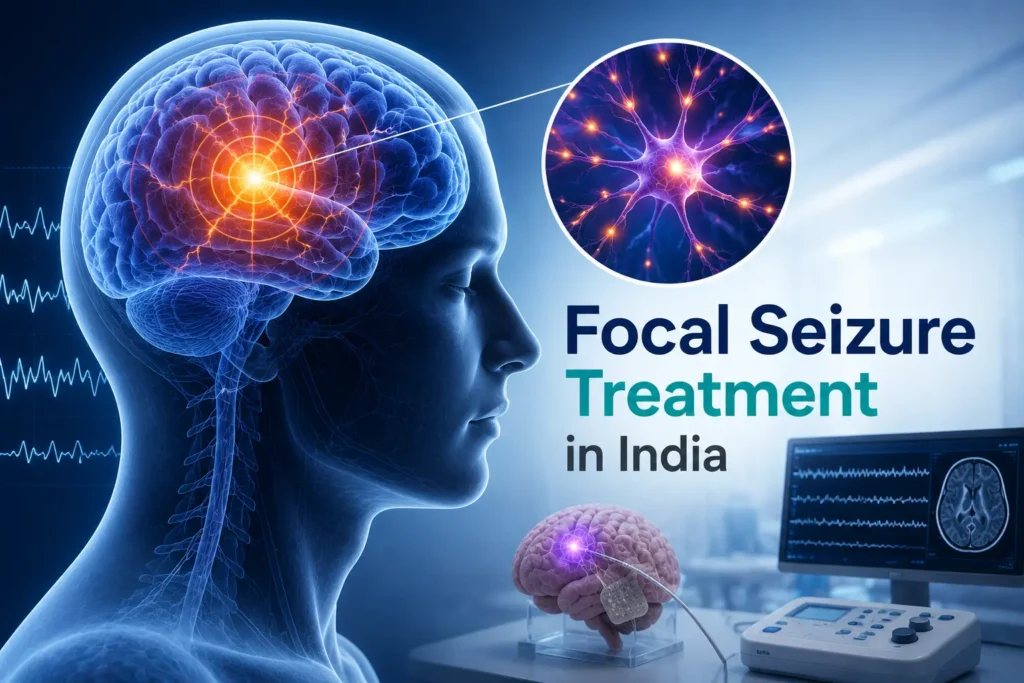
Not all seizures are characterized by violent shaking or sudden falls. Sometimes, such seizures develop in a particular area of the brain and manifest themselves as moments of confusion or strange emotional swings. Being difficult to diagnose because of the low severity of symptoms, they can easily escape attention at the initial stage.
With time, frequent attacks might interfere with routine activities and put your life at risk. This is why dealing with the problem of abnormal brain activity has become a matter of priority. Nowadays, treatment of Focal Seizure treatment in India involves sophisticated diagnostic mapping and innovative medicines.
Get Free Consultation Now
What Are Focal Seizures?
A focal seizure, for example, is a form of electrical misfire that occurs at one particular site in the brain. This could lead to movement difficulties, emotional disturbance, or impaired consciousness depending on the location. It may cause some patients to lose consciousness, while other patients remain awake throughout the event.
Early Signs and Symptoms of Focal Seizures
The symptoms can be highly variable and typically do not persist for very long. Most patients experience an aura prior to the actual seizure onset.
- Physical Behaviors: Staring into space or repetitive behaviors such as lip smacking and/or hand rubbing.
- Sensory Symptoms: An odd smell, tingling feeling, and feelings of fear/anxiety may occur suddenly.
- Awareness Symptoms: A brief period of disconnection from one’s environment.
Causes of Focal Seizures
Focal seizures usually happen because of a physical issue affecting brain activity. Common causes include old head injuries, infections, or a stroke that affected blood supply to part of the brain. Some people have brain tumors or were born with structural differences in brain development. In many cases, doctors never find the exact underlying cause.
Types of Focal Seizures Explained
There are two types of focal seizures classified depending on whether there is any impact on the level of awareness during the seizure. “Aware Seizures” means that the patient remains conscious, but he or she might have unusual experiences that cannot be controlled. “Impaired Awareness Seizures” happen when the patient gets confused and responds poorly to the environment.
How Focal Seizures Are Diagnosed
Neurologists use a few different tools to find the source of abnormal activity in the brain. They use an EEG to record electrical activity and an MRI to look for structural issues. A neurological exam is also done to assess how the nervous system is functioning. These tests help specialists plan Focal Seizure Treatment in India with precision.
Options for Focal Seizure Treatment in India
The main goal of treatment is to reduce or stop seizure activity.
- First Line: Using anti-seizure medications to stabilize brain activity.
- Surgical Options: Surgery is an option for cases that don’t respond adequately to medication.
- Lifestyle Adjustments: Changing daily habits to avoid known seizure triggers.
Medicines Used for Focal Seizure Control
Medications are usually the first course of action used to treat seizures. Various medications are chosen according to the type of seizure and the response of the body to certain drugs. Dose skipping is a very common occurrence that may lead to a seizure. This is because skipping the dosage can lead to seizures becoming worse.
When Is Surgery Needed for Focal Seizures?
Surgery is one possibility in cases where the seizures cannot be managed solely by medication. In cases where the exact location of the seizures is known, surgeries or other medical procedures may be a viable solution. This will involve imaging and monitoring in order to pinpoint the exact location of the seizures. Not everyone is eligible for surgery, however.
Lifestyle Changes to Manage Seizures
Daily habits play an important role in supporting seizure control alongside medical treatment. Getting enough sleep and avoiding triggers like alcohol or high stress can help.
- Routine Care: Taking medications at the same time every day.
- Safety Precautions: Taking extra care during activities like driving if seizures aren’t yet fully controlled.
- Regular Follow-Up: Attending appointments to monitor how well treatment is working.
Long-Term Monitoring and Follow-Up Care
Long-term care is significant because there is a likelihood that seizures will alter over time. Physicians keep track of how patients respond to the medications and make adjustments where necessary. It may be possible for some patients to reduce the amount of medication after a long period of having controlled seizures.
Focal Seizure Treatment in India Cost
Focal Seizure Treatment in India typically costs around $2,500 to $12,000. The cost varies depending on the patient’s condition, presurgical evaluation, seizure focus, treatment approach, surgeon, hospital, anesthesia, hospitalization, and postoperative care.
The exact cost depends on the treatment plan, which may include EEG and brain imaging, focal resection or lesionectomy, temporal-lobe surgery, laser treatment, or neuromodulation when appropriate. More complex procedures and extensive presurgical evaluation can increase the overall cost. These figures are general estimates, not fixed quotes, and routine anti-seizure medication costs are separate.
How Medicsaz Supports Your Focal Seizure Treatment in India Journey
Medicsaz connects international patients with vetted partner hospitals and experienced neurologists, epileptologists, and neurosurgeons for Focal Seizure Treatment in India. The team assists with medical record review, specialist and hospital matching, treatment and cost estimates, travel and visa support, accommodation, and coordination throughout the patient’s treatment journey.
For patients exploring Focal Seizure Treatment in India, Medicsaz can help identify an appropriate specialist and treatment approach based on the patient’s medical records, while providing guidance on expected costs and the overall treatment process.
Conclusion
Focal seizures can occur quietly and be easily overlooked without knowing the signs. Getting an accurate diagnosis is the most important step toward effective management. Focal Seizure Treatment in India uses advanced diagnostic methods and treatment options tailored to each patient. For most people, sticking closely to a treatment plan leads to significantly better seizure control, and many achieve good long-term management. That said, around 3 in 10 people with focal epilepsy have seizures that don’t respond fully to medication alone. This isn’t a reflection of doing anything wrong, and it’s exactly why options like surgery exist for those who need a more targeted approach.
Frequently Asked Questions
Does taking medication correctly guarantee my seizures will stop completely?
Not always — most people achieve good seizure control with the right medication, but about 30% of people with focal epilepsy have seizures that continue despite proper treatment, which isn’t a reflection of anything they’ve done wrong.
What's the difference between aware and impaired awareness focal seizures?
In aware seizures, the person stays conscious but may experience unusual sensations, while in impaired awareness seizures, the person becomes confused or unresponsive to their surroundings during the episode.
When might surgery be considered for focal seizures?
Surgery is typically considered when seizures don’t respond adequately to at least two appropriately tried medications, and doctors can precisely identify the area of the brain causing the seizures.
How successful is epilepsy surgery for focal seizures?
Success varies by the type and location of surgery, but many patients achieve significant seizure reduction or complete seizure freedom, particularly with temporal lobe surgery for well-suited candidates.
What tests are used to diagnose focal seizures?
Common tests include an EEG to record brain electrical activity, an MRI to check for structural causes, and a neurological exam to assess overall nervous system function.
What happens if I miss a dose of my anti-seizure medication?
Missing a dose raises the risk of a seizure returning, sometimes more intensely, which is why taking medication consistently at the same time each day is important.
Medically Reviewed
This page on Focal Seizure Treatment in India has been medically reviewed by Dr. Rashid Ali, MBBS, a Delhi Medical Council–registered practitioner (Registration No. DMC/R/36289), to ensure it reflects accurate, current, and evidence-based medical information.
At Medicsaz, every treatment page is checked by a licensed doctor before publication, not written by a marketing team alone. Dr. Rashid Ali review covers the accuracy of procedures, terminology, and claims described on this page, so patients researching Focal Seizure Treatment in India can rely on what they read here to make informed decisions.
Last medically reviewed: 09/09/2026
You can independently verify Dr. Rashid Ali’s registration on the Delhi Medical Council’s official website using Registration No. DMC/R/36289, or read more about his role as Medicsaz’s medical reviewer on his reviewer profile page.