
Face Transplant Surgery in India
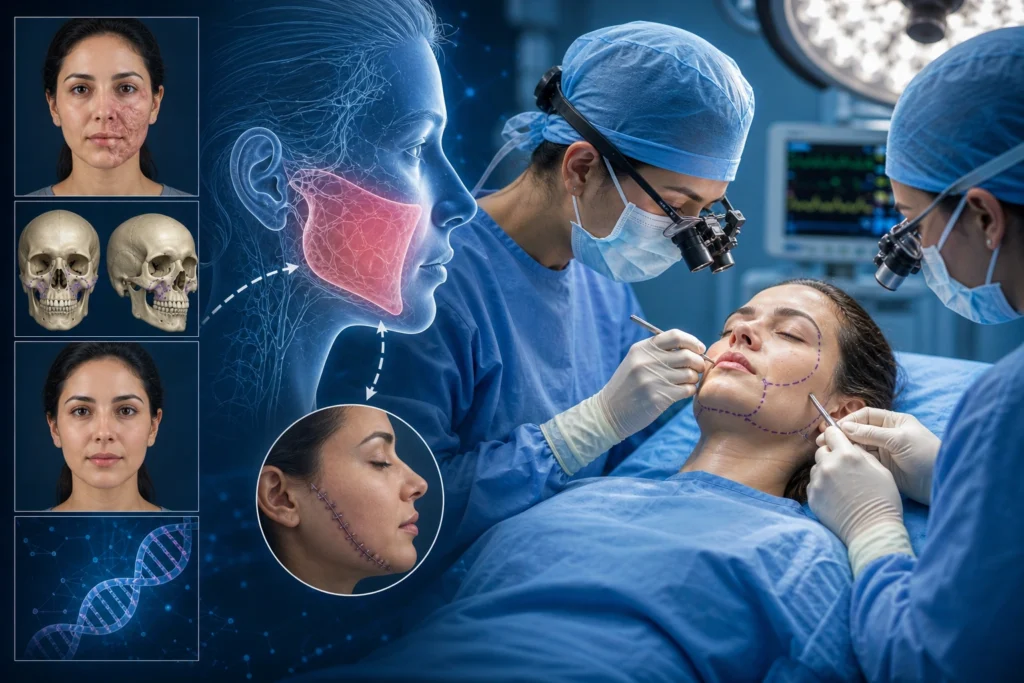
Face injuries can change a person’s life in many ways. It is not only about how the face looks. It can affect speaking, eating and breathing. And even simple daily activities. Families feel helpless when regular surgeries cannot fix the problem. It breaks patients emotionally after severe facial damage.
Face transplant surgery in India was very complex earlier. It is slowly becoming possible through specialised centres. They contain highly trained teams that have experience. In the past, people with very severe facial injuries had very limited options. But now medical science has progressed a lot. It offers hope to patients who cannot be treated with normal reconstructive surgeries. It is a complex and long treatment journey.
Get Free Consultation Now
What Is Face Transplant Surgery?
Face transplant surgery helps replace damaged parts of the face. They replace it with healthy facial tissue from a donor. This may include skin, muscles, nerves, blood vessels and sometimes parts of the jaw or nose. The goal is not only to improve appearance. The main aim is to restore function such as breathing, eating, speaking and facial movement.
It requires long-term care. It is a life-changing medical procedure and very different from normal plastic or cosmetic surgery.
Who Needs Face Transplant Surgery?
Face transplant surgery is not needed for common facial problems. It is considered only in very severe and complex cases. Doctors carefully evaluate whether a patient truly needs this procedure. It may be needed for patients who have:
- Very severe facial injuries that cannot be repaired with normal surgery.
- Major loss of facial tissue after accidents or burns.
- Serious facial deformity affecting basic functions.
- Failure of multiple reconstructive surgeries.
Conditions Treated with Face Transplant Surgery in India
Face transplant surgery is mainly used for patients with extreme facial damage. Some conditions where it may be considered include:
- Severe burn injuries of the face
- Major facial trauma after accidents
- Gunshot or blast injuries
- Severe infections that destroy facial tissue
- Certain rare conditions that cause major facial loss
Not every patient with these conditions needs a transplant. Each case is reviewed in detail.
When Is Face Transplant Surgery Recommended in India?
Face transplant surgery is recommended only when all other medical and surgical options have failed. Doctors consider this surgery when normal reconstructive methods fail. And cannot restore facial structure or function. It is also considered when the patient’s quality of life is very poor because of facial damage.
This is why planning for face transplant surgery involves a large medical team and careful discussion with the patient and family.
Evaluation and Tests Before Face Transplant Surgery
Doctors do many tests before planning a face transplant. These tests help confirm if the patient is medically and mentally fit for such a major surgery. Doctors usually evaluate:
- Overall physical health and organ function
- Mental and emotional readiness of the patient
- Ability to follow long-term medical treatment
- Risk of infections and other medical problems
Psychological counselling is also an important part of preparation.
Face Transplant Surgery Procedure Explained
The face transplant surgery itself is long and complex. It usually takes many hours. First, donor facial tissue is prepared very carefully. At the same time, the patient’s damaged facial tissue is removed. Surgeons then connect blood vessels, nerves, muscles and skin under a microscope.
The new facial tissue is fixed, and blood flow is restored. The main focus during surgery is to ensure proper circulation and nerve connection. This procedure is a highly specialised part of face transplant surgery. It can only be done in advanced hospitals.
Recovery and Rehabilitation After Face Transplant Surgery
Recovery continues for many months and does not end after surgery. Sometimes it can take years to recover. Patients usually stay in the hospital for a long period. After discharge, regular visits are required. Rehabilitation plays a major role in recovery.
Like speech and swallowing therapy, facial muscle exercises and regular medical check-ups. Slowly, patients learn to use facial muscles and regain daily functions.
Risks, Complications, and Rejection After Surgery
Face transplant surgery carries serious risks. It is important for patients to understand clearly. Some possible complications include:
- Infections due to low immunity
- Rejection of transplanted tissue
- Side effects from long-term medicines
- Delayed healing or nerve problems
Patients must take medicines for life to prevent rejection. Doctors monitor them closely for early signs of complications.
Choosing the Right Hospital for Face Transplant Surgery in India
Choosing the right hospital is most important. For this surgery, a well-prepared hospital team plays a major role in long-term success. Patients and families should look for:
- Experienced multi-speciality surgical teams
- Advanced operation and intensive care facilities
- Strong transplant and infection control systems
- Availability of rehabilitation and counselling services
Life After Face Transplant Surgery in India
After surgery, they may be able to eat, speak and breathe more comfortably. Facial movement also improves over time. Life after surgery slowly improves for many patients. However, life after transplant requires discipline. Patients must attend frequent hospital visits. And need to take medicines regularly. Emotional support remains very important during this phase.
For selected patients, face transplant surgery helps restore confidence and brings meaningful improvement in daily life.
Conclusion
Face transplant surgery one of the most complex in modern medicine. It offers hope to patients with severe and life-altering facial damage. India is slowly becoming a realistic option for selected patients. With the help of careful evaluation, advanced technology and skilled doctors.
Long-term medical care is essential for successful outcomes. Proper preparation and strong emotional support also majorly helps patient. For the right patient, this surgery can restore basic facial functions and improve quality of life in a meaningful way.
Medically Reviewed
This page on Face Transplant Surgery in India has been medically reviewed by Dr. Rashid Ali, MBBS, a Delhi Medical Council–registered practitioner (Registration No. DMC/R/36289), to ensure it reflects accurate, current, and evidence-based medical information.
At Medicsaz, every treatment page is checked by a licensed doctor before publication, not written by a marketing team alone. Dr. Rashid Ali review covers the accuracy of procedures, terminology, and claims described on this page, so patients researching Face Transplant Surgery in India can rely on what they read here to make informed decisions.
Last medically reviewed: 09/09/2026
You can independently verify Dr. Rashid Ali’s registration on the Delhi Medical Council’s official website using Registration No. DMC/R/36289, or read more about his role as Medicsaz’s medical reviewer on his reviewer profile page.