
Embryo Transfer in India
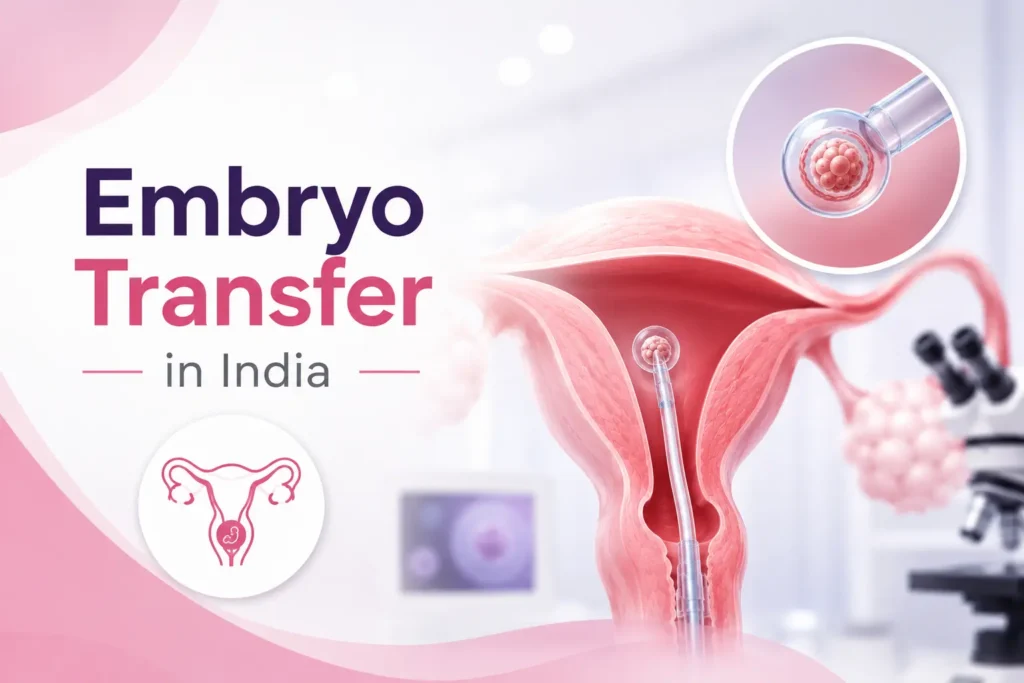
The embryo transfer procedure is considered one of the crucial stages in the IVF process. As fertilization occurs in the lab and healthy embryos grow, these embryos are then transferred to the uterus of the woman for the purpose of getting pregnant. The success of IVF is mainly dependent on the development of the embryos, the preparation of the uterus, and the embryo transfer process itself.
Improvements in reproductive technology have helped improve the techniques used in embryo transfer, making the procedure more reliable, accurate, and efficient. Embryo transfer in India today takes place in high-end fertility clinics equipped with advanced technology for successful embryo transfer procedures.
Get Free Consultation Now
What Is Embryo Transfer?
This basic fertility step means your grown cells are carefully moved into the main womb cavity. Lab teams keep the fertilized eggs safe inside special incubators for a few days until they reach the right size. Once the cells are ready, a quick clinic visit places them into the lining where they can start a normal pregnancy.
Who Can Benefit from Embryo Transfer?
Couples dealing with blocked fallopian tubes or unexplained infertility issues usually turn to this procedure to build their family. It works wonderfully for individuals who need to use donor eggs or donor sperm to get past severe reproductive health roadblocks. Your doctor will look closely at your personal medical history to check if your body is fully prepared for the cycle.
Types of Embryo Transfer in IVF
Fresh embryo transfer
The specialist moves the cells into your womb during the exact same medical cycle where your eggs were collected.
Frozen embryo transfer (FET)
Lab teams freeze the healthy cells so you can thaw and use them during a much later month.
Cleavage-stage embryo transfer
The doctor places the growing cell cluster back into your body just two or three days after fertilization.
Blastocyst transfer
The cells grow inside lab incubators for five or six days until they form an advanced structure before insertion. Choosing a proper embryo transfer in India gives you access to all these different styles, so your plan matches your body perfectly.
Role of Embryo Transfer in IVF Success
Getting the cells into the perfect spot inside your womb requires an exact blend of laboratory monitoring and clinical skill. Doctors look closely at a few major areas to make sure the cells can latch on tightly:
- Embryo quality: Strong and healthy cell clusters have a much higher chance of implanting properly.
- Uterine lining health: A thick, blood-rich wall inside the womb creates a safe home for the cells.
- Transfer technique: Smooth and careful placement ensures the delicate cells are not damaged during the process.
Tests and Evaluation Before Embryo Transfer
Your care team must run complete checks on your internal tissue walls before anyone sets up the treatment table. You will need a high-resolution ultrasound scan to measure your womb lining thickness, along with quick blood work to check your natural hormone levels. Completing these quick diagnostic tests early guarantees that planning your embryo transfer in India is backed by real facts instead of guesses.
Benefits of Embryo Transfer in Fertility Treatment
Modern clinical techniques make this vital step incredibly easy on your body while keeping your pregnancy odds high. The main advantages include:
- Minimally invasive procedure: The entire process is handled quickly without needing any heavy operational cuts.
- No surgical incisions required: Doctors use natural pathways to place the cells so your body heals instantly.
Supports natural - implantation process: Moving the cells directly into the womb lets nature take over the bonding steps
Risks and Limitations of Embryo Transfer
Let us look at the hard facts—even with the best lab tech, moving cells into a womb never brings a flat guarantee of a baby. Sometimes the cells fail to bond with the wall, or multiple embryos split to create a twin pregnancy that needs extra medical care. Your specialist will go over these natural baseline limits early on to make sure your treatment choices are completely safe.
What to Expect After Embryo Transfer
Once the quick insertion is done, you can empty your bladder and head home to relax for the rest of the afternoon. You will need to take your daily progesterone support pills exactly on time and stay away from heavy lifting tasks for a couple of weeks. Most women return to their regular jobs the very next day without experiencing any physical trouble or pain.
Factors That Influence Implantation Success
Age and overall uterine tissue health in you individually are extremely important factors in how well the cells adhere to the uterine wall. Intense scarring, lack of hormones, or smoking too much could prevent the cells from adhering to each other. The medical team would monitor your lifestyle factors very carefully while you are preparing for the embryo transfer in India process.
Conclusion
Embryo transfer in India forms an important part of IVF treatment, providing hope for couples to have successful pregnancies. Due to modern methods of infertility treatment, skilled medical professionals, and tailor-made treatment programs, embryo transfer can be regarded as an efficient and simple process for treating infertility problems.
Medically Reviewed
This page on Embryo Transfer in India has been medically reviewed by Dr. Rashid Ali, MBBS, a Delhi Medical Council–registered practitioner (Registration No. DMC/R/36289), to ensure it reflects accurate, current, and evidence-based medical information.
At Medicsaz, every treatment page is checked by a licensed doctor before publication, not written by a marketing team alone. Dr. Rashid Ali review covers the accuracy of procedures, terminology, and claims described on this page, so patients researching Embryo Transfer in India can rely on what they read here to make informed decisions.
Last medically reviewed: 09/09/2026
You can independently verify Dr. Rashid Ali’s registration on the Delhi Medical Council’s official website using Registration No. DMC/R/36289, or read more about his role as Medicsaz’s medical reviewer on his reviewer profile page.