
Egg Freezing Treatment in India
We all know that incredibly annoying, invisible ticking sound, which is the biological clock. For decades, women have felt this massive, unspoken pressure to figure out their careers, find the perfect partner, and start a family, all before hitting a certain age. It’s exhausting just thinking about it, but what if you could just hit pause?
Today, Egg Freezing Treatment in India has completely shifted the narrative. It’s a highly accessible, empowering medical choice. It gives women the ultimate luxury when it comes to family planning, which is time.
Get Free Consultation Now
What Is Egg Freezing Treatment?
The clinical term doctors use is mature oocyte cryopreservation. But honestly, it’s exactly what it sounds like. It is a specialized fertility procedure where doctors safely extract a woman’s healthy eggs, freeze them at sub-zero temperatures, and store them securely in a lab. They stay preserved until you are ready to use them. Years, or even a decade later, those eggs get thawed out, fertilized with sperm in a clinic, and placed back into the uterus to start a pregnancy.
Who Needs Egg Freezing
There is a common misconception that this is only for women wanting to delay motherhood for career reasons. While that is definitely a common reason, the medical reality is much broader.
- Cancer patients: chemotherapy and radiation can significantly affect fertility. Freezing eggs before starting cancer treatment protects that option.
- Severe endometriosis: a condition that can damage the ovaries and reduce egg count over time.
- Family history of early menopause: when genetics may bring on reproductive aging earlier than average.
- Personal timing: not having met the right partner yet, or not being financially or mentally ready for a baby right now.
Best Time and Age for Egg Freezing
Biology is a significant factor when it comes to fertility, age matters more than almost anything else. Egg quality is generally at its best in your twenties and early thirties. After 35, both the quantity and genetic quality of eggs tend to decline more noticeably. Here’s the useful part: if you freeze eggs at 30, they retain the biological profile of 30 year old eggs even if used at 41. Many doctors recommend freezing before 35 for the best odds going forward.
Why Women Choose Egg Freezing Treatment
Often, it comes down to peace of mind. Taking pressure off dating is a common reason, nobody wants to feel rushed into a relationship because of a closing fertility window. Others do it while focused on career growth, travel, or education. For women facing a serious medical diagnosis, it’s a way to protect future options before undergoing treatment that could affect fertility. At its core, it’s about having more control over your own timeline.
Egg Freezing Process Step by Step
This isn’t a quick, single appointment. The full cycle takes about two to three weeks. First, daily fertility hormone injections are taken at home. This encourages the ovaries to develop multiple eggs at once, instead of the single egg released in a typical month. You’ll visit the clinic every few days for ultrasounds and blood tests to track how the eggs are developing.
Once the eggs are ready, retrieval happens under light anesthesia, so there’s no discomfort during the procedure. The doctor uses a thin needle guided by ultrasound to retrieve the eggs. Within minutes, they’re taken to the lab and frozen.
Tests Before Egg Freezing Treatment in India
Before any hormone prescription, the clinic needs a clear picture of your fertility baseline.
- Ovarian reserve testing (AMH blood test): estimates how many eggs remain.
- Pelvic ultrasound: checks ovarian health and counts visible resting follicles.
- Infectious disease screening: standard blood tests (HIV, Hepatitis, and others) to confirm the eggs are safe to store.
Factors That Affect Egg Freezing Outcomes
It’s worth being upfront here: egg freezing is a meaningful safety net, but it isn’t a guarantee of a future baby. The outcome depends on several individual factors, your age at the time of freezing, how many healthy eggs were retrieved, and later, how fertilization and embryo development go once the eggs are used. This is why doctors often recommend freezing a reasonable number of eggs, particularly for women under 35, rather than just one or two, to give yourself a realistic set of options later. A fertility specialist can walk you through what’s realistic for your specific situation rather than a general statistic.
Storage and Future Pregnancy Options
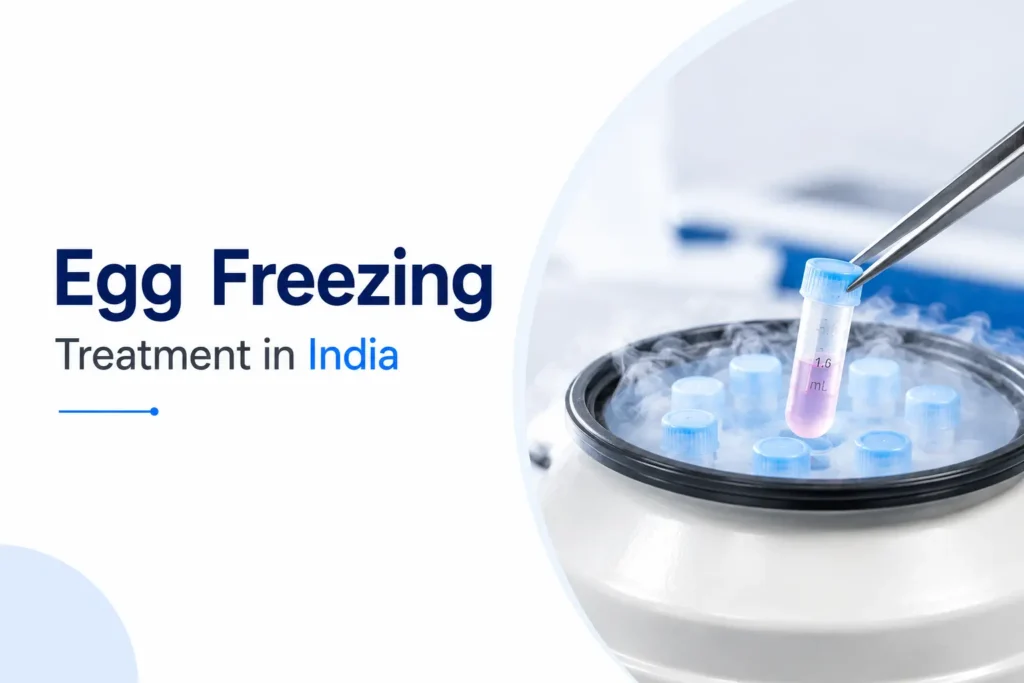
Clinics use a fast-freezing method called vitrification, which helps prevent damaging ice crystals from forming inside the egg. Once frozen, eggs are kept in monitored liquid nitrogen storage, where they can remain viable for years. When you’re ready, the clinic thaws them, fertilizes them (often via ICSI, injecting a single sperm directly into the egg), and transfers the resulting embryo.
Egg Freezing Treatment Cost in India
For international patients, a single egg freezing cycle in India typically costs between $1,200 and $3,600, generally covering consultation, ovarian stimulation medication, egg retrieval, and the first year of storage. Annual storage after that typically runs $120 to $300 per year. When you’re ready to use the eggs later, thawing and fertilization is a separate cost, typically $800 to $1,800, usually handled as part of an IVF cycle.
These are general figures, not fixed quotes. Medicsaz can put together a personalized cost estimate once a partner fertility specialist has reviewed your case.
How Medicsaz Supports Your Egg Freezing Treatment Journey in India
Medicsaz connects you with vetted partner fertility clinics and specialists experienced in egg freezing, and coordinates everything around the process, cost estimates, medical records review, clinic and doctor matching, travel and visa support, accommodation, and a point of contact throughout your stay in India.
If you’re ready to explore this, reach out for a free medical opinion and cost estimate. Most inquiries get a response within 30 minutes.
Risks and Side Effects of Egg Freezing
Hormone medication does come with some physical effects. The process is generally very safe, but it’s worth knowing what to expect.
- Bloating and mood swings: similar to PMS symptoms in the weeks leading up to retrieval.
Ovarian - Hyperstimulation Syndrome (OHSS): occasionally the body responds strongly to medication, causing ovarian swelling. Doctors monitor closely to catch this early.
- Procedure-related effects: mild cramping and light spotting are common right after retrieval.
Conclusion
Biology no longer has to dictate the timeline for motherhood. Taking charge of your fertility is a personal choice, whether driven by medical circumstances or simply wanting more time. Today, Egg Freezing Treatment in India offers modern lab technology and experienced fertility specialists, giving many women a genuine sense of control over their reproductive timeline.
Frequently Asked Questions
Is egg freezing only for career-focused women delaying motherhood?
No, while personal timing is a common reason, egg freezing is also used by cancer patients before chemotherapy, women with conditions like endometriosis that affect ovarian reserve, and those with a family history of early menopause.
What's the best age to freeze your eggs?
Doctors generally recommend freezing before 35, since both egg quantity and quality tend to decline more after this age, though the right timing depends on individual circumstances and ovarian reserve.
How many eggs do I need to freeze for a reasonable chance at a future baby?
This varies by age and individual fertility factors. A fertility specialist can give guidance specific to your situation rather than a general number.
How long can eggs stay frozen before they're used?
Eggs can remain viable in storage for many years, since the freezing process pauses their biological age.
What are the risks of egg freezing?
Common effects include temporary bloating and mood swings from hormone medication, mild cramping after retrieval, and a small risk of Ovarian Hyperstimulation Syndrome (OHSS), which doctors monitor closely.
Can I still get pregnant naturally after freezing my eggs?
Yes, freezing eggs doesn’t affect natural fertility. It simply provides a backup option later.
Does freezing eggs at a younger age make a difference later?
Yes, eggs retain the biological age they were frozen at, so eggs frozen at 30 have the same quality potential whether used at 35 or 45.
Medically Reviewed
This page on Egg Freezing Treatment in India has been medically reviewed by Dr. Rashid Ali, MBBS, a Delhi Medical Council–registered practitioner (Registration No. DMC/R/36289), to ensure it reflects accurate, current, and evidence-based medical information.
At Medicsaz, every treatment page is checked by a licensed doctor before publication, not written by a marketing team alone. Dr. Rashid Ali review covers the accuracy of procedures, terminology, and claims described on this page, so patients researching Egg Freezing Treatment in India can rely on what they read here to make informed decisions.
Last medically reviewed: 09/09/2026
You can independently verify Dr. Rashid Ali’s registration on the Delhi Medical Council’s official website using Registration No. DMC/R/36289, or read more about his role as Medicsaz’s medical reviewer on his reviewer profile page.