
Dynamic Hip Screw in India
Hip injuries located close to the pelvis result in an extremely devastating state of life, as being confined to bed following a hip fracture is very dangerous, because complete biological failure will eventually occur due to immobilization. Once a fracture occurs in the intertrochanteric region and disrupts weight-bearing ability, surgery is imperative.
When structural failure destroys the upper femur architecture, orthopedic teams turn to dynamic internal hardware to salvage the joint. Opting for a Dynamic Hip Screw in India connects patients with elite trauma teams utilizing real-time fluoroscopic imaging lines, heavy-duty biocompatible implants, and aggressive mobilization protocols to get them back on their feet before muscle wasting sets in.
Get Free Consultation Now
What Is a Dynamic Hip Screw?
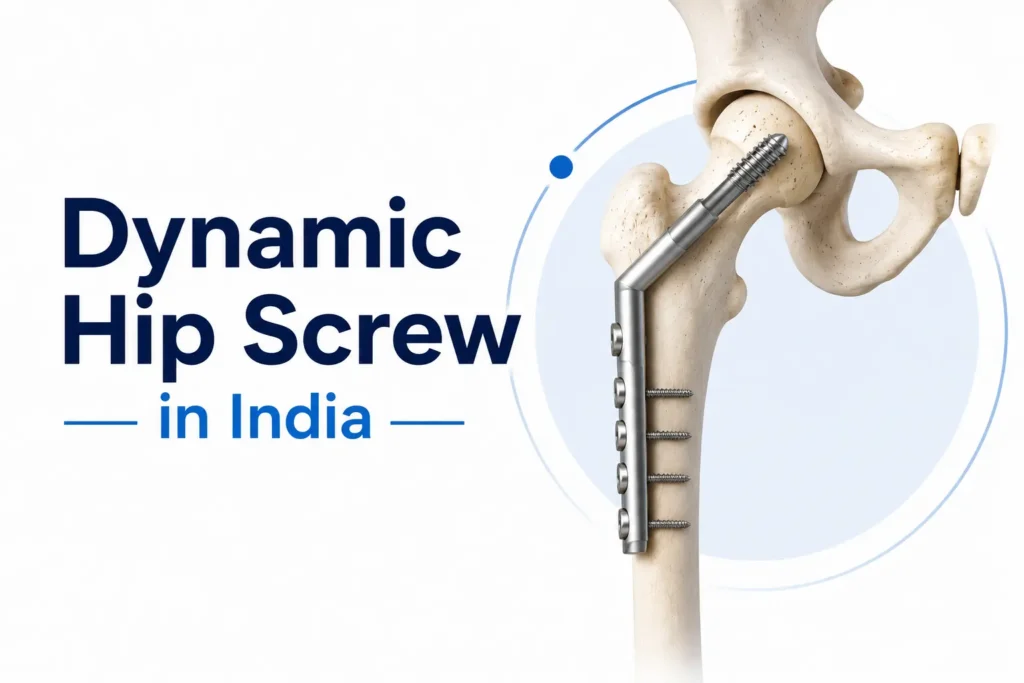
A Dynamic Hip Screw (DHS) is an orthopedic implant system used to treat fractures near the upper part of the thigh bone close to the hip joint. The system includes a large screw inserted into the hip bone and a metal plate attached along the thigh bone.
The genius behind this mechanical setup is its sliding design. While the traditional technique used to immobilize the bones would involve freezing them into a fully rigid position, the telescopic nature of the screw means that controlled compression can occur, thereby assisting the healing process. In addition, once the patient starts to place pressure on his foot by touching it to the floor, the pressure of his weight will cause bone compression.
When Is Dynamic Hip Screw Surgery Needed?
Doctors usually recommend DHS surgery when a hip fracture is unstable or unlikely to heal properly without surgical fixation. Leaving a displaced upper femur fracture unmanaged is an absolute recipe for a long-term physical crash. Surgery may be needed when the patient cannot walk due to severe pain, the fracture causes bone displacement, or conservative treatment is unlikely to provide stability.
Most importantly, the procedure is fast-tracked when early movement and rehabilitation are important for the patient’s long-term survival. Moving forward quickly with a Dynamic Hip Screw in India procedure drastically lowers the systemic threats associated with prolonged bed rest, such as severe respiratory fluid accumulation and vascular blockages.
Common Hip Fractures Treated with DHS
Dynamic Hip Screw fixation is commonly used for fractures involving the upper femur near the hip. The mechanical design is heavily optimized for intertrochanteric hip fractures, which are the jagged breaks that cut across the thick bony segments right below the femoral neck.
Orthopedic specialists also deploy this plate-and-screw network for stable fractures near the femoral neck and certain traumatic hip injuries caused by high-impact collisions. The final decision on whether DHS fixation is suitable based on fracture type and bone condition relies on checking if the underlying bone grid can handle the hardware sliding track without collapsing.
Symptoms and Diagnosis of Hip Fractures
Hip fractures usually cause sudden, severe symptoms after injury. You face an immediate, locking groin pain paired with a complete inability to stand or walk on the affected leg.
When you look down at the limb, a highly visible indicator is a shortened or externally rotated leg, where the foot oddly flops outward on the mattress. The deep tissue swelling and bruising near the hip turn agonizing with the slightest movement. Doctors diagnose fractures using physical examination and imaging tests, relying on immediate pelvic X-rays to map the structural displacement.
Dynamic Hip Screw Procedure Explained
The surgery is usually performed under spinal or general anesthesia inside specialized orthopedic trauma suites. During the procedure, the surgeon aligns the fractured bone carefully using a specialized traction table to pull the limb back into its true anatomical baseline.
Once the alignment looks pristine, they make a lateral incision down the upper thigh to pass a thick guide pin into the femoral head under continuous X-ray guidance. From there, a large screw is inserted into the femoral head, and a metal side plate is attached along the shaft of the thigh bone to stabilize the fracture. X-ray guidance helps ensure accurate implant placement before the surgical team closes up the deep muscle layers. Choosing a modern Dynamic Hip Screw in India ensures this process is backed by real-time digital fluoroscopy for near-perfect hardware tracking.
Benefits of Dynamic Hip Screw Fixation
Dynamic Hip Screw fixation offers several orthopedic advantages that make it a baseline choice for specific trauma layouts:
- Strong Fracture Stabilization: The heavy-duty plate construct stops the thigh bone from twisting out of alignment under load.
- Controlled Bone Compression during Healing: The sliding screw track keeps the raw bone ends constantly touching, speeding up natural bone bridge formations.
- Earlier Mobilization after Surgery: Patients can begin safely moving their joints within days instead of spending months trapped in traction slings.
Risks and Complications of DHS Surgery
DHS Fixation, like any other form of orthopedic surgery, also involves some physical and mechanical dangers. The list of dangers includes infection, excessive bleeding, or the formation of a blood clot inside the veins in the lower leg caused by immobilization.
Structurally, if the patient has severe osteoporosis, the screw may become dislodged due to the fact that it cuts through weak bone. The good news is that post-surgical tracking using X-rays helps medical practitioners to detect these rare cases of misalignment with a DHS Fixation surgery in India.
Physiotherapy and Rehabilitation After DHS
Physiotherapy plays a major role in restoring strength and movement after hip surgery. Your daily rehabilitation programs may include progressive walking exercises, targeted hip abductor muscle strengthening, and intense balance and mobility training.
Therapists also prioritize joint flexibility exercises to stop the hip capsule from freezing up. Committing to a highly structured rehabilitation after a Dynamic Hip Screw in India is what ultimately determines how effectively a patient regains their walking independence.
Long-Term Mobility and Follow-Up Care
A long-term recovery program will entail ensuring that your mobility is maintained, as well as safeguarding your remaining bones from further fractures.
You might be put through routine orthopedic scanning coupled with an assessment of your bone health to deal with your osteoporosis. You will also receive continuous doses of calcium and vitamin D to help you avoid falls at home.
Conclusion
Hip fractures may greatly compromise mobility, independence, and even the patient’s quality of life. The technique known as the Dynamic Hip Screw is an effective method for surgically fixing a hip fracture to assist in the proper healing of bones.
In India, a Dynamic Hip Screw provides top-notch orthopedic services through highly skilled doctors and innovative methods to treat bone fractures. Patients are able to regain their mobility thanks to this procedure, along with physiotherapy and follow-up sessions.
Medically Reviewed
This page on Dynamic Hip Screw in India has been medically reviewed by Dr. Rashid Ali, MBBS, a Delhi Medical Council–registered practitioner (Registration No. DMC/R/36289), to ensure it reflects accurate, current, and evidence-based medical information.
At Medicsaz, every treatment page is checked by a licensed doctor before publication, not written by a marketing team alone. Dr. Rashid Ali review covers the accuracy of procedures, terminology, and claims described on this page, so patients researching Dynamic Hip Screw in India can rely on what they read here to make informed decisions.
Last medically reviewed: 09/09/2026
You can independently verify Dr. Rashid Ali’s registration on the Delhi Medical Council’s official website using Registration No. DMC/R/36289, or read more about his role as Medicsaz’s medical reviewer on his reviewer profile page.