
Dialysis in India
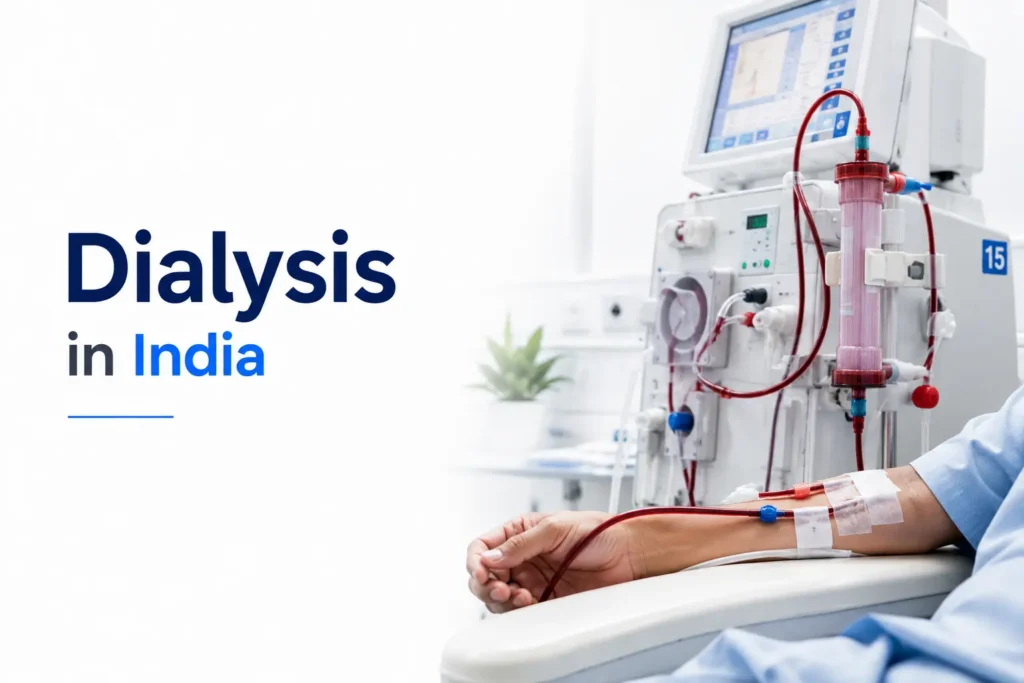
When the kidneys fail, the body can no longer manage on its own. These twin organs act as the body’s silent, relentless purifiers. When they suddenly shut down, dangerous toxins rapidly build up in the bloodstream. It is an immediate, serious health crisis. Waste products that should be leaving the body begin accumulating instead. But modern medicine offers a remarkable backup plan.
Dialysis serves as a vital lifeline. Today, Dialysis in India is more advanced and geographically accessible than ever before. It provides a highly effective way to keep patients alive and biologically stable when their natural organs can no longer keep up.
Get Free Consultation Now
What Is Dialysis?
Consider it a mechanical stand in for a biological process. Under normal circumstances, healthy kidneys constantly filter the blood. They pull out excess water, lingering salts, and metabolic waste, eventually turning it all into urine. When the kidneys fail, that waste has nowhere to go. It builds up in the system.
Dialysis is a specialized medical treatment designed to replicate that filtering process. It removes those toxins. It drains the excess fluids. It essentially performs the work that the damaged kidneys can no longer manage on their own.
When Is Dialysis Needed in India
Nephrologists do not order this treatment for a minor kidney infection. The protocol is reserved for patients facing end stage renal disease.
Medical teams generally initiate this treatment when patients exhibit the following:
- Severe loss of function: when kidney function drops permanently below ten to fifteen percent.
- Unmanageable fluid retention: the body stops processing liquid properly, causing fluid to dangerously build up around the lungs and heart.
- Uremic symptoms: nausea, vomiting, and severe fatigue as waste products build up in the blood.
- Chronic disease progression: often the outcome of years of uncontrolled diabetes or chronic hypertension.
Types of Dialysis Available in India
Patients facing this reality have two main routes to choose from. Both achieve the same goal of filtering the blood, but they work in different ways.
The most widely used approach is Hemodialysis. The second, slightly less common but effective alternative, is Peritoneal Dialysis. The final choice depends on the patient’s daily lifestyle, underlying vascular health, and overall physical condition.
Hemodialysis vs Peritoneal Dialysis
Hemodialysis is usually done in a hospital or dialysis centre. Blood is taken from the body, filtered through a machine, and then returned.
Peritoneal dialysis can often be done at home. A fluid is introduced into the abdominal cavity, which absorbs waste and is later drained out.
Hemodialysis is more commonly used, while peritoneal dialysis offers more flexibility for some patients. Doctors help decide the best option based on medical needs.
How Dialysis Is Performed
Both methods require precise, permanent surgical access.
For hemodialysis, surgeons usually create an “AV fistula” in the patient’s arm several weeks in advance. This procedure connects an artery directly to a vein, creating a sturdy access point capable of handling the needles used during treatment. During the actual session, two needles go in. One draws blood out to be filtered. The other returns the filtered blood to the body.
For peritoneal dialysis, a permanent, soft plastic catheter is surgically placed into the patient’s abdomen. Patients attach bags of sterile fluid to this tube. Gravity and the body’s own tissue do the filtering without a single needle involved.
Frequency and Duration of Dialysis Sessions
This is a significant, ongoing time commitment. Hemodialysis usually requires three sessions every week. Each session takes roughly four hours.
Peritoneal dialysis requires more frequent attention. Because the filtering process is gentler and slower, patients usually perform manual fluid exchanges up to four times a day. Alternatively, they can connect to an automated machine every night, letting it run for eight to ten hours while they sleep.
Risks and Side Effects of Dialysis
Keeping the body stable through dialysis takes a real toll. The side effects are frequent and worth understanding upfront.
- Post-dialysis exhaustion: fatigue and depletion for hours after treatment.
- Hypotension and cramps: blood pressure drops can cause muscle cramps or dizziness.
- Infection risk: access sites (fistula or catheter) require strict hygiene to prevent bloodstream infection.
- Chronic uremic itch: persistent skin itching from waste buildup, often unresponsive to typical lotions.
Dialysis Cost in India
Because dialysis is an ongoing treatment rather than a one-time procedure, cost works differently here than for surgical treatments. Per-session hemodialysis costs in India typically range from about $18 to $300, depending on the specific type used, conventional hemodialysis and high-flux hemodialysis are the most common and generally fall on the lower end, around $18 to $84 per session, while more specialized methods like hemodiafiltration or sustained low-efficiency dialysis, usually reserved for more complex or critical cases, cost more.
Most patients require two to three sessions per week. Unlike surgical procedures, dialysis pricing doesn’t appear to carry a significant international-patient premium, the added cost for traveling patients typically comes from accommodation, travel, and coordination rather than the medical procedure itself. Because total cost depends heavily on treatment duration and type, Medicsaz can work with you and a partner nephrologist to build a realistic cost picture based on your specific situation.
How Medicsaz Supports Your Dialysis Journey in India
Medicsaz connects you with vetted partner hospitals and nephrologists experienced in both hemodialysis and peritoneal dialysis, and coordinates everything around ongoing treatment, cost planning, medical records review, hospital and doctor matching, travel and visa support, accommodation, and a point of contact throughout your time in India.
If you’re exploring dialysis or kidney treatment options in India, reach out for a free medical opinion. Most inquiries get a response within 30 minutes.
Life on Dialysis in India
Adjusting to this routine is a real psychological adjustment. The treatment schedule shapes the week, and spontaneity becomes harder to come by.
But long term survival is entirely possible. Many individuals successfully adapt to this new routine every day. They lean on family support systems and dedicated clinical teams. Many patients continue working full time jobs. They travel. They manage to find a steady balance. The treatment becomes a regular part of life rather than something that defines it entirely.
Conclusion
Total kidney failure is serious, but no longer an immediate death sentence, it’s a manageable, long term path forward.
Dialysis in India now provides world class clinical support. It requires patience, dietary changes, and resilience. By following medical protocols and working with an experienced care team, patients can gain years of valuable, fulfilling time.
Frequently Asked Questions
At what point do kidneys need dialysis?
Dialysis is typically needed when kidney function drops below about 10 to 15 percent, or when symptoms like severe fluid retention, nausea, or extreme fatigue from waste buildup become unmanageable.
How often do dialysis sessions happen?
Hemodialysis is typically needed three times a week, with each session lasting about four hours. Peritoneal dialysis is done more frequently, either through several manual exchanges a day or overnight with an automated machine.
Can peritoneal dialysis be done without needles?
Yes, peritoneal dialysis uses a permanent catheter in the abdomen rather than needles, with fluid exchanges done manually during the day or through an automated machine overnight.
What are the common side effects of dialysis?
Common side effects include fatigue after treatment, temporary drops in blood pressure with cramping, a higher risk of infection at access sites, and persistent skin itching from waste buildup.
Is dialysis a permanent treatment, or temporary?
For most patients with end stage kidney disease, dialysis is an ongoing, long term treatment unless a kidney transplant becomes an option.
What causes kidney failure that eventually requires dialysis?
The most common causes are long term uncontrolled diabetes and chronic high blood pressure, both of which gradually damage kidney function over years.
How long can someone live on dialysis?
Many patients live for years on dialysis, especially with consistent treatment adherence, dietary management, and support from their medical team, though outcomes vary based on overall health.
What lifestyle changes are needed after starting dialysis?
Patients typically need to follow specific dietary restrictions, manage fluid intake carefully, and attend all scheduled sessions consistently to maintain stability between treatments.
Medically Reviewed
This page on Dialysis in India has been medically reviewed by Dr. Rashid Ali, MBBS, a Delhi Medical Council–registered practitioner (Registration No. DMC/R/36289), to ensure it reflects accurate, current, and evidence-based medical information.
At Medicsaz, every treatment page is checked by a licensed doctor before publication, not written by a marketing team alone. Dr. Rashid Ali review covers the accuracy of procedures, terminology, and claims described on this page, so patients researching Dialysis in India can rely on what they read here to make informed decisions.
Last medically reviewed: 09/09/2026
You can independently verify Dr. Rashid Ali’s registration on the Delhi Medical Council’s official website using Registration No. DMC/R/36289, or read more about his role as Medicsaz’s medical reviewer on his reviewer profile page.