
Coronary Angiography (CAG) in India
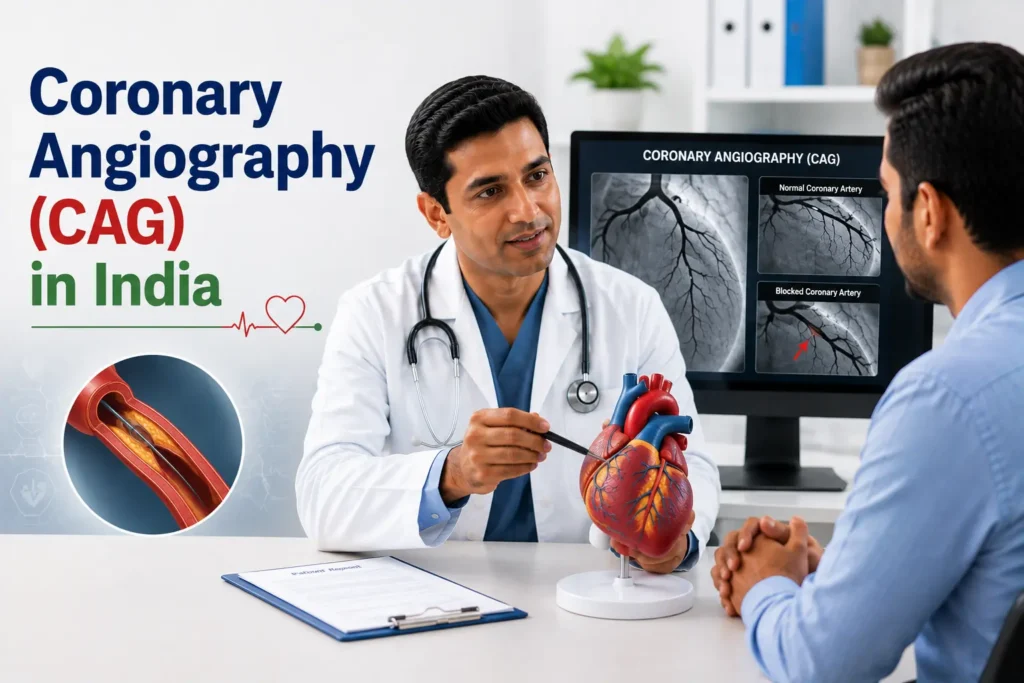
Persistent chest pressure or shortness of breath suggests reduced stamina because of struggling coronary arteries, which risks serious cardiovascular complications. Coronary Angiography (CAG) in India serves as the definitive diagnostic test, using high-definition imaging to provide a detailed look at the heart’s coronary arteries.
This procedure acts as a meticulous mapping session to identify physical blockages before they lead to a major health crisis. It addresses the uncertainty of chest pain by providing a direct visual confirmation of the vessel structure. Today, these sophisticated medical strategies protect a patient’s well-being through accurate diagnostic data and rapid clinical decision-making.
Get Free Consultation Now
What Is Coronary Angiography (CAG)?
CAG is a specialized diagnostic imaging test where contrast dye is injected into the coronary arteries to make them visible on X-ray. The specialist utilizes this contrast to reveal narrowing or blockages in the heart’s vessels, improving how they detect obstructions. Since it involves the heart’s primary blood supply, the procedure is a careful balance of medical safety and diagnostic precision.
The goal is to identify blockages while creating an accurate treatment plan for the patient. Every session is tailored based on the patient’s clinical presentation to ensure a stable path to recovery. This precise diagnosis determines the final treatment and natural energy levels of the patient.
Important: CAG is a diagnostic test only—it identifies blockages but does not treat them. Treatment decisions (medication, angioplasty, or surgery) are made after reviewing the results.
When Is Coronary Angiography Needed
Coronary artery disease in India is often driven by genetic traits and modern lifestyle factors that lead to progressive narrowing of the arteries. Progressive narrowing of the coronary arteries reduces oxygen delivery to the heart muscle during daily activities. Common clinical indications for this diagnostic procedure include:
- Persistent Chest Pain – Chronic angina that indicates the coronary arteries are significantly narrowed.
- Abnormal Test Results – When a standard ECG or stress test signals a potential blockage.
- Suspected Blockage – An emergency indicator where serious blockage is feared due to restricted flow.
Causes of Blocked Heart Arteries
Coronary artery disease happens because of progressive blockage in the arteries that restricts blood flow. Factors like high blood pressure, diabetes, and smoking trigger an inflammatory response that causes the vessels to accumulate cholesterol and plaque. Once the artery is narrowed, the heart struggles to receive adequate oxygen and nutrients needed for the whole system to function properly.
Tests Before Coronary Angiography in India
Clinical experts in India use advanced screening to ensure the patient’s general health before the procedure. This ensures the care is targeted and the recovery is predictable for every patient during the diagnostic session. These preliminary tests allow for a detailed look at the heart’s rhythm to plan the appropriate diagnostic approach.
- ECG and Echo – Checking the electrical activity and pumping function to assess heart muscle damage.
- Blood Screening – Confirming kidney function and blood counts before contrast dye injection, as the dye can stress the kidneys.
- Stress Test – Monitoring how the coronary arteries respond to increased physical exertion.
What to Expect on the Day of CAG
On the day of the procedure, the patient is prepared in a sterile cardiac catheterization lab with basic clinical checks. The specialist ensures the entry point in the wrist (radial approach, now preferred) or groin is stabilized before the catheter begins its journey through the arteries. After the session, the patient is observed for a few hours to ensure the insertion site is secure and there are no complications.
Recovery After Coronary Angiography
Recovery is fast, as the procedure uses only a small puncture in the wrist or groin rather than a large incision. Most people are back to their daily routines within a day, though light rest is encouraged to let the puncture site heal. Patients usually stay in the hospital for only a short observation period while vital signs are monitored. Post-procedure care:
- Avoid heavy lifting for 24-48 hours
- Watch for bleeding, swelling, or discoloration at the puncture site
- Follow up with your cardiologist to discuss results and next steps
Risks and Complications of CAG
As with any clinical intervention, patients might experience temporary bruising or localized discomfort at the entry site. These minor issues usually resolve themselves without any extra treatment as the tissues heal. More serious but rare complications are managed by the specialized cardiac team in top-tier Indian hospitals.
- Bleeding or Hematoma – At the catheter insertion site.
- Allergic Reaction to Contrast Dye – Ranges from mild itching to severe anaphylaxis (rare).
- Contrast-Induced Kidney Injury – Higher risk in patients with pre-existing kidney disease or diabetes.
- Artery Dissection or Damage – Rare injury to the artery wall during catheter insertion.
- Stroke or Heart Attack – Very rare, but possible if plaque dislodges.
- Arrhythmias – Irregular heart rhythms during the procedure.
Your cardiologist will discuss your individual risk profile beforehand.
Results and Next Steps After CAG
The results are typically available immediately after the procedure, ending the uncertainty about heart health. Doctors explain the severity and location of blockages and recommend treatment, which may include medication, angioplasty (often done in the same session if appropriate), or bypass surgery. This clarity allows the patient to move from uncertainty to a structured clinical path for their long-term wellness.
Life After Coronary Angiography (CAG) in India
Once the diagnostic test is complete, patients have a clear understanding of their coronary artery health. People can move forward with confidence knowing whether medication alone is sufficient or if further intervention is needed. Adopting a heart-healthy diet and regular exercise supports long-term cardiovascular health.
Coronary Angiography (CAG) in India Cost
Coronary Angiography (CAG) in India typically costs around $150 to $1,500, depending on the hospital, cardiologist, type of angiography, and the patient’s medical requirements. Diagnostic coronary angiography is generally less expensive than procedures that may be required after blockages are identified, such as angioplasty or stent placement.
The exact cost depends on the cardiologist, hospital, pre-procedure investigations, catheterization laboratory charges, contrast dye, sedation or anesthesia, medications, and hospital stay. If significant blockages are identified and additional procedures such as angioplasty or stent placement are required, the overall treatment cost may increase substantially. These figures are general estimates, not fixed quotes. Medicsaz can provide a personalized estimate after a partner interventional cardiologist reviews the patient’s medical records and treatment requirements.
How Medicsaz Supports Your Coronary Angiography (CAG) in India Journey
Medicsaz connects international patients with vetted partner hospitals and experienced cardiologists and interventional cardiologists for Coronary Angiography (CAG) in India. The team assists with medical record review, hospital and specialist matching, treatment and cost estimates, travel and visa support, accommodation, and coordination throughout the patient’s treatment journey.
For patients exploring Coronary Angiography (CAG) in India, Medicsaz can help identify an appropriate cardiologist and diagnostic approach based on the patient’s medical records and cardiovascular condition, while providing guidance on expected costs and the overall treatment process.
Conclusion
Ignoring chest pain or abnormal test results can lead to serious heart damage or death. Coronary angiography (CAG) in India offers high-quality care to accurately diagnose coronary artery disease and guide treatment decisions. A structured CAG is the most reliable way to identify blockages and secure long-term heart health. Modern care makes sure the diagnostic path is smooth, and the future remains active.
Frequently Asked Questions
Is coronary angiography the same as angioplasty?
No. Coronary angiography (CAG) is a diagnostic test that uses X-ray and contrast dye to identify blockages in your heart arteries. It does not treat blockages. Angioplasty (PTCA) is a treatment procedure that opens blocked arteries using a balloon and stent. Sometimes both are done in the same session if severe blockages are found during CAG.
How long do I need to rest after coronary angiography?
Most patients can resume light activities within 24 hours. If the catheter was inserted through your wrist, recovery is faster, and you can walk almost immediately. If it was through the groin, you’ll need to lie flat for 4-6 hours. Avoid heavy lifting, strenuous exercise, or driving for at least 48 hours after the procedure.
Will I be awake during the coronary angiography?
Yes, you will be awake but sedated. Local anesthesia numbs the insertion site (wrist or groin), and mild sedation keeps you calm and relaxed. You may feel some pressure or warmth when the dye is injected, but you won’t feel pain. Being awake allows you to follow instructions like holding your breath briefly during imaging.
What are the risks of the contrast dye used in CAG?
The contrast dye is generally safe, but it can occasionally cause side effects. Mild reactions include a warm flushing feeling or metallic taste. Rarely, patients may have allergic reactions (rash, itching, difficulty breathing) or contrast-induced kidney injury, especially if they already have kidney problems or diabetes. Your doctor will check your kidney function before the test and keep you hydrated to minimize risk.
Can I eat or drink before coronary angiography?
No. You’ll be asked to fast (no food or drink) for 6-8 hours before the procedure. This is a safety measure in case sedation causes nausea or if emergency intervention is needed. Your doctor will give you specific instructions, including whether to take your regular medications the morning of the test.
What do the results of coronary angiography show?
CAG shows the exact location, number, and severity of blockages in your coronary arteries. Results are usually available immediately. Based on what’s found, your cardiologist will recommend the next step: medication management, angioplasty with stent placement, or coronary artery bypass surgery. In some cases, if no significant blockages are found, lifestyle changes and medication may be all that’s needed.
Medically Reviewed
This page on Coronary Angiography (CAG) in India has been medically reviewed by Dr. Rashid Ali, MBBS, a Delhi Medical Council–registered practitioner (Registration No. DMC/R/36289), to ensure it reflects accurate, current, and evidence-based medical information.
At Medicsaz, every treatment page is checked by a licensed doctor before publication, not written by a marketing team alone. Dr. Rashid Ali review covers the accuracy of procedures, terminology, and claims described on this page, so patients researching Coronary Angiography (CAG) in India can rely on what they read here to make informed decisions.
Last medically reviewed: 09/09/2026
You can independently verify Dr. Rashid Ali’s registration on the Delhi Medical Council’s official website using Registration No. DMC/R/36289, or read more about his role as Medicsaz’s medical reviewer on his reviewer profile page.