
COPD Management in India
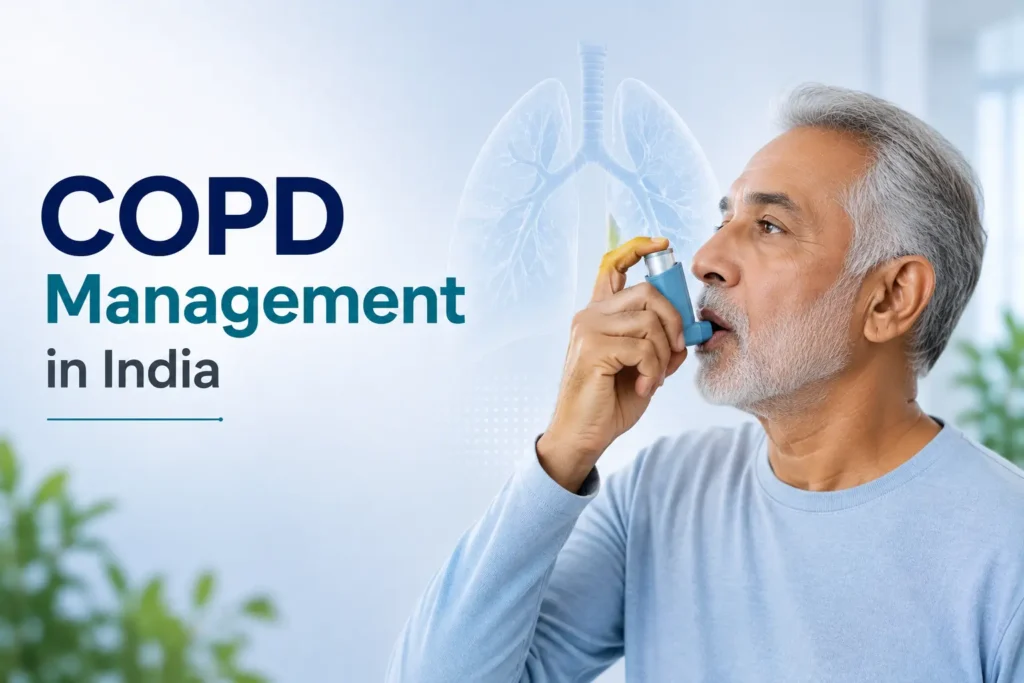
Breathing issues usually begin in a very subtle manner. Individuals might experience some coughing or difficulty breathing when climbing stairs, attributing this to either aging or weakness. Nevertheless, when such symptoms occur continuously and eventually impact the patient’s standard of living, there is a high probability that it is a result of Chronic Obstructive Pulmonary Disease (COPD).
COPD is a progressive illness that results in damage to the lungs that is not easily reversible. Nevertheless, this does not mean that nothing can be done. Advanced COPD management in India, including medical treatments and clinical care, can help reduce the progression of the disease and improve the patients’ quality of life.
Get Free Consultation Now
What Is COPD?
COPD is a condition that involves chronic inflammation and damage to the tissues that result in airway obstruction. A pulmonary physician is interested in managing such an obstruction to ensure that the flow of air in the lungs is improved during any physical activity.
Since COPD is a problem of chronic respiratory system health, its treatment requires very delicate balancing of symptom control and disease observation. It is aimed at reducing inflammation, preventing decline, and allowing the patient to breathe as evenly as possible. Each case is managed according to individual results of the lung examinations.
Early Signs and Symptoms of COPD
The onset is often gradual, with the lungs slowly losing functional capacity over time. Common clinical markers include:
- Chronic Mucus Production – Constant “clearing of the throat” due to airway irritation.
- Exertional Dyspnea – Shortness of breath during simple tasks like climbing stairs.
- Chest Tightness – A sensation of tightness in the chest, often worsening in polluted environments.
Common Causes of COPD in India
Respiratory issues in India are often a mix of lifestyle choices and harsh environmental exposure to harmful particles. Common contributing factors include:
- Smoking – The leading cause of COPD, responsible for progressive damage to lung tissue over time.
- Air Pollution – Long-term exposure to dust and pollutants that damages the airways.
- Indoor Pollution – Smoke from cooking fuels that irritates and damages the airways in poorly ventilated spaces.
Types of COPD Conditions
The condition usually presents as a combination of two related issues within the chest. Chronic Bronchitis involves ongoing inflammation of the airways, accompanied by persistent mucus production that restricts airflow. Emphysema involves damage to the air sacs, or alveoli, where the tissue responsible for oxygen exchange is permanently damaged. Most patients need a combined clinical approach to manage both the inflammation and the structural changes.
Tests and Diagnosis for COPD Management in India
A successful management plan relies on accurately assessing lung function and overall respiratory health. Standard diagnostic evaluations include:
- Spirometry Test – Measures airflow speed and volume to assess overall lung function and severity.
- Chest X-ray or CT Scan – Checking the lungs for structural changes and ruling out other conditions.
- Pulse Oximetry – Measuring oxygen saturation in the blood to assess how well the lungs are functioning.
Medicines and Inhalers for COPD
Management is an ongoing routine designed to preserve as much remaining lung function as possible. Bronchodilators relax the muscles around the airways to ease breathing, while steroid inhalers help reduce inflammation inside the airways. Correct inhaler technique is essential to ensure medication reaches deep into the lungs effectively.
Oxygen Therapy and Pulmonary Rehabilitation
In more advanced cases, if the patient’s lungs cannot get enough oxygen from the air alone, Oxygen Therapy is administered and has been proven to increase the chances of survival for those with dangerously low blood oxygen levels. Pulmonary rehabilitation is a technique that helps build stamina, decrease breathlessness, and improve mental and physical well-being through breathing exercises and exercise.
Lifestyle Changes to Manage COPD
With consistent management, many patients maintain a stronger sense of control over their daily stamina and independence. Important long-term habits include:
- Quit Smoking – The single most effective step to slow further lung damage.
- Healthy Diet – Supporting overall strength and immunity.
- Regular Exercise – Appropriate, supervised activity that can help maintain stamina and energy levels over time.
COPD Management in India Cost
COPD Management in India typically costs around $1,000 to $12,000 or more for international patients, depending on the severity of the condition and the treatment required. The cost may vary based on the patient’s COPD stage, treatment approach, diagnostic investigations, medications, oxygen therapy, hospitalization, pulmonary rehabilitation, and follow-up care.
The exact cost depends on the patient’s overall health, severity of symptoms, frequency of exacerbations, need for respiratory support, duration of hospital stay, and individual treatment plan. More complex cases requiring intensive care, prolonged hospitalization, or advanced respiratory support may increase the overall cost. These figures are general estimates, not fixed quotes. Medicsaz can provide a personalized estimate after a partner pulmonologist reviews the patient’s medical records and treatment requirements.
How Medicsaz Supports Your COPD Management in India Journey
Medicsaz connects international patients with vetted partner hospitals and experienced pulmonologists for COPD evaluation and management in India. The team assists with medical record review, hospital and specialist matching, treatment and cost estimates, travel and visa support, accommodation, and coordination throughout the patient’s treatment journey.
For patients exploring COPD Management in India, Medicsaz can help identify an appropriate pulmonologist and treatment plan based on the patient’s medical records, while providing guidance on expected costs and the overall treatment process.
Conclusion
Chronic obstructive pulmonary disease (COPD) is a serious progressive respiratory disorder, but despite the fact that the damage done to the lungs by the disease is irreversible, professional treatment at COPD Management in India can effectively manage it and keep it from getting worse for many years. Regular treatment and quitting smoking will be the key to success.
Frequently Asked Questions
Can COPD be cured?
No — COPD causes lung damage that is largely irreversible, and there is currently no cure. However, consistent treatment and smoking cessation can significantly slow disease progression and improve quality of life.
What's the difference between chronic bronchitis and emphysema?
Chronic bronchitis involves inflammation and mucus buildup in the airways, while emphysema involves damage to the air sacs where oxygen exchange happens — most COPD patients have a combination of both.
Does quitting smoking help if I already have COPD?
Yes — quitting smoking is the single most effective step to slow further lung damage, even after a COPD diagnosis, and it significantly improves long-term outcomes.
When is oxygen therapy needed for COPD?
Oxygen therapy is typically introduced in advanced COPD when blood oxygen levels drop significantly, and it has been shown to improve survival in these cases.
What tests are used to diagnose COPD?
Common tests include spirometry to measure lung function, a chest X-ray or CT scan to check for structural lung changes, and pulse oximetry to measure blood oxygen levels.
Can pulmonary rehabilitation really help with COPD?
Yes — pulmonary rehabilitation, combining breathing techniques and supervised exercise, has been shown to improve symptoms, exercise tolerance, and quality of life, especially in more advanced cases.
Medically Reviewed
This page on COPD Management in India has been medically reviewed by Dr. Rashid Ali, MBBS, a Delhi Medical Council–registered practitioner (Registration No. DMC/R/36289), to ensure it reflects accurate, current, and evidence-based medical information.
At Medicsaz, every treatment page is checked by a licensed doctor before publication, not written by a marketing team alone. Dr. Rashid Ali review covers the accuracy of procedures, terminology, and claims described on this page, so patients researching COPD Management in India can rely on what they read here to make informed decisions.
Last medically reviewed: 09/09/2026
You can independently verify Dr. Rashid Ali’s registration on the Delhi Medical Council’s official website using Registration No. DMC/R/36289, or read more about his role as Medicsaz’s medical reviewer on his reviewer profile page.