
Colon Cancer Treatment in India
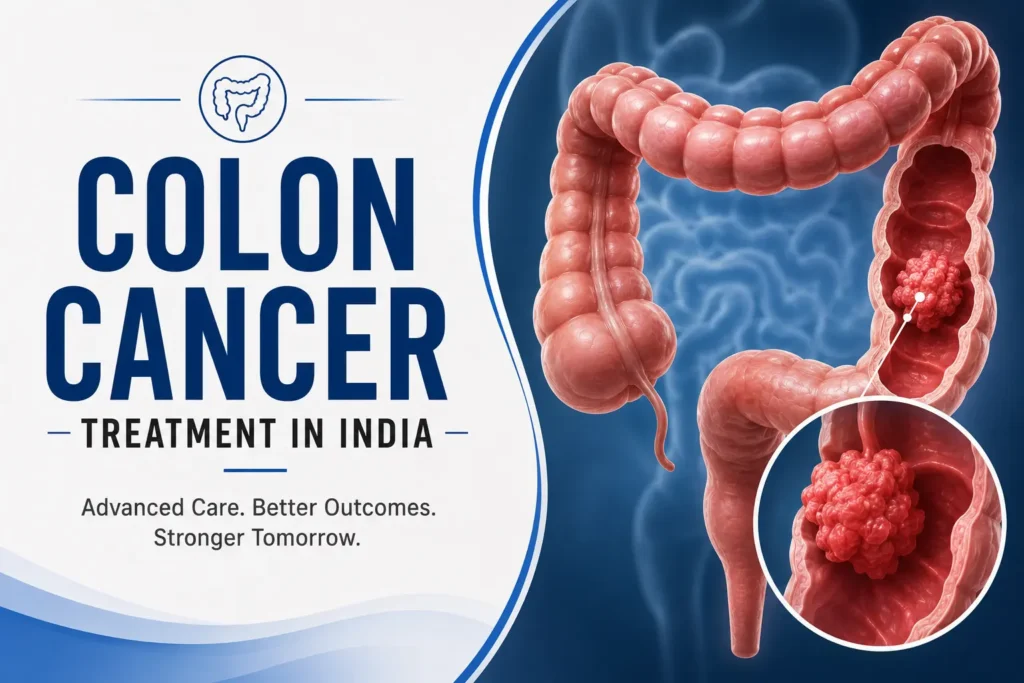
Awareness about digestive well-being is finally becoming common in India, yet too many individuals remain unconcerned about symptoms until they have become a serious problem. Colorectal cancer occurs in the large bowel and normally begins with the development of small tumors along the inner walls. The reason why such cancer goes unnoticed for a long time is the slow development of these tumors.
Colon cancer treatment in India is already well-developed and effective. Early diagnosis and prompt treatment are crucial in this case.
Get Free Consultation Now
What Exactly Is Colon Cancer?
Colon cancer arises from the colon. In most cases, the cancer develops from polyps, which are harmless tumors. However, after some time, some polyps may develop abnormal cells, leading to the formation of cancerous tumors. That is precisely why screening is important, since removal of the polyps prevents the onset of the disease.
Red Flags and Warning Signs
The signs of this condition can be subtle. Specialists watch for these specific red flags:
- Changes in Bowel Habits: Ongoing changes in your normal bowel patterns.
- Blood in Stool: A key warning sign that should always be checked by a doctor.
- Abdominal Discomfort: Chronic pressure or pain in the abdomen.
- Unexplained Weight Loss: A sign that shouldn’t be ignored.
Why It Happens: Risk Factors
Colon cancer risk is commonly associated with a combination of lifestyle factors and heredity. The factors that contribute to colon cancer risk include non-hereditary elements like poor diet, a lack of exercise, and environmental causes, along with age and family background.
- The dietary behavior of an individual is most relevant in this regard, including poor fiber intake combined with junk foods and red meat.
- A sedentary lifestyle can also be seen as an important factor.
- Non-modifiable factors like age and personal/family history of polyps in the large intestine or colon cancers are also relevant here.
These factors interact with each other in the presence of genetic tendencies and lifestyle choices in the environment. This realization gives way to the screening process and early diagnosis.
Diagnosing Colon Cancer
Doctors in India use visual inspection along with biopsy for diagnosing colon cancer:
- Colonoscopy: It is a high-definition camera that can help doctors to see inside the inner lining of the colon. There is a small risk involved in doing a colonoscopy (which includes the possibility of bowel perforation, around 1 in 1,000 patients).
- Imaging Studies: This includes an MRI or CT scan and can be very useful in locating the exact place of the tumor.
- Biopsy: It is done to collect a small sample of the tissue for further analysis.
Screening: The Best Prevention Tool
The most successful method of preventing colon cancer is routine screening because it helps identify and eliminate polyps before they turn into cancers.
- Most experts recommend starting colon cancer screening at age 45.
- Earlier screening may be necessary for individuals with a family history of colon cancer or polyps, which should be discussed with a physician.
- Patients are often diagnosed with colorectal cancer at a younger age than in the Western world, including many under age 40.
Staging Colon Cancer
Colon cancer is classified into stages based on how far it has spread, from cancer confined to the colon lining (early stage), to cancer that has spread to nearby lymph nodes or tissue, to cancer that has spread to distant organs (advanced stage). This staging helps doctors determine the most appropriate treatment approach.
Treatment Planning in India
Treatment depends on the stage of the cancer and the patient’s overall health. In India, specialists work as a team to create a personalized treatment plan, ensuring every step is handled with precision.
Surgery: The Primary Treatment
The surgical approach is the primary one used to excise the part of the colon affected by cancer. The surgical team excises the cancerous tumor with a margin of normal tissue to ensure that all of the affected areas have been removed. Normally, the unaffected parts of the colon can be rejoined without the need for an ostomy procedure (involving an external waste bag); although the latter is more common for procedures involving rectal cancer rather than colon cancer.
Chemotherapy and Targeted Therapy
In more complex cases, physicians make use of chemotherapy and targeted therapies to complement each other. Chemotherapy is used in cases where cancer cells have migrated outside of the initial location; it produces some side effects such as fatigue, nausea, and greater susceptibility to infections. Targeted therapy involves concentrating on particular molecular pathways in some situations.
A healthy lifestyle helps prevent colon cancer. The emphasis should be on a high fiber intake, physical activity, and quitting tobacco products.
Recovery and Follow-Up Scans
Recovery: The duration will depend upon the therapy administered, and it usually takes a couple of weeks for most patients to get their strength back, with some needing up to several months to fully recover. Most patients find it possible to resume their regular diet. Follow-ups are necessary to assess progress of recovery as well as detect any recurrence.
Life After Colon Cancer Treatment
Once treatment is complete, maintaining a healthy lifestyle remains a priority. Specialists provide guidance on long-term care, focusing on diet and regular follow-up. These habits are essential to supporting long-term health and reducing the risk of recurrence.
Colon Cancer Treatment in India Cost
Colon Cancer Treatment in India typically ranges from around $4,500 to $22,500. The cost varies depending on the stage and location of the cancer, type of surgery, hospital, surgeon, chemotherapy, targeted therapy or immunotherapy requirements, diagnostic tests, hospital stay, and the patient’s overall treatment plan.
The exact cost depends on biopsy and imaging, colectomy or other surgery, chemotherapy, targeted therapy or immunotherapy when required, hospitalisation, medications, and follow-up care. These figures are general estimates, not fixed quotes. Medicsaz can provide a personalized cost estimate after a partner oncology team reviews the patient’s medical records and treatment requirements.
How Medicsaz Supports Your Colon Cancer Treatment in India Journey
Medicsaz connects international patients with vetted partner hospitals and experienced colorectal surgeons and oncology specialists for Colon Cancer Treatment in India. The team assists with medical record review, hospital and doctor matching, treatment and cost estimates, travel and visa support, accommodation, and coordination throughout the patient’s treatment journey in India.
For patients exploring Colon Cancer Treatment in India, Medicsaz can help identify an appropriate colorectal cancer specialist and treatment approach based on the patient’s diagnosis and medical records, while providing guidance on expected costs and the overall treatment process.
Conclusion
Ignoring digestive symptoms like blood in the stool or persistent changes in bowel habits is a risk not worth taking. Colon cancer treatment in India offers advanced diagnostic and treatment tools, along with effective screening options that can catch problems early. Modern, coordinated care offers a clear and reliable path back to health.
Frequently Asked Questions
Will I need a colostomy bag after colon cancer surgery?
Not necessarily — most people with colon cancer do not need a colostomy, since the healthy ends of the colon can usually be reconnected during surgery. Colostomies are more commonly needed for rectal cancer surgery, and when one is needed for colon cancer, it’s often temporary while the bowel heals.
At what age should I start screening for colon cancer?
Most guidelines recommend starting around age 45 for average-risk individuals, though screening should start earlier if you have a family history of colon cancer or polyps. It’s best to discuss your personal risk factors and screening schedule with your doctor.
What are the early warning signs of colon cancer?
Common signs include blood in the stool, persistent changes in bowel habits, ongoing abdominal discomfort, and unexplained weight loss. Because early colon cancer can also cause no symptoms at all, regular screening is important even without warning signs.
Is colon cancer curable?
Outcomes depend heavily on the stage at diagnosis — colon cancer caught at an early stage has a high survival rate, while outcomes become more challenging the further it has spread. This is why early screening and prompt evaluation of symptoms make such a meaningful difference.
Can removing polyps during a colonoscopy actually prevent cancer?
Yes — since most colon cancers develop from polyps over time, finding and removing them during a colonoscopy, before they become cancerous, is one of the most effective ways to prevent colon cancer altogether. This is a key reason routine screening is recommended even without symptoms.
What can I eat after colon cancer surgery?
Most patients are able to gradually return to a normal diet, though some temporary food intolerances are common right after surgery and tend to improve as the colon heals. Your care team will guide you on reintroducing foods gradually and adjusting your diet based on how your body responds.
Medically Reviewed
This page on Colon Cancer Treatment in India has been medically reviewed by Dr. Rashid Ali, MBBS, a Delhi Medical Council–registered practitioner (Registration No. DMC/R/36289), to ensure it reflects accurate, current, and evidence-based medical information.
At Medicsaz, every treatment page is checked by a licensed doctor before publication, not written by a marketing team alone. Dr. Rashid Ali review covers the accuracy of procedures, terminology, and claims described on this page, so patients researching Colon Cancer Treatment in India can rely on what they read here to make informed decisions.
Last medically reviewed: 09/09/2026
You can independently verify Dr. Rashid Ali’s registration on the Delhi Medical Council’s official website using Registration No. DMC/R/36289, or read more about his role as Medicsaz’s medical reviewer on his reviewer profile page.