
Cardioversion Treatment in India
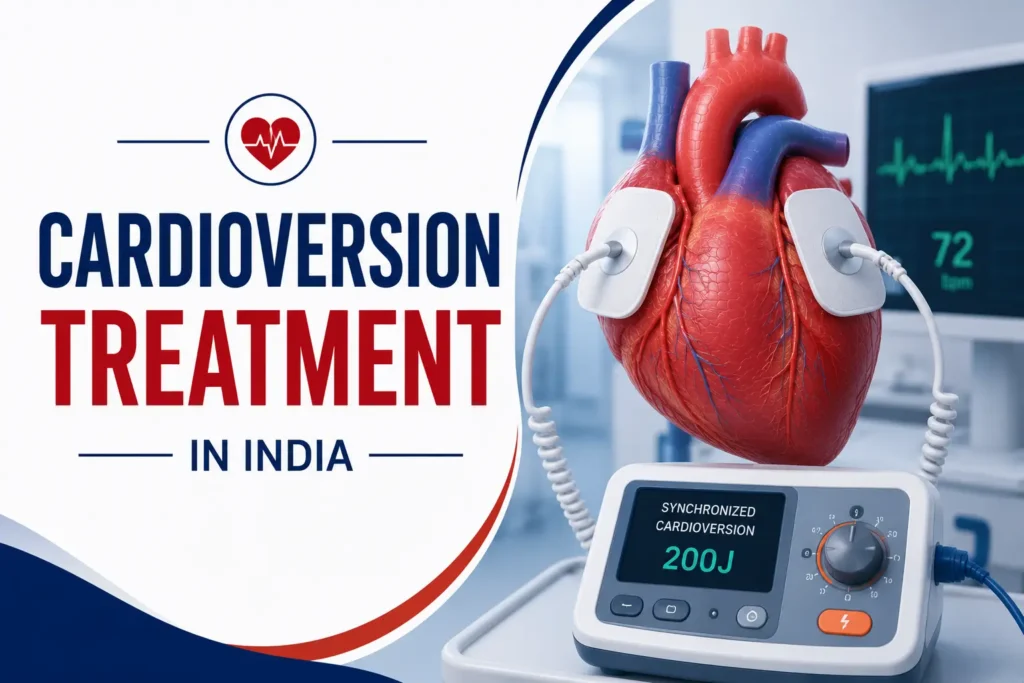
An abnormal heartbeat need not necessarily be felt immediately; however, it can gradually take away your energy and oxygen. While some people experience a rapid heartbeat or fluttering of the heart, others feel simply fatigued for no reason at all – unknowingly, their body is slowing down.
In cases where the heart beats abnormally and does not regulate itself, cardioversion may be recommended by physicians to correct this problem. Cardioversion is a process where the heart rhythm is restored through a medically controlled process. Today, Cardioversion Treatment in India is commonly used to safely restore a normal heart rhythm and prevent serious complications from an untreated arrhythmia.
Get Free Consultation Now
What Is Cardioversion?
Cardioversion is the process by which the irregular heartbeat of the heart is converted into a normal rate through a series of actions. This action may be recommended in cases such as atrial fibrillation, where there are problems with the electrical signal of the heart. The aim is to get the heart back to its regular rhythm so that it beats in harmony.
Symptoms of Irregular Heartbeat
Irregular heart rhythm may show up as various signs in daily life:
- Racing or Uneven Heartbeat: A fast or irregular pulse that feels noticeably “off.”
- Fluttering Sensation: A feeling in the chest that the heartbeat is unsteady.
- Dizziness: Caused by reduced blood flow to the brain.
- Breathlessness: Difficulty maintaining normal oxygen levels.
- Fatigue: Unusual tiredness signaling the heart is struggling to pump efficiently.
Causes of Arrhythmia
The reasons for an arrhythmia can vary widely. The reason might be due to a heart problem, high blood pressure, or an earlier trauma to the heart. There can be many other reasons too, such as a thyroid problem, stress, and electrolyte imbalance.
Tests and Diagnosis Before Cardioversion
Before conducting the process, doctors have to determine the cause and nature of the rhythm disorder:
- ECG (Electrocardiogram): Shows how the heart works electrically.
- Holter monitoring: Monitors the rhythm of the heart throughout a day.
- Echocardiography: A procedure aimed at evaluating the heart’s functioning and structure.
- Blood tests: Detect biochemical disorders that can influence the heart’s rhythm.
It should be noted that when an abnormal rhythm occurs for more than 48 hours (or its duration remains unknown), doctors usually give their patient blood-thinning drugs for about three weeks prior to the procedure, or conduct a transesophageal echocardiogram (TEE). It is essential since the cardioversion procedure might result in the dislocation of a clot, which causes a stroke.
Types of Cardioversion: Electrical vs Chemical
There are two main types of cardioversion used to restore the heart’s normal rhythm:
- Electrical Cardioversion: This method uses a controlled electrical shock delivered to the heart through pads placed on the chest. It is done under sedation, so the patient feels no discomfort. This restores the heart’s natural rhythm immediately.
- Chemical Cardioversion: This method uses specific medications to restore a normal heart rhythm. It may take more time to work, and it is usually used in less urgent situations.
Risks and Complications of Cardioversion
Cardioversion is generally considered very safe, but like any medical procedure, it carries some risks:
- Skin Irritation: Occasional skin irritation where the electrode pads were applied.
- Rhythm Disturbance: Transient heart rhythm disturbance shortly after the treatment.
- Risk of Stroke Due to Clot: If there is a blood clot in the heart prior to the procedure, cardioversion may result in dislodging of the clot and cause a stroke; hence, pre-procedure anticoagulation or a TEE examination is done to rule out such a risk factor, and post-procedure anticoagulants are prescribed for a minimum of 4 weeks.
- Side Effects Associated with Sedatives: Rare side effects due to the sedatives administered during the procedure.
Recovery After Cardioversion Treatment in India
Recovery from this procedure is usually straightforward and quick. Most patients are monitored for only a few hours to ensure the heart’s rhythm stays stable. There may be some mild tenderness on the chest where the pads were placed, but generally, you can return to your regular activities within a day. Doctors may prescribe medication to help maintain the normal rhythm over the long term.
Long-Term Monitoring After Cardioversion
Follow-up visits are important to ensure the heart’s rhythm remains stable and the arrhythmia doesn’t return. Some patients may need long-term medication, continued anticoagulation, or lifestyle changes to protect their heart health. Regular check-ups help the cardiac team monitor heart function and reduce the risk of future arrhythmia episodes.
Cardioversion Treatment in India Cost
Cardioversion Treatment in India typically costs around $1,000 to $1,500. The cost varies depending on the type of cardioversion, hospital, cardiologist, pre-procedure evaluation, anesthesia or sedation, hospital observation, medications, and follow-up care.
The exact cost depends on the patient’s condition and treatment plan, including cardiac evaluation, ECG and other diagnostic tests, anesthesia or sedation, the cardioversion procedure, hospital observation, medications, and follow-up care. These figures are general estimates, not fixed quotes. The final cost may vary depending on the hospital and the patient’s individual treatment requirements.
How Medicsaz Supports Your Cardioversion Treatment in India Journey
Medicsaz connects international patients with vetted partner hospitals and experienced cardiologists for Cardioversion Treatment in India. The team assists with medical record review, hospital and specialist matching, treatment and cost estimates, travel and visa support, accommodation, and coordination throughout the patient’s treatment journey in India.
For patients exploring Cardioversion Treatment in India, Medicsaz can help identify an appropriate cardiac specialist and treatment approach based on the patient’s medical records, while providing guidance on expected costs and the overall treatment process.
Conclusion
Cardioversion is a safe and effective way to restore the heart’s rhythm when an irregular heartbeat becomes a concern. Early intervention can prevent complications and improve overall heart function. Cardioversion Treatment in India offers reliable care with modern diagnostic tools and experienced specialists. With proper follow-up, appropriate use of blood thinners where needed, and a structured recovery plan, patients can maintain a steady heart rhythm and return to their daily lives with much better stamina.
Frequently Asked Questions
Is cardioversion painful?
No. Electrical cardioversion is done under sedation, so you’re asleep and feel no pain during the procedure. Some mild skin irritation from the electrode pads is common afterward but resolves quickly.
Why do I need blood thinners before cardioversion?
If your irregular heartbeat has lasted more than 48 hours, there’s a chance a blood clot has formed in the heart. Cardioversion can dislodge that clot and cause a stroke, so blood thinners (or a scan to rule out a clot) are used beforehand as a safety precaution.
How long does the effect of cardioversion last?
This varies by person. Some people maintain a normal rhythm long-term, especially with continued medication, while others experience a recurrence of the arrhythmia and may need repeat cardioversion or additional treatment such as catheter ablation.
What's the difference between electrical and chemical cardioversion?
Electrical cardioversion uses a controlled shock delivered through pads on the chest and works immediately. Chemical cardioversion uses medication to restore rhythm and works more gradually — it’s typically used in less urgent situations.
Can I go home the same day after cardioversion?
In most cases, yes. Patients are usually monitored for a few hours after the procedure and can go home the same day if the heart rhythm and vital signs remain stable.
Will I need to keep taking medication after cardioversion?
Often, yes. Many patients continue blood-thinning medication for at least four weeks after the procedure to reduce stroke risk, and some may need longer-term rhythm-control medication depending on their overall heart condition.
Medically Reviewed
This page on Cardioversion Treatment in India has been medically reviewed by Dr. Rashid Ali, MBBS, a Delhi Medical Council–registered practitioner (Registration No. DMC/R/36289), to ensure it reflects accurate, current, and evidence-based medical information.
At Medicsaz, every treatment page is checked by a licensed doctor before publication, not written by a marketing team alone. Dr. Rashid Ali review covers the accuracy of procedures, terminology, and claims described on this page, so patients researching Cardioversion Treatment in India can rely on what they read here to make informed decisions.
Last medically reviewed: 09/09/2026
You can independently verify Dr. Rashid Ali’s registration on the Delhi Medical Council’s official website using Registration No. DMC/R/36289, or read more about his role as Medicsaz’s medical reviewer on his reviewer profile page.