
Bone Tumor Treatment in India
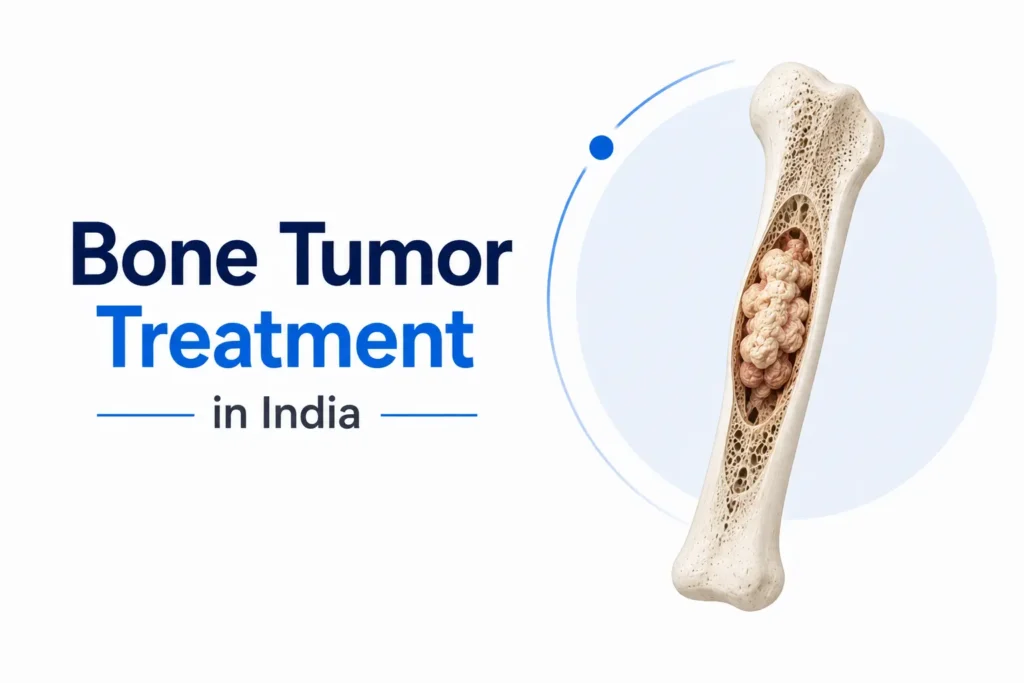
Bone pain is something most people just ignore at first. You figure it’s from standing too long, a minor gym injury, or just getting older. You take a painkiller and go about your day, but when that dull ache refuses to fade and actually starts getting worse over time, you have a real problem.
Sometimes, this stubborn pain points to a bone tumor. It does not always mean cancer, but it absolutely needs a proper medical look. Today, Bone Tumor Treatment in India has completely shifted. India offers specialized diagnostics and tissue sparing surgeries, enabling recovery without permanent damage. Remember, early detection makes the biggest difference.
Get Free Consultation Now
What Is a Bone Tumor?
Essentially, cells within your bone begin to proliferate uncontrollably. They multiply rapidly, resulting in the formation of a solid mass in an inappropriate location.
These tumors are either benign or malignant. Benign ones usually grow very slowly and stay in one exact spot. Malignant ones are much more aggressive and can spread to totally different parts of the body. While it can happen in any bone, doctors see this condition constantly in the long bones of the arms and legs.
Types of Bone Tumors Treated in India
Doctors don’t just guess how to treat it. They classify the tumor based on exactly how it behaves.
- Benign bone tumors: Non cancerous growths that do not spread but might cause heavy swelling or localized pain.
- Primary bone cancer: Actual cancer that starts directly inside the bone tissue itself, like osteosarcoma.
- Secondary bone tumors: The really severe stuff, where cancer from another organ (like the lungs) spreads directly into the bone.
Understanding the exact type of tumor hands the medical team the blueprint they need to plan treatment.
Early Signs and Symptoms of Bone Tumors
The early signs are usually pretty mild. Most people delay going to the hospital because nothing feels like a real emergency at first.
Common symptoms include a persistent, deep bone ache, swelling near a joint, and tenderness when you touch the area. The pain usually flares up at night or right after heavy activity. In some cases, the tumor weakens the bone structure. This means a fracture could occur from a relatively minor fall. If you are limping or hurting for days, stop waiting around.
Causes and Risk Factors of Bone Tumors
Ask a doctor what causes this, and the exact reason isn’t always clear. But certain things definitely increase the risk.
- Genetic conditions: Certain inherited disorders, passed down through families, are linked to a higher likelihood of bone tumor development, and doctors may ask about family history for this reason.
- Previous radiation exposure: High dose radiation treatments received years earlier, often for an unrelated cancer, can affect bone cells over time and slightly raise the risk of a new tumor forming later in life.
- Rapid bone growth: This is seen constantly in teenagers hitting major growth spurts, and it is heavily linked to primary bone cancers like osteosarcoma, which is part of why this cancer disproportionately affects younger patients.
- History of other cancers: Cancer that started somewhere else in the body, such as the lungs, breast, or prostate, can sometimes spread over to the skeletal system, which doctors classify separately as a secondary bone tumor.
In many situations, no clear cause is ever identified, and the tumor simply develops without any of the above risk factors being present.
Tests and Diagnosis for Bone Tumors in India
Doctors always start with a physical exam. They check the joint for swelling and see how much range of motion you actually have left.
- X-ray imaging: The quickest way to check for structural changes and see if a mass is present.
- MRI scan: Gives a highly detailed map of soft tissues so the surgeon knows exactly how far the tumor has spread.
- CT scan: A fast look to help assess the size of the tumor and the actual bone damage.
- Biopsy: A tiny tissue sample is pulled out to confirm if the mass is benign or malignant.
These tests give doctors what they need to plan Bone Tumor Treatment in India accurately.
Treatment Options for Bone Tumors in India
How you get treated completely depends on the tumor type, its size, and if it is spreading. For mild stuff, the doctor might just monitor a benign tumor or do a minor scrape surgery.
But when things get malignant, you face much heavier interventions. We are talking surgery, specialized chemotherapy, or intense radiation therapy.
Modern treatment isn’t just about removing the mass. It is about rebuilding the area while preserving as much normal bone and physical function as possible.
Surgery for Bone Tumor Treatment in India
Surgery is usually the main treatment here. The goal is to get the entire tumor out safely.
In most cases today, surgeons perform limb sparing surgery. They remove the affected bone part and replace it with heavy duty metal implants or bone grafts. Amputation is only considered in rare, advanced cases where the joint is too damaged to preserve.
Advanced surgical techniques in Bone Tumor Treatment in India are specifically designed to preserve movement and long term function.
Why International Patients Choose India for Bone Tumor Treatment
Bone tumor treatment, especially when it involves cancer, is a decision most people research carefully before committing to a country or hospital. A few practical reasons India comes up often in that research: orthopedic oncology specialists here handle a high volume of bone tumor cases each year, which builds real hands on experience with the kind of complex limb sparing surgery this condition often requires.
Treatment costs are also generally 60 to 80 percent lower than equivalent care in the United States, United Kingdom, or other Western countries, without switching to different implants or techniques than what is used internationally. And because scheduling isn’t tied to a long public healthcare waitlist, international patients are often able to move from diagnosis to surgery considerably faster, which matters when a tumor’s growth is being monitored closely.
Recovery After Bone Tumor Treatment
How long you stay in recovery depends entirely on the extent of the surgery. You need real time to regain strength and basic mobility. Physiotherapy is vital to improve movement and build muscle strength back up to baseline. Managing pain and eating proper nutrition directly support the healing process.
Following regular follow up visits ensures doctors can monitor healing and catch any recurrence early.
Life After Bone Tumor Treatment
Adjusting to normal life after rehab takes time, often involving initial weakness or limited movement, but improvement is common with consistent care. A few things tend to matter most during this stage:
- Regular follow up care: Scheduled check ins let doctors detect any recurrence early and track overall bone health over months and years, not just in the weeks right after surgery.
- Physical rehabilitation: A physiotherapist typically builds a program of specific, progressively harder exercises aimed at rebuilding strength and restoring joint mobility without overloading the repaired area too soon.
- Healthy lifestyle habits: Eating a balanced, protein sufficient diet and cutting out habits like smoking both support how well the surrounding tissue heals and integrates with any implant or graft used.
- Emotional support: Processing a bone tumor diagnosis, especially a malignant one, is genuinely difficult, and leaning on family or a support network during recovery is a normal and often necessary part of getting through it.
Many patients are eventually able to return to their normal daily routine with consistent follow up and rehabilitation.
Bone Tumor Treatment Cost in India
Cost depends heavily on whether the tumor is benign or malignant, and if malignant, on the stage and treatment plan involved. Benign tumors that only need monitoring or a minor procedure typically cost significantly less than malignant cases.
For malignant bone tumors requiring surgery, such as limb sparing surgery, cost for international patients typically ranges from $6,000 to $12,000 for the surgical portion. If chemotherapy or radiation therapy is also needed as part of a complete treatment plan, total cost typically rises to $8,000 to $18,000 or more, depending on the number of cycles and overall treatment duration.
These are general figures, not fixed quotes, and can vary significantly based on the specific diagnosis. Medicsaz can put together a personalized cost estimate once a partner oncology specialist has reviewed the biopsy results and full diagnosis.
How Medicsaz Supports Your Bone Tumor Treatment Journey
Medicsaz connects you with vetted partner hospitals and orthopedic oncology specialists experienced in bone tumor treatment, and coordinates everything around the process, cost estimates, medical records and biopsy review, hospital and doctor matching, travel and visa support, accommodation, and a point of contact throughout your stay in India.
If you’re ready to explore this, reach out for a free medical opinion and cost estimate. Most inquiries get a response within 30 minutes.
Conclusion
Bone tumors can easily start with simple symptoms like a basic ache or swelling that almost everyone ignores. But getting an early diagnosis is critical to give treatment the best chance of working well.
Today, Bone Tumor Treatment in India offers highly advanced options, ranging from precise imaging to tissue sparing modern surgeries and guided rehabilitation. With early diagnosis and consistent follow up care, many patients are able to return to an active daily life.
Frequently Asked Questions
What are the early warning signs of a bone tumor?
Common early signs include a persistent deep ache in the bone, swelling near a joint, and tenderness to touch, often worse at night or after activity. A fracture from a minor fall can also be a warning sign in advanced cases.
What causes bone tumors?
The exact cause often isn’t clear, but risk factors include genetic conditions, prior high dose radiation exposure, rapid bone growth during teenage years, and a history of other cancers.
How are bone tumors diagnosed?
Diagnosis typically starts with a physical exam, followed by X-rays to spot structural changes, an MRI to map soft tissue involvement, a CT scan to assess size, and a biopsy to confirm whether the tumor is benign or malignant.
Will I need amputation for a bone tumor?
In most cases, no. Limb sparing surgery is now the standard approach, removing just the affected bone and reconstructing it with implants or grafts. Amputation is reserved for rare, advanced cases where the joint is too damaged to preserve.
What is limb sparing surgery?
It’s a surgical technique where surgeons remove only the tumor affected portion of bone and replace it with a metal implant or bone graft, preserving the limb’s structure and function instead of amputating.
Can bone tumors come back after treatment?
Recurrence is possible, which is why regular follow up visits are important. They allow doctors to catch any recurrence early, often before it becomes symptomatic.
How long is recovery after bone tumor surgery?
Recovery time varies significantly based on how extensive the surgery was, but physiotherapy, proper nutrition, and pain management all play a major role in regaining strength and mobility.
What's the difference between primary and secondary bone tumors?
Primary bone tumors, like osteosarcoma, start directly in the bone tissue. Secondary bone tumors occur when cancer from another organ, such as the lungs, spreads into the bone.
Medically Reviewed
This page on Bone Tumor Treatment in India has been medically reviewed by Dr. Rashid Ali, MBBS, a Delhi Medical Council–registered practitioner (Registration No. DMC/R/36289), to ensure it reflects accurate, current, and evidence-based medical information.
At Medicsaz, every treatment page is checked by a licensed doctor before publication, not written by a marketing team alone. Dr. Rashid Ali review covers the accuracy of procedures, terminology, and claims described on this page, so patients researching Bone Tumor Treatment in India can rely on what they read here to make informed decisions.
Last medically reviewed: 09/09/2026
You can independently verify Dr. Rashid Ali’s registration on the Delhi Medical Council’s official website using Registration No. DMC/R/36289, or read more about his role as Medicsaz’s medical reviewer on his reviewer profile page.