
Bladder Cancer Treatment in India
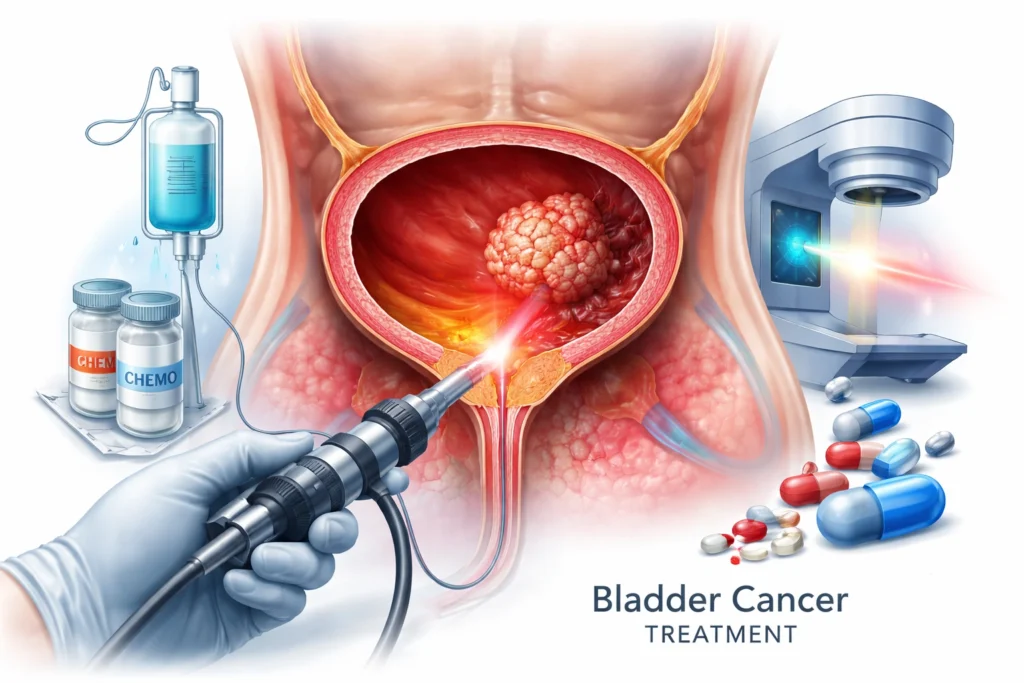
Many people don’t even pay attention to their bladder until something feels off. Life goes on normally at first. Work, food, routine, everything feels fine. Then small issues start, mostly while passing urine. Most people just ignore it in the beginning. They feel it’s some urinary infection or maybe something they ate. A few medicines, some rest, and they expect it to settle. But when the same problem shows up again and again, and daily things start getting affected, the mood at home changes. That’s when families start realising seriously about bladder cancer treatment.
Get Free Consultation Now
What is Bladder Cancer?
Bladder cancer starts inside the bladder, but most people don’t notice it early. The bladder keeps doing its normal work, so nothing feels clearly wrong at first. A few cells inside start behaving oddly, but there’s no big pain or warning sign. Life goes on as usual. That’s why many people realise something is off only much later.
Who Needs Bladder Cancer Treatment?
However, if the symptoms do not clear up and become a problem of comfort and safety, treatment will be required. A doctor will suggest further investigation if the symptoms persist rather than clearing up. Some of the symptoms that patients may experience are as follows:
- Presence of blood in the urine, which may be visible or only detected through tests. Even if there is no pain, this is not a normal condition and should not be neglected.
- Burning or pain in the passage of urine, which persists. Medication may relieve the symptoms for a short while, but the symptoms persist.
- Urge to pass urine frequently, especially at night. This interferes with sleep and makes the patient tired during the day.
- Pain in the lower abdomen or back persists for a long time without any apparent reason.
- Weak or uneven urine flow, which feels uncomfortable and worrying over time.
Types of Bladder Cancer
Physicians typically describe bladder cancer based on the extent to which it has developed inside the bladder. This is how they determine which treatment is best. Physicians describe it this way:
- Surface-level bladder cancer: This type stays on the inner lining of the bladder. It usually grows slowly and is easier to manage when found early. Many patients fall into this group.
- Deeper bladder cancer: Here, the cancer grows into the bladder wall. It needs stronger treatment and closer follow-up because it can spread if ignored.
- Recurring bladder cancer: In some cases, cancer comes back even after treatment. This doesn’t mean treatment failed, but it does mean long-term care and regular monitoring are needed.
Bladder Cancer Treatment Process
After bladder cancer is diagnosed, the treatment process is planned carefully. The doctors do not hurry, but they do not waste time either. They plan everything carefully.
- Urine tests, scans, and in some cases, a small piece of tissue, help doctors know the stage of cancer clearly.
- Often, the first step is removing the cancer growth through a procedure done via the urinary passage.
- Medicines or additional treatments may be added to reduce the chance of cancer returning.
- Regular follow-ups are planned so doctors can watch healing and catch changes early.
This planned approach is a big part of bladder cancer treatment in India today.
Benefits of Bladder Cancer Treatment
Starting treatment on time helps patients feel more in control. It’s not only about treating cancer, but also about feeling normal again.
- Blood in urine reduces or stops, which brings mental relief.
- Burning and pain during urination slowly reduce, making daily life easier.
- Sleep improves when frequent nighttime bathroom visits are reduced.
- Anxiety becomes less once treatment starts, and progress is visible.
- Confidence slowly comes back as symptoms come under control.
Risks and Safety
Like any medical treatment, bladder cancer treatment also comes with some risks. Feeling scared before treatment is normal. Doctors plan everything carefully to keep problems low.
- In the beginning, some people just don’t feel right in their bodies. They feel weak, tired, or uneasy, but they can’t point out one clear reason.
- Medicines can sometimes feel a bit heavy at first. That happens. Doctors then change the dose slowly instead of forcing it.
- During treatment, patients are watched closely. Doctors keep checking so nothing small turns into a bigger problem later.
- With regular follow-ups, most people manage treatment without major issues.
Daily Challenges with Bladder Cancer
Living with bladder cancer brings daily struggles that people don’t always talk about openly.
- Constant worry about urine problems creates stress, even outside the home.
- Frequent bathroom disturb work, travel, and social life.
- Pain or discomfort affects mood and patience.
- Waiting for test reports causes emotional stress.
- Depending on others during treatment feels heavy emotionally.
Recovery After Bladder Cancer Treatment
Recovery takes time and patience. Everyone heals at a different pace, and that’s completely normal. Doctors guide patients slowly during this phase.
- Proper rest helps the body regain strength.
- Drinking enough fluids supports bladder healing.
- Medicines need to be taken every day for better results.
- Regular visits help doctors track recovery properly.
- Emotional support helps patients stay calm and positive.
Long-Term Care and Support
Even after treatment looks successful, bladder cancer needs long-term attention. Staying alert helps avoid future problems.
- Regular check-ups help detect changes early.
- Healthy habits support overall bladder health.
- Family support helps patients stay consistent with care.
- Calm surroundings reduce stress and anxiety.
- Support groups help patients feel less alone.
Why People Choose India For Bladder Cancer Treatment?
There are many reasons why people opt for bladder cancer treatment in India. Some of the reasons are quite simple. Indian doctors come across such patients quite frequently, so it does not seem like a new or puzzling situation for them. The hospitals have a set procedure, which is quite helpful for the patients. The cost of treatment is also lower in India, especially if the treatment is going to continue for months. Relatives can also be present and communicate with the doctors.
Conclusion
At the start, bladder cancer usually doesn’t give any strong warning signs. This is why some people do not consider it seriously in the initial stages. However, if the same symptoms recur, then it is no longer a matter to be ignored. Early detection makes it easier because, at least, the treatment becomes more manageable. Bladder cancer treatment in India is being taken care of much better now, and with proper follow-ups and support from family members, people slowly start living their normal lives.
Medically Reviewed
This page on Bladder Cancer Treatment in India has been medically reviewed by Dr. Rashid Ali, MBBS, a Delhi Medical Council–registered practitioner (Registration No. DMC/R/36289), to ensure it reflects accurate, current, and evidence-based medical information.
At Medicsaz, every treatment page is checked by a licensed doctor before publication, not written by a marketing team alone. Dr. Rashid Ali review covers the accuracy of procedures, terminology, and claims described on this page, so patients researching Bladder Cancer Treatment in India can rely on what they read here to make informed decisions.
Last medically reviewed: 09/09/2026
You can independently verify Dr. Rashid Ali’s registration on the Delhi Medical Council’s official website using Registration No. DMC/R/36289, or read more about his role as Medicsaz’s medical reviewer on his reviewer profile page.