
Appendicitis Treatment in India
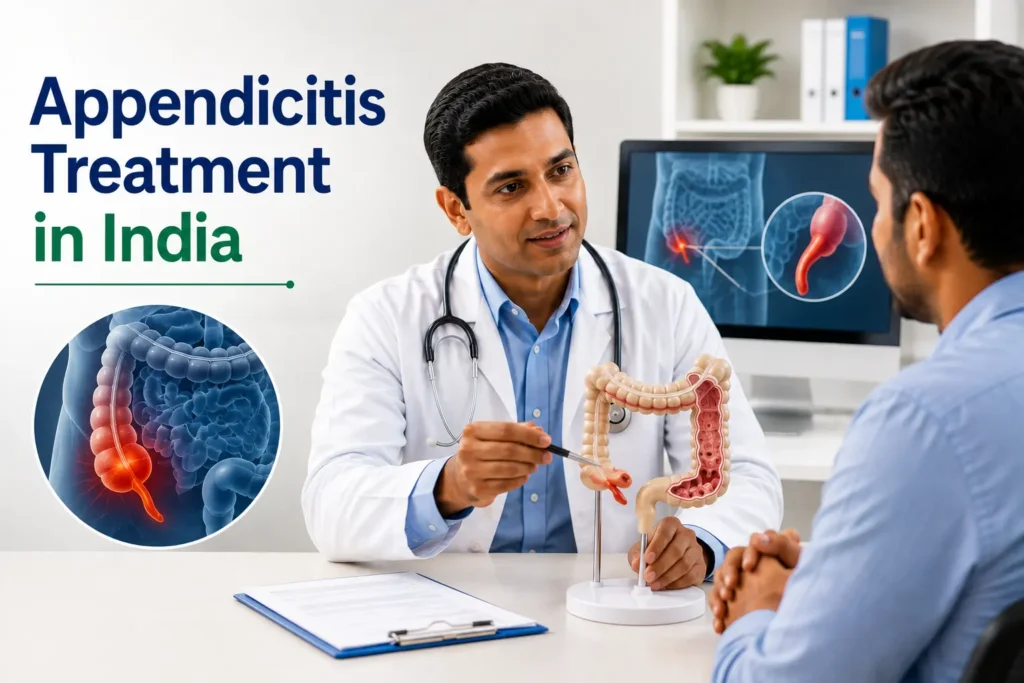
Sharp pain in the lower right stomach isn’t just gas; it’s often a sign that the appendix has hit a functional breaking point. When this small pouch inflames, it stops being a harmless vestigial part and threatens a person’s health. Appendicitis Treatment in India offers a definitive clinical reset, using high-end surgery to pull out the infected tissue before complications cascade.
Removing the appendix is a standard move to stabilize internal health. It’s a direct response to physical swelling that can’t be fixed with pills alone. Because the appendix has no critical digestive function, surgical removal is safe and widely considered the most reliable treatment for appendicitis.
Get Free Consultation Now
What Is Appendicitis?
The appendix is a tiny extension of the large intestine that can suddenly fail when waste or bacteria block its opening. As pressure builds up fast, the resulting inflammation creates acute stress on the organ’s function. Specialists look for this specific swelling to stop a total structural failure that could lead to life-threatening complications.
If the infection isn’t caught, reduced blood flow can lead to tissue death (gangrene) and, if untreated, rupture of the appendix. That is why early diagnosis is very important to prevent serious infection of the abdominal cavity (peritonitis). This precise mechanical construction of a diagnosis determines the final treatment and natural energy levels of the patient.
Emergency Indicators
Appendix pain becomes a top priority when the organ is about to rupture. This is a system emergency. If the abdomen feels hard like a board or a high fever kicks in, the infection might be spreading. Waiting too long is a gamble that leads to peritonitis—a messy, dangerous internal infection.
Causes and Diagnosis
Appendicitis happens because of a literal blockage in the organ’s opening. Sometimes it’s hardened stool (fecalith); other times it’s swollen lymph tissue. Once that door is shut, bacteria multiply and cause the pouch to swell with pus. This is why surgery is the most definitive treatment and eliminates the risk of recurrence.
Clinical experts in India use high-tech mapping to be 100% sure before they operate. This ensures the care is targeted and the recovery is predictable.
- Physical Check: Doctors press on the belly to check for “rebound” pain.
- Blood Work: Looking for a high white blood cell count that proves the body is fighting an infection.
- Imaging: Using an Ultrasound or a CT scan to see the exact size of the swelling.
Treatment Options for Appendicitis in India
Appendicitis typically requires surgical removal of the appendix (appendectomy), though antibiotics may be used in certain uncomplicated cases under close monitoring. Early treatment prevents a total system failure and reduces the risk of the organ rupturing. This is a direct clinical response to ensure the patient regains their physical independence and stability.
- Appendectomy Surgery – The primary mechanical move to remove the inflamed organ.
- Antibiotics – Used as a supportive tool to control infection before and after the procedure.
- Emergency Care – High-speed intervention is needed if the internal plumbing is at risk of a crash.
- Post-Op Monitoring – Ensuring the internal architecture settles back into a stable pattern.
Laparoscopic Appendix Surgery
Laparoscopic surgery is the main method used in India today. It uses a tiny camera and small, keyhole cuts to keep the downtime low. It’s much better than the old-school “open” surgery because it doesn’t involve a large, painful opening in the abdominal wall.
Specialists use precision tools to detach and extract the inflamed organ. This minimally invasive approach means smaller scars, way less pain, and a much faster return to daily life.
Recovery
Most patients undergoing laparoscopic appendectomy are encouraged to walk within hours of surgery to help the body settle into its new state. You’re usually out of the hospital in 24 to 48 hours. Most people recover fully with no long-term dietary restrictions.
- Movement: Getting up early prevents the system from getting sluggish after surgery.
- Food: Sticking to easy-to-digest light meals while the digestive plumbing resets.
- Check-ups: A quick follow-up ensures the healing is smooth and the internal architecture is stable.
Risks and Complications of Appendix Treatment
While appendix surgery is generally safe, any clinical intervention carries a small risk of localized irritation or temporary discomfort. These issues are managed carefully by the medical team to prevent secondary infection. Most side effects are minor and fix themselves as the internal balance of the body settles.
- Infection Risk – Minimized through sterile clinical environments and antibiotics.
- Localized Bleeding – A rare mechanical failure that is monitored during and after surgery.
- Abscess Formation – Can occur if the initial treatment was delayed, requiring extra clinical measures.
- Digestive Discomfort – Temporary changes in bowel rhythm as the plumbing resets after surgery.
Appendicitis Treatment in India Cost
Appendicitis Treatment in India typically costs around $500 to $3,500, depending on the severity of the condition and the treatment required. Laparoscopic appendectomy is commonly performed and is generally associated with faster recovery, while complicated cases involving a ruptured appendix, abscess, infection, emergency surgery, or prolonged hospitalization may increase the overall cost.
The exact cost depends on the type of appendectomy, surgeon, hospital, diagnostic tests, anesthesia, medications, hospital stay, and postoperative care. Patients requiring emergency intervention, ICU care, treatment for infection, or management of complications may have higher overall costs. These figures are general estimates, not fixed quotes. Medicsaz can provide a personalized estimate after a partner surgeon reviews the patient’s medical records and treatment requirements.
How Medicsaz Supports Your Appendicitis Treatment in India Journey
Medicsaz connects international patients with vetted partner hospitals and experienced general and laparoscopic surgeons for Appendicitis Treatment in India. The team assists with medical record review, hospital and specialist matching, treatment and cost estimates, travel and visa support, accommodation, and coordination throughout the patient’s treatment journey.
For patients exploring Appendicitis Treatment in India, Medicsaz can help identify an appropriate surgeon and treatment approach based on the patient’s medical records and clinical condition, while providing guidance on expected costs and the overall treatment process.
Conclusion
Trying to “wait out” sharp stomach pain is a risky move that leads to a total health collapse. Appendicitis Treatment in India offers a permanent surgical reset that is both safe and efficient, removing the source of the biological theft. A structured appendectomy is the most reliable way to get back to core stability and long-term wellness. Modern care makes sure the recovery is smooth, and the future is entirely pain-free.
Frequently Asked Questions
Can appendicitis be treated without surgery?
In select cases of uncomplicated appendicitis, antibiotics alone may resolve the infection under close hospital monitoring. However, the recurrence rate is significant (up to 20–30%), so surgery remains the standard and most definitive treatment to eliminate future risk.
How long does it take to recover from laparoscopic appendix surgery?
Most patients return to light activities within 1–2 weeks and full normal activity within 3–4 weeks. Recovery from open surgery may take 4–6 weeks. Your surgeon will give specific activity restrictions based on your case.
What are the signs that my appendix has already burst?
Sudden severe pain followed by temporary relief (as pressure releases), then worsening diffuse abdominal pain, high fever, rapid heart rate, and a rigid abdomen are warning signs of rupture and spreading infection (peritonitis). This requires emergency surgery.
Will I need to follow a special diet after appendix removal?
No permanent diet changes are needed. Your appendix plays no role in digestion. For the first few days post-surgery, you may be advised to eat light, easily digestible foods while your bowel function returns to normal.
What is the cost of appendicitis treatment in India?
Laparoscopic appendectomy in India typically ranges from ₹40,000 to ₹1,50,000 depending on the hospital tier, city, surgeon expertise, and whether complications like rupture are present. Government hospitals offer significantly lower costs.
Can appendicitis happen more than once after surgery?
No. Once the appendix is surgically removed, appendicitis cannot recur. However, if you experienced right lower abdominal pain after surgery, it may be due to other causes like adhesions, hernia at the port site, or unrelated digestive issues—consult your doctor for evaluation.
Medically Reviewed
This page on Appendicitis Treatment in India has been medically reviewed by Dr. Rashid Ali, MBBS, a Delhi Medical Council–registered practitioner (Registration No. DMC/R/36289), to ensure it reflects accurate, current, and evidence-based medical information.
At Medicsaz, every treatment page is checked by a licensed doctor before publication, not written by a marketing team alone. Dr. Rashid Ali review covers the accuracy of procedures, terminology, and claims described on this page, so patients researching Appendicitis Treatment in India can rely on what they read here to make informed decisions.
Last medically reviewed: 09/09/2026
You can independently verify Dr. Rashid Ali’s registration on the Delhi Medical Council’s official website using Registration No. DMC/R/36289, or read more about his role as Medicsaz’s medical reviewer on his reviewer profile page.