
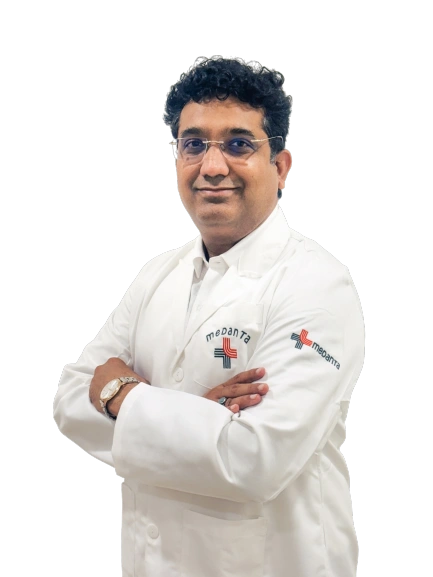
Dr. Sajjan Rajpurohit
Experience: Over 24 years
Medanta Super Speciality Hospital
Noida, India
Introduction
Dr. Sajjan Rajpurohit, Director & Head of Medical Oncology at Medanta Noida, treats cancers of the breast, lung, stomach, colon, and prostate using chemotherapy, immunotherapy, and targeted drugs chosen based on the genetic makeup of the tumor. He handles early-stage cases to extremely complicated situations where precision-targeted drugs are the only realistic option left.
About Dr. Sajjan Rajpurohit
Dr. Rajpurohit has been treating cancers for over twenty-four years now. What makes him different is that he doesn’t give the same chemo cocktail to every patient with the same cancer name. He looks at molecular markers of the tumor to pick drugs attacking that particular cancer’s weakness and has administered over fifteen thousand immunotherapy cycles personally.
Dr. Sajjan got his advanced training at MD Anderson Cancer Center, Houston, and did preceptorships at National Cancer Centre Singapore and ESMO Geneva. Holds European certification from ESMO. Before Medanta, he treated complex cases across major Delhi NCR hospitals.
Qualifications
- MBBS — Maulana Azad Medical College, New Delhi.
- MD (Internal Medicine) — Maulana Azad Medical College, New Delhi.
- DNB (Medical Oncology) — Rajiv Gandhi Cancer Institute, New Delhi.
- Advanced Training — MD Anderson Cancer Center, Houston, USA.
Awards & Recognition
- Director & Head of Medical Oncology at Medanta Noida
- Over 15,000 immunotherapy cycles administered
- Best Oncologist in North India — India Today Group (2017)
- Oncologist of the Year — ELETS Annual Meet (2016)
- Dr. Satya Gupta Memorial Award for Best Thesis (2015)
- Active member of major oncology societies
Specialities & Expertise
- Immunotherapy for advanced cancers
- Precision oncology based on tumor profiling
- Chemotherapy and targeted therapy
- Solid tumor management
- CAR T-cell therapy coordination
- Second opinions for complex cancers
Patient Experience & Approach
Patients say Dr. Rajpurohit waits for full biopsy results, including molecular markers, before deciding treatment instead of rushing into chemo. Families mention he explains why two patients with the same cancer type get different drugs because the tumor biology is different. People coming for second opinions appreciate that he reviews previous records carefully and sometimes finds the tumor mutated, needing a completely different approach.
Frequently Asked Questions
How do I book an appointment with Doctor?
You can book a consultation with the doctor through Medicsaz by contacting our team via WhatsApp or the “Book an Appointment” button on this page. We’ll coordinate the appointment directly with the hospital and assist with scheduling based on your treatment needs.
Is the doctor experienced in treating international patients?
Yes, the doctor has treated patients from various countries, with experience managing cross-border care, language coordination, and treatment planning for patients traveling to India.
Can I get a free medical opinion before travelling to India?
Yes. Medicsaz facilitates free preliminary medical opinions; you can share your medical reports with our team, and we’ll coordinate a review with the concerned specialist or hospital before you finalize your travel plans.
Does Medicsaz arrange travel, visa, and accommodation for treatment with Doctor?
Yes. Medicsaz provides end-to-end support, including medical visa assistance, travel coordination, accommodation, and local support throughout your treatment journey.
What languages does the doctor communicate in?
The doctors generally communicate in languages such as English and Hindi, and Medicsaz additionally provides translator support for patients who need assistance in other languages.
Content Verification
This doctor profile has been compiled and written by the Medicsaz editorial team based on publicly available hospital records, credentials, and professional experience. It has been medically reviewed by Dr. Rashid Ali, MBBS (Delhi Medical Council Reg. No. DMC/R/36289) for accuracy of medical qualifications, specializations, and terminology. Medicsaz does not employ this doctor directly; we facilitate access to verified specialists at partner hospitals in India. For the most current information on this doctor’s practice, please consult the hospital directly or contact our team.