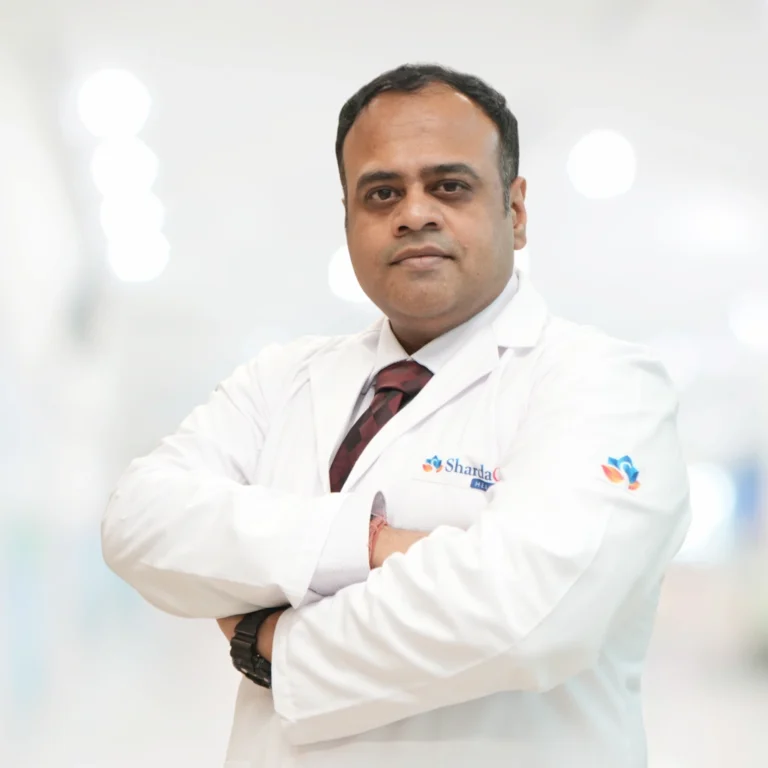
Dr. Anindya Mukherjee
Over 15 years
ShardaCare - Healthcity, Knowledge Park III, Greater Noida, Delhi NCR
Greater Noida, India
Introduction
Dr. Anindya Mukherjee is a Senior Consultant in Medical Oncology at ShardaCare. Patients reach him for newly diagnosed cancers, advanced disease where standard chemo failed, blood cancers needing specialized protocols, and second opinions.
About Dr. Anindya Mukherjee
Dr. Anindya Mukherjee has fifteen years of experience treating cancers. He handles early-stage cases and complicated situations needing molecular testing to find the right drug.
He also won the Commendable Thesis Award for his DrNB work in 2023.
Dr. Anindya got his DrNB from the Institute of Delhi, which handles some of the highest cancer volumes in the country. He uses liquid biopsy and next-generation sequencing to map the tumor’s DNA and find its exact weakness. Previously worked at Rajiv Gandhi Cancer Institute as an attending consultant and at Meherbai Tata Memorial Hospital.
Qualifications
- MD (Radiotherapy) — Postgraduate Institute of Medical Education and Research, Chandigarh
- DrNB (Medical Oncology) — Rajiv Gandhi Cancer Institute, New Delhi
Awards & Recognition
- Commendable Thesis Award for Dr. NB (2023)
- Previously at RGCI Delhi and Meherbai Tata Memorial Hospital
- Presenter at ASCO and ISMPO conferences
- Trained at PGIMER Chandigarh and RGCI Delhi
Specialities & Expertise
- Solid tumor management
- Lymphoma treatment
- Leukemia treatment
- Precision oncology
- Liquid biopsy and next-generation sequencing
- Chemotherapy
- Immunotherapy
- Targeted therapy
- Palliative and supportive care
Patient Experience & Approach
Families mention he explains immunotherapy versus chemotherapy simply so they understand why two patients with the same cancer get different drugs. People with advanced disease appreciate that he’s honest about what treatment can achieve without taking hope away. Those coming for second opinions say he reviewed everything fresh and sometimes changed the approach based on molecular findings nobody tested for before.