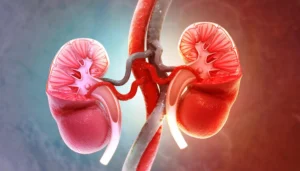

India has now become one of the top countries in the world for organ transplants. It does a very large number of successful transplants every year and helps patients from India and many other nations. India now ranks in the third position globally in organ transplantation. And first position in living donor transplants, making it a global leader. Here in this blog, we will be discussing why India is a global leader in organ transplants.
India’s Big Numbers in Organ Transplants
In 2024, India performed about 19,000 organ transplants in one year, which is a record for the country. This is a huge rise from less than 4,000 transplants in 2014.This places India third in the world in terms of the total number of organ transplants, after the US and China.
Also, India ranks as the number one country in the world for living donor organ transplants. Mainly in the case of kidneys and livers, which indicates not only the medical proficiency but also the strong familial support systems. Meanwhile, the organ donation from the deceased is gradually gaining momentum, with a record of more than 1,000 deceased donors in a single year.
What Is NOTTO and Why It Matters
A big reason for India’s success is a strong national system to manage organs. The main body is called NOTTO – National Organ and Tissue Transplant Organisation. NOTTO works from New Delhi and connects hospitals across India. It keeps records, makes rules, and helps in the fair sharing of organs between patients.
- National centre: NOTTO is the main office for organ and tissue transplant work in all of India.
- Clear rules: It follows the Transplantation of Human Organs and Tissues Act, which sets laws for organ removal, storage, and transplant.
- Fair matching: It manages waiting lists and helps match organs to the right patients in a fair way.
Strong Support From Government
The government of India has done a lot to promote organ donation and transplant services through various initiatives. These works are geared towards making transplants simple, risk-free, and equally available to patients in various regions of the country.
- National network: The India network is structured in a three-tier manner with NOTTO at the national level, ROTTOs at the regional level, and SOTTOs at the state level to administer donations and transplants.
- Online pledge: Now, anybody can make an organ donation pledge via the internet through the government portals, and several hundred thousand Indians have already registered their pledge.
- Focus on fairness: The new regulations endeavour to eliminate bias as well as ensure that organs are utilised more equitably among males, females, the rich, and the poor people equally.
Skilled Doctors and Good Hospitals for Organ Transplants
India has a plethora of well-trained transplant doctors, and technologically advanced hospitals are at the forefront of this field. They carry out complex surgeries such as liver, kidney, heart, and lung transplants with high success rates.
- Experienced teams: On the whole, the transplant teams have been trained for years and have global exposure.
- Wide range of organs: Indian hospitals perform transplants of the kidney, liver, heart, lungs, pancreas, and other organs.
- Better care after surgery: Intensive care units, as well as follow-up facilities, allow patients to regain strength and live longer after transplantation.
Low Cost Compared to Other Countries for Organ Transplants
One major factor why patients from abroad would pick India is the price. A transplant in India costs way less than in the United States or Europe, while the standard of care is still maintained at a high level.
- Liver transplant cost: Usually, the cost of a liver transplant is estimated to be between 15 and 25 lakh rupees at private hospitals, and it depends on the hospital facilities and the condition of the patient.
- Package deals: Hospitals usually offer complete packages that cover tests, surgery, surgeon’s fee, stay, and basic medicine costs.
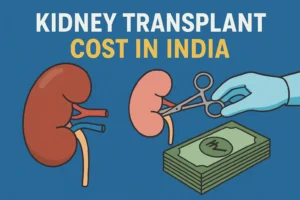
- Kidney transplant cost: The cost of a kidney transplant in India is almost one-third of Western countries.
Many patients are coming from Africa, the Middle East, and South Asia to India for transplants because of the cheaper cost.
Living Donor Strength in India
A point worth mentioning about India is the large number of living donor transplant cases. It is a common situation in the majority of families when fathers, mothers, brothers, or sisters offer a kidney or a part of the liver as a gift of life.
- Family support: The strong bond between family members increases the chance that a close relative will be willing to donate an organ.
- More living donor cases: In India, almost all kidney and many liver transplants are from living donors, which is an advantage when the rate of deceased donation is very low.
- Counselling help: The hospitals offer counselling to the donors so that they can be fully aware of the benefits and the risks of the donation of organs.
Role of Awareness and NGOs
A substantial number of people in India have increased their knowledge about organ donation. The government, NGOs, and media are the three pillars that stand together in spreading the word that one donor can save many lives.
- Organ donation days: Success stories come to light at events like National Organ Donation Day, and thanks and recognition are given to donor families.
- NGO support: ORGAN India and other groups working with NOTTO, along with the support of running campaigns and guiding the families, is the face of coordination.
- Simple information: Along with the easy-to-understand materials like posters and videos that are placed or being used for hospitals and schools, talks are organised to relieve the fears and to answer the questions that people may have.
Challenges India Still Faces
Despite the good progress made, India still has significant gaps in the field of organ donation and transplantation. Unfortunately, many of those who are on the waiting list for an organ end up dying as the supply is less than the demand.
- Very low donation rate: The number of deceased donors in India is less than one per million people. This is drastically lower than the leading countries like Spain.
- Long waiting lists: Millions of people need kidneys, livers, or hearts; however, only a fraction of them will receive the transplant in time.
- City‑centric care: The majority of big transplant centres are located in large cities; hence, people coming from small towns face difficulties in accessing them.
- Ethical risks: The risk of illegal organ trade is always present; thus, the provision of strict checks and strong law enforcement becomes necessary.
Steps Being Taken to Improve Things
To deal with these problems, India is trying to make the system stronger and fairer. Changes in rules and better systems can help more patients in the coming years.
- Better hospital network: More government and medical college hospitals are being trained and linked to the NOTTO system.
- Faster matching: Digital systems help match organs and patients quickly, so less time is lost.
- Focus on trust: By making the system more open and well‑regulated, officials hope more families will agree to donate organs of loved ones.
- Help for poor patients: Some state and central schemes help pay for transplant costs for low‑income families.
Tips for Patients and Families During Organ Transplants
- Choose the right hospital: Pick a centre registered with NOTTO or state bodies, and ask about their past transplant record.
- Understand total cost: Ask for a clear cost sheet that covers tests, surgery, ICU, medicines, and follow‑up care.
- Check all documents: Make sure donor and patient papers follow the law, especially for living donors, to avoid legal trouble.
- Plan aftercare: Remember that after a transplant, patients need lifelong medicines and regular check‑ups.
- Use official sites: For pledging organs or learning rules, use official portals like NOTTO and trusted NGOs.
Conclusion
India is now ranked among the top 3 countries in the world in organ transplants. It was initially a minor player, but now the country has become a global leader in this sector. Thanks to strong doctors, improved hospitals, a national body like NOTTO, and low costs.
The difference between the number of organs required and the number of donations remains substantial. However, awareness and policy changes are gradually changing the situation. With the support of the public, the work of doctors, the government, and NGOs, India will be able to save a lot of lives by organ transplantation in the next few years.