
Organ Transplant Success Rate in India: Kidney, Liver, Heart & Lung
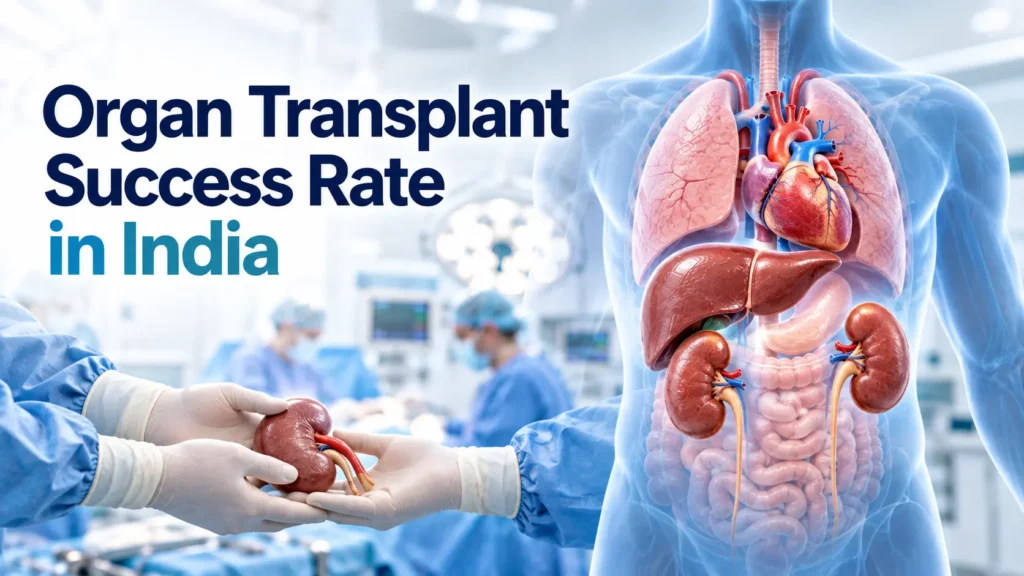
In case one of the organs in the body ceases to function, transplanting the organ can be the only thing that will save one’s life. This is the only way to improve one’s health condition without undergoing strenuous medical procedures such as dialysis. Surely, the very first thought that strikes one’s mind is pretty simple – how high my chance of survival is.
Transplant surgeries are very popular among Indians due to their expert surgeons, state-of-the-art hospitals, and affordable costs when compared to other countries. Awareness regarding the organ transplant success rate in India is very important when making any decision.
Get Free Consultation Now
What Is an Organ Transplant?
Transplanting an organ is one of the most important surgeries. It involves the removal of a diseased or dysfunctional organ and the replacement with a functional organ. Depending upon the surgery required, the donated organ will be provided either by a donor while he or she is alive or by a person who has recently died.
The organ transplant success rate in India has become a benchmark for medical excellence, drawing thousands of patients annually. This success is underpinned by rigorous pre-operative evaluations and advanced post-operative care protocols.
Such operations are the last resort for individuals suffering from serious heart diseases, respiratory failures, liver, and kidney malfunctions. The aim is to make sure that your body begins functioning normally so that you can have a normal life without any medical assistance at all. All the hospitals in India abide by stringent laws and ethics.
Understanding Organ Transplant Success Rates
When the medical field speaks about “success rates,” it refers to something very basic. The number of people who remain alive and healthy and are leading their lives with a functioning organ after a year, five years, and even ten years is counted.
It is fortunate that things have improved during the past two decades, and at present the picture has greatly changed for the better. It is largely due to advancements in surgical procedures and medication used for preventing the rejection of organs that transplantation is highly successful in India nowadays.
Kidney Transplant Success Rate in India
In India, the kidneys are the organs that are transplanted the most. Due to its common occurrence, the surgery is very efficient and effective. It is a successful way forward for all those who want to free themselves from the weekly ordeal of going through dialysis.
Outcome | Success Rate |
One-Year Patient Survival | 95–98% |
One-Year Graft (Organ) Survival | 90–95% |
Five-Year Kidney Function | 80–90% |
Ten-Year Survival (Selected Cases) | 60–80% |
The success rates for kidney transplants are excellent across India. You will usually see slightly better long-term results if the kidney comes from a living donor. This is because the organ goes straight into your body without spending hours sitting on ice. For international patients, this generally means bringing your own living donor from home, since deceased donor kidneys in India are allocated to foreign nationals only after all matching Indian candidates have been considered.
Liver Transplant Success Rate in India
A liver transplant is the only real option left when a patient faces severe liver failure, deep scarring, or liver cancer.
Outcome | Success Rate |
One-Year Patient Survival | 85–95% |
Three-Year Patient Survival | 80–90% |
Five-Year Patient Survival | 70–85% |
India’s specialized liver clinics are highly advanced now. They handle both adult and child cases successfully every single day. Big improvements in how doctors care for patients right after surgery have pushed the liver organ transplant success rate in India up to match international standards.
Heart Transplant Success Rate in India
When standard heart medicines and other treatments no longer work, a new heart is the ultimate way to save a life.
| Outcome | Success Rate |
|---|---|
| One-Year Patient Survival | 80–90% |
| Three-Year Patient Survival | 70–80% |
| Five-Year Patient Survival | 60–75% |
There is no doubt that heart transplants are very complex and difficult surgeries. Even so, the top cardiac hospitals in India get great results. They do this by choosing the right matches and setting up careful physical therapy plans for recovery. It’s important for international patients to know that heart transplants in India always use organs from deceased donors, since living donor heart transplants aren’t medically possible. As a foreign national, you’ll generally be considered for a donor heart only after every matching Indian candidate nationwide has been ruled out, so wait times can be genuinely unpredictable, which is worth discussing directly with your transplant center.
Lung Transplant Success Rate in India
For patients who cannot breathe well due to severe lung diseases, a transplant offers a real chance to breathe freely again.
Outcome | Success Rate |
One-Year Patient Survival | 75–85% |
Three-Year Patient Survival | 60–70% |
Five-Year Patient Survival | 50–65% |
Lungs are among the hardest organs to transplant safely. This is because our lungs are always exposed to dust and germs from the outside air every time we breathe. Despite these natural challenges, India’s top lung teams continue to report very encouraging results. As with heart transplants, lung transplants in India rely almost entirely on deceased donors, and international patients are generally prioritized behind matching Indian candidates, so it’s worth planning your timeline expectations with your transplant center early.
Factors That Affect Organ Transplant Outcomes
It is just the beginning to survive the surgery, but there are other important factors involved in keeping the organ alive for a number of years:
- Compatibility of Blood Type: The more alike your blood type is to the donated organ, the less likely the organ is to be rejected by your body.
- Your Health Before Surgery: Patients who are in decent physical shape before the operation usually heal much faster.
- The Doctor’s Experience: A highly skilled surgical team knows how to prevent mistakes and manage complications easily.
- Taking Your Pills on Time: This is the most important rule. Missing your anti-rejection medicine can cause a medical crisis very quickly.
- Preventing Infections: Since your new medicines lower your immune system on purpose, you must treat basic colds or bugs with extra care.
Living Donor vs Deceased Donor: Does It Affect Success Rates?
For kidney and liver patients, the source of the organ changes your timeline and long-term results.
Factor | Living Donor | Deceased Donor |
Waiting Time | Very short | Can take months or years |
Organ Quality | Often better and fresher | Varies based on the donor’s health history |
Surgery Planning | Scheduled on your terms | Happens suddenly when an organ is ready |
Long-Term Outlook | Generally lasts longer | Very good, but a tiny bit lower |
With a living donor, the surgery is planned in advance. The organ does not travel a long way on ice, so the tissue stays perfectly healthy. When discussing the general organ transplant success rate in India, donor type is always one of the first things a specialist will consider.
Life After an Organ Transplant
Getting a transplant is about returning to a normal, happy life. You will need to see your doctors for regular checks forever, but you will feel a massive boost in your daily energy.
Maintaining a high organ transplant success rate in India requires a collaborative effort between the medical team and the patient. Adhering to lifestyle recommendations and monitoring recovery milestones are crucial steps in this lifelong journey. Once you heal completely, your new life will usually include:
- Having the energy to walk, exercise, and play without feeling tired.
- Watching the painful symptoms of organ failure disappear.
- Going to the clinic for routine blood tests to check your levels.
- Scheduling daily reminders to remind yourself to take the necessary drugs.
Patients can usually get back to their work, studies, leisure activities, and other daily activities within a few months post-surgery.
How to Improve Long-Term Transplant Success
Taking care of your new organ is a daily commitment. Long-term organ transplant success rate in India improves significantly when patients focus on a few simple, daily habits:
- Never skip your medication, since skipping even one dose means there is a chance that your body will start rejecting your transplant.
- Be sure to visit your physician for all your checkups since, by means of blood testing, any potential issues can be found out.
- Eat healthily, exercise consistently, and keep track of your blood pressure and blood glucose level. This will reduce the stress placed upon your new organ.
- Practice frequent hand washing, and try avoiding contact with people who are ill as well as crowded places in your first few months post-transplant.
Conclusion
Organ transplants have changed everything for patients facing organ failure. What used to be a dead end is now just a tough step toward a fresh start. Organ transplant success rate in India, with the best hospitals, provide some of the finest treatment with success rates on par with those around the globe. If you know what kind of success rate is associated with organ transplantation in India, it will definitely help you set realistic expectations. With your cooperation, taking medicines religiously and living a healthy lifestyle, there is much in store for you in the future.
Frequently Asked Questions
Can international patients bring their own living donor for a kidney or liver transplant?
Yes, this is the most common and practical route for foreign patients, since it lets you plan surgery around a known timeline rather than an unpredictable deceased donor wait. Your donor generally needs to be a near relative, and both of you will need approval from the hospital’s Authorization Committee and your embassy.
Can international patients get a heart or lung transplant in India?
It’s possible, but heart and lung transplants rely entirely on deceased donors (living donation isn’t a realistic option for these organs), and foreign nationals are typically considered only after all matching Indian candidates have been ruled out. This means wait times are genuinely unpredictable, so it’s worth discussing realistic timelines directly with your transplant center early on.
What is the success rate for kidney transplants in India?
One-year patient survival rates for kidney transplants in India generally range from 95 to 98%, which is in line with international standards. Results tend to be somewhat better with a living donor compared to a deceased donor.
Why do heart and lung transplants have lower success rates than kidney or liver?
Heart and lung transplants are more complex surgeries involving organs constantly exposed to blood flow demands or outside air, making them inherently more challenging to manage long-term. Even so, leading Indian transplant centers report results that are competitive with major international programs.
What happens if I miss my anti-rejection medication after a transplant?
Missing doses raises your risk of organ rejection significantly and can trigger a medical crisis quickly, so consistent, on-time medication is one of the most important things you can do for long-term success. Your transplant team will help you set up a reliable routine before you leave the hospital.
How soon can I return to normal life after an organ transplant?
Most patients return to work, studies, and regular daily activities within a few months of surgery, though this varies by organ type and individual recovery. Lifelong follow-up care and medication remain part of life afterward, even once you’re feeling well.
Medically Reviewed
This page on Organ Transplant Success Rate in India has been medically reviewed by Dr. Rashid Ali, MBBS, a Delhi Medical Council–registered practitioner (Registration No. DMC/R/36289), to ensure it reflects accurate, current, and evidence-based medical information.
At Medicsaz, every treatment page is checked by a licensed doctor before publication, not written by a marketing team alone. Dr. Rashid Ali review covers the accuracy of procedures, terminology, and claims described on this page, so patients researching Organ Transplant Success Rate in India can rely on what they read here to make informed decisions.
Last medically reviewed: 09/09/2026
You can independently verify Dr. Rashid Ali’s registration on the Delhi Medical Council’s official website using Registration No. DMC/R/36289, or read more about his role as Medicsaz’s medical reviewer on his reviewer profile page.