
Living Donor vs Deceased Donor: What's Best for a Kidney Transplant?
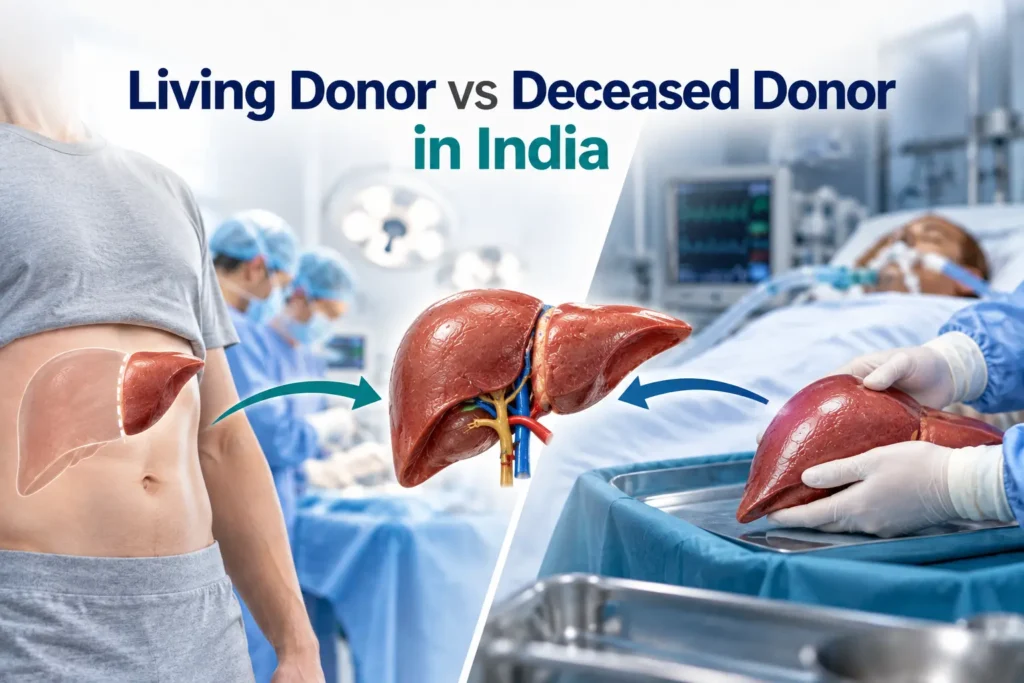
If you have end-stage kidney failure, then having a kidney transplant will definitely be one of the most effective ways to improve your health and situation. It will not only improve your quality of life but will also free you from dialysis and allow you to return to your normal lifestyle. However, during this process, one of the largest decisions that you will have to make will be about the source of the donor kidney.
It is only natural that there should be plenty of considerations to take into account when deciding on whether to use a living donor or a deceased donor. Even though either living donor vs deceased donor may result in an extremely positive outcome, the two scenarios are drastically different in terms of time frame, preparation, recovery process, and potential results. Getting down to brass tacks will help sort things out for you.
Get Free Consultation Now
What Is a Kidney Transplant?
Kidney transplant surgery is an operation in which a healthy kidney from another individual is placed in an individual suffering from kidney failure. The transplanted kidney performs the function of filtering the blood to eliminate toxins and excess fluid from it.
This often involves considering the pros and cons of a living donor vs deceased donor for your specific situation. This kind of treatment procedure is suggested by experts for cases of chronic kidney failure because of a better survival rate and quality of life compared to dialysis.
In India, such procedures are routinely carried out, making use of state-of-the-art hospitals and technology.
Understanding Living Donor Kidney Transplants
As the name suggests, this transplant involves taking a kidney from a living donor, meaning that you get a transplant from another living individual who is considered fit to give you the transplant. In most cases, the individual giving you the transplant will be someone within your family, your husband, wife, or even a close friend.
If you are traveling to India from abroad with your own donor, it’s important to know that both the donor and recipient will need approval from the hospital’s Authorization Committee before surgery, along with any clearances required by your home country’s embassy or government, to confirm the donation is genuine and not a commercial transaction. It’s worth starting this process well ahead of your planned travel dates, and your hospital’s international patient coordinator can guide you through the specific requirements.
The process begins after an extensive health examination for the donor to ensure that he/she is healthy enough to go through with the donation and that there is a great match between his/her kidney and yours. It is due to the fact that it is possible for human beings to survive well even with just one kidney, this procedure is relatively safe.
The major advantage in this kind of transplant is that it can be planned well ahead, and both the recipient and the donor will have ample time for preparation.
Understanding Deceased Donor Kidney Transplants
A deceased donor transplant makes use of a kidney belonging to a donor who has died. This could be due to being an organ donor or having one’s family agree to donate one’s organs at the time of death.
Identifying a matching kidney involves the process of checking the blood groups, tissue match, and urgency for the patient needing the kidney. The patients would be listed on the national or regional list for a suitable kidney donor to be found.
In India, there is a rise in the number of deceased donors’ kidneys used in transplantations. This has been achieved due to increasing awareness amongst people regarding organ donation and improved coordination among medical networks. For international patients specifically, it’s worth knowing that deceased donor waiting lists are generally managed for local patients and residents, and pursuing this route as a foreign national involves additional eligibility considerations that vary by hospital, so this option is typically much harder to plan a trip around than a living donor transplant.
Key Differences Between Living and Deceased Donors
Deciding which route to take depends heavily on your unique medical profile and personal situation. The table below breaks down how the two options stack up against each other.
Factor | Living Donor Transplant | Deceased Donor Transplant |
Donor Source | A healthy, living individual | A person who has passed away |
Waiting Time | Generally much shorter | Can take months or even years |
Surgery Planning | Scheduled ahead of time | Depends entirely on when an organ is available |
Kidney Function | Usually starts working right away | It may take a little time to wake up and function |
Long-Term Outcomes | Generally excellent | Very good, but statistically slightly lower |
Availability | Depends on finding a willing donor | Depends on your place on the waiting list |
Keeping these distinctions in mind is a great starting point when sitting down with your doctor to weigh your choices.
Factors to Consider When Choosing a Donor Type
Every patient’s situation is unique, so you will want to look at a few core factors before finalizing your plans:
- A Suitable Match: You need to have a well-wisher, friend, or relative who will be willing to help you and will qualify medically for kidney transplantation.
- Medical Emergency: In case your kidney is not working well, the need for a quick transplantation should be considered highly.
- Your Medical History and Fitness: Your general medical condition and the extent of your health before going through this operation will be considered.
- Financial Consideration: This cost may vary greatly depending on the number of tests done before surgery, your stay at the hospital, and aftercare.
- Your Inner Circle: Support from people around you can make or break your transplant experience.
- Evaluating Your Options: Comparing a living donor vs deceased donor is a critical step in planning your treatment journey.
Success Rates of Living Donor vs Deceased Donor Transplants
While both options boast excellent success rates, living donor transplants tend to have a slight edge when you look at the data.
Outcome | Living Donor | Deceased Donor |
One-Year Success Rate | 95–98% | 90–95% |
Five-Year Kidney Survival | Higher overall | Slightly lower |
Immediate Kidney Function | Highly common | Can be less predictable at first |
Waiting Period | Short and predictable | Longer and variable |
However, it should be noted that precise success rates can vary due to a number of factors, such as the general condition of the person receiving the transplantation, compatibility of the organs, surgical expertise, and adherence to the patient’s treatment plan.
In this regard, highly professional centers specializing in kidney transplantation in India have very high success rates using either option.
Living Donor vs Deceased Donor: Risks and Challenges of Each Transplant Option
No major surgery is completely without risk. It helps to be realistic about the challenges tied to each path.
Living Donor Transplant Risks
- Surgical Risks for the Donor: The donor will experience common risks that come about during any surgical procedure. Such risks include pain, infections, risk of bleeding, and bad reactions to anesthesia.
- Emotional Stress: The emotional stress will be experienced before and even after surgery because of the psychological pressure that comes along.
- Incompatibility Issues: Sometimes the disappointment will stem from the realization that your loved one, who wishes to be an organ donor, fails the necessary requirements.
Deceased Donor Transplant Risks
- The Waiting Game: The waitlist involves a lot of uncertainty, sometimes even for years.
- Suddenness: The phone may ring at any moment, whether it be morning, noon, or midnight, forcing you to stop what you are doing and head straight to the hospital.
- Quality Differences of Organs: The kidneys from a deceased donor will require time to be transferred, and the process of transportation will cause the kidneys to be kept on ice for some time.
- Kidney Function Delay: Deceased donor kidneys do not always begin to function right away and may need a bit of time to “wake up,” which would necessitate your undergoing temporary dialysis.
Living donor vs deceased donor: Which option would be better for you?
Ultimately, it depends on your medical condition, whether you have a donor, and what suits you personally. It is preferable to go for a living donation since it will give you earlier surgery, and you will enjoy some extra durability.
Yet, in case living donation is not available to you, then you have to consider the possibility of a deceased organ donation, which is a great idea that can help you live longer and avoid all the problems with your kidneys. You just have to make the right decision after discussing your condition with your physician and surgeon.
There is no one answer to this issue. You should take the most appropriate step to restore your health.
Conclusion
Choosing between a living donor vs deceased donor will mark another landmark in your health care experience. Living and deceased donors have helped give a second chance at life to many who have suffered from kidney failure. While the former has turned out to be very successful in its effectiveness regarding time efficiency and reliability, the latter is very helpful in offering life to those individuals who lack a matching donor. Getting information on both kinds of transplants will definitely prepare you for what lies ahead.
Frequently Asked Questions
Can international patients bring any donor, or does it have to be a close relative?
For foreign nationals, your donor generally needs to be a near relative (spouse, parent, child, sibling, or grandparent). Both of you will need approval from the hospital’s Authorization Committee and your embassy before surgery.
Can international patients receive a deceased donor kidney in India?
Rarely. Deceased donor kidneys are generally allocated to Indian residents, so foreign patients should plan around bringing a living donor instead
How long do the patient and donor need to stay in India?
Most patients and donors should plan for around 6 to 8 weeks total, covering evaluation, legal clearance, surgery, and post-op monitoring before flying home.
What does a kidney transplant cost in India for international patients?
Package estimates typically range from about $13,000 to $24,000 USD, covering evaluation, surgery, hospital stay, and initial medications. Your hospital can give you a personalized quote.
What paperwork is needed before traveling?
A medical visa, proof of your relationship to your donor, and approval from both the Authorization Committee and your embassy. Start this early, since delays here are common.
What's the success rate for living donor transplants in India?
Leading centers report one-year success rates of around 92 to 96%, in line with international benchmarks.
Medically Reviewed
This page on Living Donor vs Deceased Donor has been medically reviewed by Dr. Rashid Ali, MBBS, a Delhi Medical Council–registered practitioner (Registration No. DMC/R/36289), to ensure it reflects accurate, current, and evidence-based medical information.
At Medicsaz, every treatment page is checked by a licensed doctor before publication, not written by a marketing team alone. Dr. Rashid Ali review covers the accuracy of procedures, terminology, and claims described on this page, so patients researching Living Donor vs Deceased Donor can rely on what they read here to make informed decisions.
Last medically reviewed: 09/09/2026
You can independently verify Dr. Rashid Ali’s registration on the Delhi Medical Council’s official website using Registration No. DMC/R/36289, or read more about his role as Medicsaz’s medical reviewer on his reviewer profile page.