
Head and Neck Cancer Treatment in India
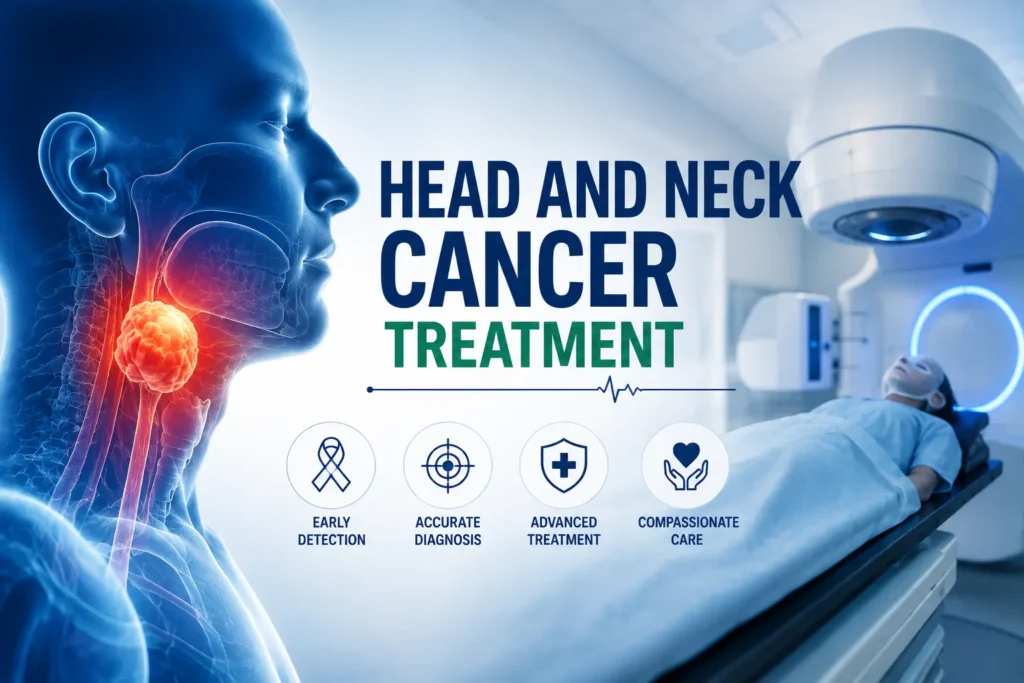
Head and neck cancer treatment in India is a critical oncology sub-specialty. These diseases strike at a person’s ability to talk and eat. Early symptoms like a lingering hoarseness or a stubborn mouth ulcer are often dismissed. People call them minor irritations; in reality, they are a biological theft of essential functions. When these signs don’t go away, it means the delicate tissues of the upper aerodigestive tract are failing structurally.
Multidisciplinary teams now offer meticulous interventions to stabilize patient health. This mechanical approach addresses malignant cells through extraction, chemical suppression, or high-energy beams. These sophisticated strategies protect a patient’s long-term stability via high-end surgical certainty and modern recovery protocols.
Get Free Consultation Now
What Is Head and Neck Cancer?
This cancer is an uncontrolled growth in the moist lining of the mouth, nose, or voice box. These tissues are the scaffolding for how you breathe and speak. If the disease spreads to the neck nodes, it indicates a more advanced stage, which affects treatment intensity and prognosis, making early detection critical. Getting a clinical map early is a mandatory requirement to save your voice and ability to eat.
Early Warning Signs That Should Not Be Ignored
The biological disruption starts small. It’s easy to confuse it with a cold, but as the tissue damage worsens, the body signals an emergency. Catching these signs is the only way to ensure a stable path to recovery:
- Sore Throat: A lingering pain that drugs won’t fix.
- Swallowing Trouble: A mechanical failure where it feels like food is stuck.
- Neck Lump: A physical sign that the disease is moving through your scaffolding.
- Voice Changes: Hoarseness that signals a crash in the voice box.
- Mouth Sores: Non-healing ulcers that show a breakdown in your oral lining.
Common Causes and Risk Factors
The development of head and neck cancer is often linked to specific lifestyle choices and environmental exposures that cause long-term cellular damage. Understanding these global risk factors is essential for prevention and early intervention.
- Use of Tobacco: The most prevalent worldwide cause of head and neck cancers. Inhaled tobacco exposes the respiratory system to carcinogens, while use of smokeless tobacco comes in direct contact with the oral mucosa, thereby increasing the risk of oral cancers.
- Consumption of Alcohol: Increases the risk of cancers of the mouth, pharynx, and larynx. Combination of alcohol consumption along with tobacco smoking multiplies the risk, as alcohol acts as an irritant and enables the carcinogens to penetrate the tissues.
- Human Papillomavirus (HPV): Some high-risk variants of HPV (like HPV 16) are increasingly responsible for oropharyngeal cancers, which mostly affect younger individuals with unique clinical presentations from those of tobacco- and alcohol induced cancers.
- Other Environmental/Individual Risk Factors: Exposure to hazardous industrial products such as wood dust, asbestos, and artificial fibers increases the risk. Lack of vitamin A and C and improper oral hygiene are some other reasons for the cancers.
How Head and Neck Cancer Is Diagnosed
Doctors in India use high-tech mapping to see the damage. This helps them accurately stage the cancer and plan the most effective treatment approach.
- Endoscopy: A “mechanical eye” looks deep into the throat.
- Scans (CT/MRI): These provide 3D images of your internal architecture.
- Biopsy: The only way to confirm a tissue crash by looking at cells under a lens.
Treatment depends on where the tumor is. Doctors combine different approaches to protect healthy tissue. This multidisciplinary team ensures the biological disruption is handled from all sides for a stable outcome.
Surgery for Head and Neck Cancer
Surgery is the main mechanical method to extract the tumor. Transoral Robotic Surgery (TORS) is increasingly used to remove throat cancers through the mouth. This avoids large, disfiguring cuts. The goal is to remove the cancer while keeping the scaffolding of your face and neck intact. As with any surgery, there are risks including bleeding, infection, and temporary swallowing difficulty, which your surgical team will discuss with you beforehand.
Radiation Therapy and Chemotherapy
If surgery isn’t enough, we use energy beams or drugs to suppress the biological theft of your cells. Radiation targets the internal architecture to shrink tumors. Chemotherapy travels through your plumbing to kill hidden cancer cells. These treatments can cause temporary side effects such as fatigue, mouth dryness, or difficulty swallowing, which your care team will help you manage. Immunotherapy, now an established option for advanced or recurrent cases, with newer approvals expanding its use in earlier-stage disease, can also help the body target cancer cells, often with a different side-effect profile than traditional chemotherapy.
Rehabilitation After Cancer Treatment
Because these cancers affect how you speak and eat, getting “better” involves more than just surgery. You’ll likely work with therapists to get your strength back.
- Speech Therapy: To help you find your voice again.
- Swallowing Exercises: Training your throat to handle food safely.
- Diet Support: Making sure you get the right nutrition while you heal.
Recovery and Long-Term Care
Healing takes time because these tissues are sensitive. With robotic tools, hospital stays in India are now shorter, often just a few days to a week, depending on the extent of surgery. You must have regular follow-ups to make sure your internal plumbing stays clear. Having family support is a huge part of making the treatment work.
Life After Head and Neck Cancer Treatment
After treatment, you need to change your habits to stay stable. This takes emotional grit. You must stop using tobacco and alcohol to protect your remaining scaffolding. Regular screenings help catch any recurrence early, which is why long-term follow-up remains essential even after successful treatment.
Head and Neck Cancer Treatment in India Cost
Head and Neck Cancer Treatment in India typically costs around $2,500 to $8,500, depending on the type and stage of cancer and the treatment plan required. Treatment may involve surgery, radiation therapy, chemotherapy, targeted therapy, immunotherapy, or a combination of treatments, with more complex cases generally requiring a higher budget.
The exact cost depends on the cancer type and location, stage, treatment protocol, type of surgery, radiation technique, number of chemotherapy or immunotherapy cycles, diagnostic investigations, medicines, hospital stay, reconstructive procedures, and management of treatment-related complications. Advanced treatments, complex surgery, or prolonged hospitalization may further increase the overall cost. These figures are general estimates, not fixed quotes. Medicsaz can provide a personalized estimate after a partner oncologist and head and neck cancer specialist review the patient’s medical records and treatment requirements.
How Medicsaz Supports Your Head and Neck Cancer Treatment in India Journey
Medicsaz connects international patients with vetted partner hospitals and experienced medical oncologists, radiation oncologists, and head and neck cancer surgeons for Head and Neck Cancer Treatment in India. The team assists with medical record review, hospital and specialist matching, treatment and cost estimates, travel and visa support, accommodation, and coordination throughout the patient’s treatment journey.
For patients exploring Head and Neck Cancer Treatment in India, Medicsaz can help identify an appropriate oncology team and treatment approach based on the patient’s medical records, cancer type and stage, and clinical requirements, while providing guidance on expected costs and the overall treatment process.
Conclusion
Waiting out mouth or throat pain is a gamble that can lead to advanced-stage disease. India’s clinical centers offer safe, precise, evidence-based treatment options. A structured plan and consistent follow-up are the best ways to secure your long-term wellness. Modern, multidisciplinary care gives patients a genuinely strong chance at recovery.
Frequently Asked Questions
Is head and neck cancer curable?
Many cases are curable, especially when caught early — small, localized tumors have the best outcomes. Outcomes depend heavily on cancer type, stage at diagnosis, and how well the disease responds to treatment, so it’s important to discuss your specific prognosis with your oncologist rather than relying on general statistics.
What are the first warning signs of head and neck cancer?
Common early signs include a persistent sore throat, a non-healing mouth ulcer, unexplained hoarseness lasting more than two to three weeks, a lump in the neck, and difficulty swallowing. Because these can mimic minor infections, any symptom that doesn’t resolve within a few weeks should be checked by a doctor.
Will I be able to eat and speak normally after treatment?
Most patients regain functional speech and swallowing, especially with modern techniques like TORS that preserve more healthy tissue than older open surgeries. Speech therapy and swallowing exercises are a standard part of recovery, and the extent of recovery depends on tumor location, size, and the specific treatment used.
Is head and neck cancer hereditary?
Most cases are not inherited — tobacco use, alcohol, and HPV infection are the leading risk factors. A small number of cases are linked to inherited conditions, so a family history of certain genetic syndromes is worth mentioning to your doctor, but it isn’t the primary cause for the majority of patients.
How much does head and neck cancer treatment cost in India?
Costs vary widely based on cancer stage, treatment type (surgery alone versus surgery plus radiation/chemotherapy/immunotherapy), hospital, and city. It’s best to request a personalized treatment and cost estimate directly from the hospital or cancer center you’re considering, since a single figure can be misleading.
How long is the hospital stay and recovery after surgery?
With robotic and minimally invasive techniques like TORS, hospital stays are often just a few days, compared to a week or more with traditional open surgery. Full recovery of swallowing and speech function can take several weeks, and regular follow-up visits continue for years afterward to monitor for recurrence.
Medically Reviewed
This page on Head and Neck Cancer Treatment in India has been medically reviewed by Dr. Rashid Ali, MBBS, a Delhi Medical Council–registered practitioner (Registration No. DMC/R/36289), to ensure it reflects accurate, current, and evidence-based medical information.
At Medicsaz, every treatment page is checked by a licensed doctor before publication, not written by a marketing team alone. Dr. Rashid Ali review covers the accuracy of procedures, terminology, and claims described on this page, so patients researching Head and Neck Cancer Treatment in India can rely on what they read here to make informed decisions.
Last medically reviewed: 09/09/2026
You can independently verify Dr. Rashid Ali’s registration on the Delhi Medical Council’s official website using Registration No. DMC/R/36289, or read more about his role as Medicsaz’s medical reviewer on his reviewer profile page.