Congenital Adrenal Hyperplasia (CAH) Treatment in India
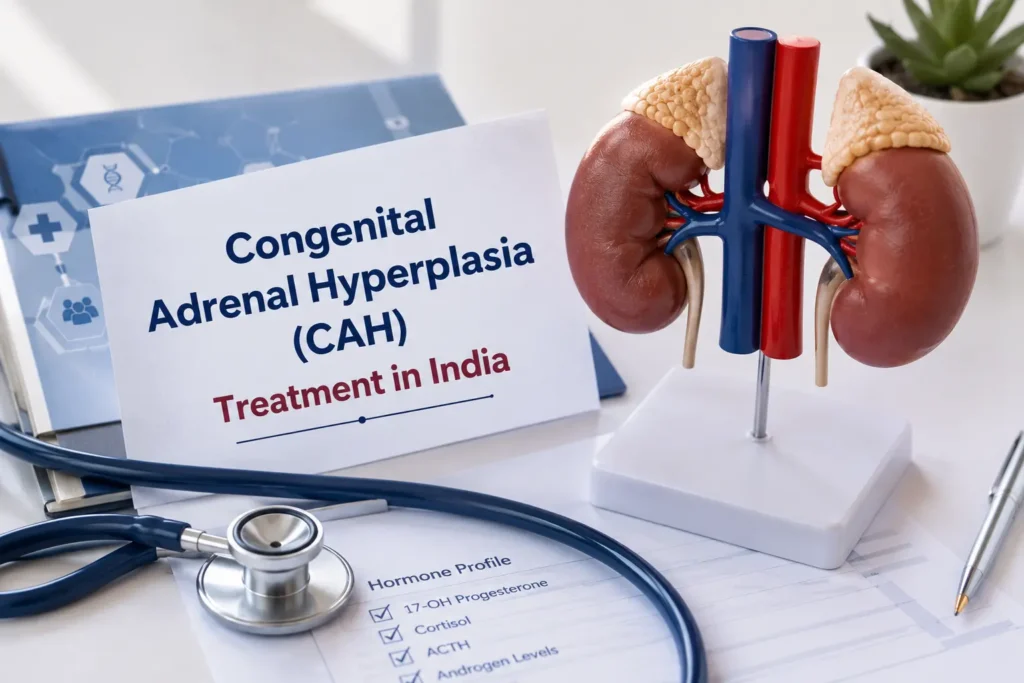
Finding out that your infant or toddler has been diagnosed with a severe and hereditary hormonal disorder is definitely one of the hardest times for any parent. Congenital Adrenal Hyperplasia (CAH) affects the adrenal glands, which are small triangular glands located above the kidneys. They are important in maintaining proper blood pressure and growth of the child.
If your child suffers from an inability to maintain hormone balance from birth because of this disorder, then specific treatment in the field of endocrinology is necessary. Congenital adrenal hyperplasia (CAH) treatment in India will provide your family with access to qualified pediatric doctors, laboratories, and medical specialists.
Get Free Consultation Now
What Is Congenital Adrenal Hyperplasia (CAH)?
CAH is an inherited disorder characterized by the body’s inability to generate sufficient amounts of certain enzymes necessary for the formation of adrenal hormones. The lack of these enzymes results in insufficient production of cortisol (main stress hormone) and sometimes aldosterone (hormone that helps keep the salt levels inside the body). Due to this barrier, androgens (male hormones) tend to be generated in excess amounts.
Symptoms of CAH in Infants and Toddlers. These symptoms can occur all of a sudden after birth or during the growth period of the child. They help specialists detect the need for medical intervention in the case:
- Feeding Problems: Inability to feed properly or gain weight.
- Listlessness and Dehydration: A dangerous state when the baby appears to be unusually listless and inactive and produces a small number of wet diapers.
- Persistent Vomiting: Vomiting that the parents can confuse with stomach flu or regular spitting up.
Recognizing these signs helps medical professionals begin emergency congenital adrenal hyperplasia (CAH) treatment in India before a child experiences dangerous salt loss.
Causes and Genetic Factors Behind CAH
CAH is a genetically transmitted disease. Usually, the parents of the patient are healthy carriers of the mutation, and they have no symptoms themselves. Knowing the exact genetic cause will help in the treatment process:
- Gene Mutations: An alteration in the genes responsible for the synthesis of adrenal hormones.
- Enzyme Deficiency: Mostly, the lack of the 21-hydroxylase enzyme that is required for the production of cortisol.
- Family History: The presence of a history of illnesses in infancy in the patient’s family can suggest CAH among other family members.
Types of Congenital Adrenal Hyperplasia Explained
Classic Salt-Wasting CAH
This is a medical emergency where the infant’s body cannot retain sufficient amounts of sodium, resulting in acute dehydration and shock.
Classic Simple Virilizing CAH
This is a milder form of the disorder where there is excess production of androgens, but there is sufficient salt retention as compared to that observed in cases of classic salt-wasting CAH.
Non-Classic CAH
This is the mildest form of the disease, which usually goes unnoticed until late childhood or adulthood, when it manifests as problems like acne or menstrual irregularities. It is crucial to know the type of CAH your child has because it influences the management strategy and the level of surveillance required.
How CAH Is Diagnosed in India
The medical team will conduct specific tests to determine if the child’s adrenal glands need treatment:
- Newborn Heel Prick Test: This is a routine blood test conducted right after delivery to diagnose CAH even before the onset of any symptoms.
- Hormone Blood Panels: These tests measure the levels of cortisol and androgen hormones in the bloodstream.
- Electrolyte Testing: Testing the levels of sodium and potassium in the bloodstream to know if the child is losing salt excessively.
These tests help ensure your child’s plan for congenital adrenal hyperplasia (CAH) treatment in India is based on accurate, real-time information.
Hormone Replacement Therapy for CAH
Medication taken on a daily basis acts as a substitute for the hormones not produced naturally by the body. Generally, glucocorticoids are used as substitutes for cortisol. The use of glucocorticoids results from their ability to lower the level of one hormone from the pituitary gland (ACTH), which otherwise stimulates the adrenal glands and thus reduces the excessive production of androgens. Infants with the salt-wasting variety also need mineralocorticoids and extra salt intake.
In order to achieve a perfect balance, the patient needs to take just enough of the glucocorticoid in order to prevent androgen level elevation, leading to salt loss. In case of taking excessive doses, growth may be affected negatively. This is the very reason why continuous monitoring and adjustment of doses are so significant.
Preventing Adrenal Crisis: Stress Dosing
Under conditions of illness (fever or vomiting), injury, surgery, or extreme physical stress, normal glucocorticoid therapy is inadequate and needs to be increased temporarily as a form of “stress dosing.”
- Not doing so may lead to an extremely dangerous situation called adrenal crisis.
- Endocrinologists specializing in pediatrics will inform you how and when stress dosing should be used.
- Families should have an emergency kit containing hydrocortisone to be injected in case of the impossibility of taking glucocorticoids orally (vomiting, for instance).
- CAH children need to wear some kind of medical ID bracelet or card.
Managing Growth, Development, and Puberty in CAH Patients
Ongoing care requires regular contact with your child’s pediatric endocrinologist to monitor growth patterns closely. Medication doses are adjusted over time based on your child’s growth and development, helping to protect against both the effects of the underlying condition and any side effects from treatment. With this consistent care, children with CAH can grow and develop well.
Congenital Adrenal Hyperplasia (CAH) Treatment in India Cost
Congenital Adrenal Hyperplasia (CAH) Treatment in India typically costs around $500 to $2,000, depending on the type and severity of CAH and the treatment required. Long-term hormone replacement is the mainstay of treatment, while specialist evaluation, diagnostic testing, genetic testing, and management of complications can increase the overall cost.
The exact cost depends on the patient’s CAH type, endocrinologist consultations, hormone replacement medicines, hormone and electrolyte monitoring, genetic testing, frequency of follow-up, and any additional treatment required. Emergency care for adrenal crises, surgery, or management of complications may further increase the overall cost. These figures are general estimates, not fixed quotes. Medicsaz can provide a personalized estimate after a partner endocrinologist reviews the patient’s medical records and treatment requirements.
How Medicsaz Supports Your Congenital Adrenal Hyperplasia (CAH) Treatment in India Journey
Medicsaz connects international patients with vetted partner hospitals and experienced endocrinologists and pediatric endocrine specialists for Congenital Adrenal Hyperplasia (CAH) Treatment in India. The team assists with medical record review, hospital and specialist matching, treatment and cost estimates, travel and visa support, accommodation, and coordination throughout the patient’s treatment journey.
For patients exploring Congenital Adrenal Hyperplasia (CAH) Treatment in India, Medicsaz can help identify an appropriate specialist and treatment approach based on the patient’s medical records, CAH type, hormone requirements, and clinical needs.
Conclusion
Managing Congenital Adrenal Hyperplasia involves ongoing attention to hormone balance, growth, and emergency preparedness, particularly around illness and stress dosing. The good news is that with regular monitoring, appropriate medication, and proper emergency planning, children with CAH can lead healthy, active lives.
Choosing Congenital Adrenal Hyperplasia (CAH) Treatment in India gives your family access to specialized pediatric endocrinologists and diagnostic laboratories. With early diagnosis, consistent treatment, and a clear emergency plan in place, children with CAH can thrive.
Frequently Asked Questions
What is an adrenal crisis, and why is it so dangerous?
An adrenal crisis happens when the body doesn’t have enough cortisol during illness or physical stress, and it can cause severe dehydration, low blood pressure, and can be life-threatening if not treated immediately with emergency hydrocortisone. This is why stress dosing during illness and having an emergency injection kit on hand are such critical parts of managing CAH.
When does my child need a higher dose of medication?
Dose increases (“stress dosing”) are typically needed during fever, vomiting, significant injury, surgery, or other major physical stress, since the body’s normal medication dose isn’t enough to cope with these situations. Your pediatric endocrinologist will give you specific guidance on when and how much to increase the dose.
Should my child wear medical identification?
Yes, this is strongly recommended for children with CAH, since a medical alert bracelet or card can help emergency responders act quickly and appropriately if your child is unable to communicate their condition themselves. It’s a simple step that can make a real difference in an emergency.
What are the different types of CAH, and does it matter which one my child has?
The three main types are classic salt-wasting CAH, classic simple virilizing CAH, and non-classic CAH, ranging from most to least severe. Knowing the exact type is important, since it affects the treatment plan, how closely your child needs to be monitored, and the risk of adrenal crisis.
Can too much medication also be harmful?
Yes, managing CAH is a balancing act. Too little glucocorticoid can allow androgen levels to rise and increase the risk of salt loss, while too much can cause side effects like slowed growth. This is why regular monitoring and dose adjustments with a pediatric endocrinologist are an essential, ongoing part of care.
Is CAH something my child will have for life?
Yes, CAH is a lifelong genetic condition that requires ongoing hormone replacement and monitoring, though with consistent treatment and emergency preparedness, most children with CAH grow up to lead healthy, active lives. Regular follow-up with a pediatric endocrinologist helps adjust treatment as your child grows.
Medically Reviewed
This page on Congenital Adrenal Hyperplasia (CAH) Treatment in India has been medically reviewed by Dr. Rashid Ali, MBBS, a Delhi Medical Council–registered practitioner (Registration No. DMC/R/36289), to ensure it reflects accurate, current, and evidence-based medical information.
At Medicsaz, every treatment page is checked by a licensed doctor before publication, not written by a marketing team alone. Dr. Rashid Ali review covers the accuracy of procedures, terminology, and claims described on this page, so patients researching Congenital Adrenal Hyperplasia (CAH) Treatment in India can rely on what they read here to make informed decisions.
Last medically reviewed: 09/09/2026
You can independently verify Dr. Rashid Ali’s registration on the Delhi Medical Council’s official website using Registration No. DMC/R/36289, or read more about his role as Medicsaz’s medical reviewer on his reviewer profile page.