
Thalassemia Treatment in India
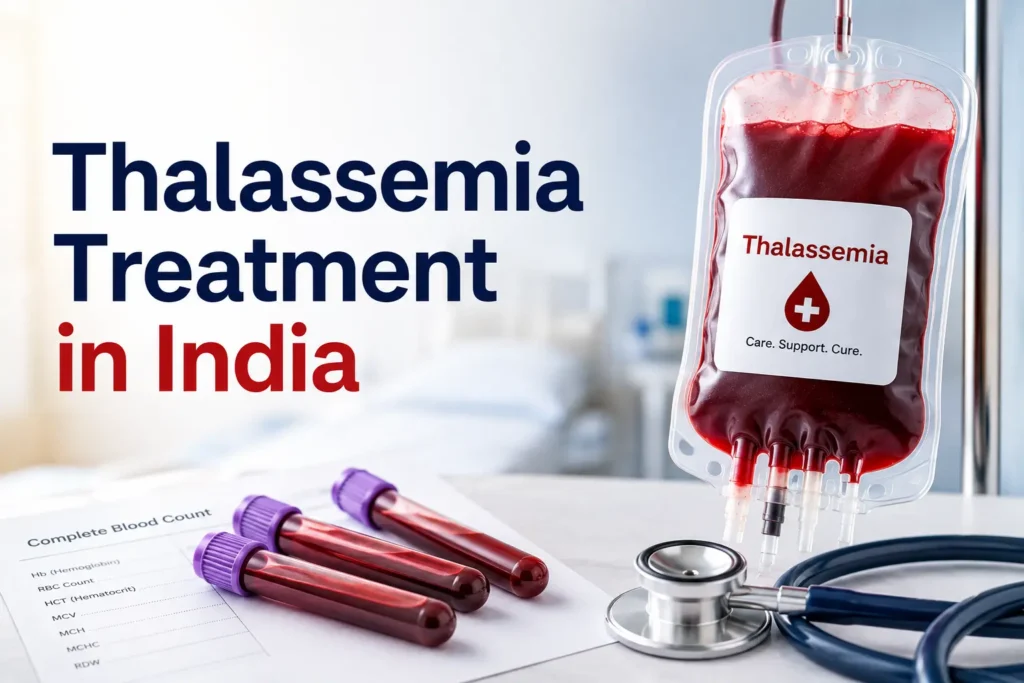
Thalassemia is a type of blood disorder that affects a person’s capacity to produce normal hemoglobin. This disease may be seen early in life when a person experiences weakness, paleness of the skin, or lack of growth with less vigor. If this type of disease is not handled using a professional approach, then thalassemia may hamper the overall growth of a kid.
This condition can be taken care of by continuous treatment and monitoring of the heart and blood vessels. Now, thalassemia treatment in India is so advanced that all facilities ranging from blood transfusion to bone marrow transplant are available for eligible cases.
Get Free Consultation Now
What Is Thalassemia?
Thalassemia is a condition you inherit through your genes. In this condition, the body’s production of hemoglobin, the primary protein responsible for carrying oxygen, is impaired or reduced. When your blood cannot carry enough oxygen through your tissues, it leads to significant fatigue known as anemia. Because this is a permanent change in the genes, it is passed down directly from parents to their children.
Early Signs and Symptoms of Thalassemia
These symptoms tend to manifest either in early infancy or childhood. Where there are severe complications due to this malfunction of blood cells, the symptoms tend to be quite obvious. These include:
- Pale/Yellow Skin: An obvious indication that the body lacks adequate oxygenated blood.
- Persistent Fatigue: Where there is inadequate energy in the body for both growth and regular functions.
- Stunted Growth: This entails not growing as you should during childhood.
- Abdominal Enlargement: Swelling in the stomach due to an enlarged spleen or liver.
Types of Thalassemia Explained
The condition is usually classified by which part of hemoglobin production is affected. Alpha Thalassemia happens when there’s a defect in the alpha-globin chain. Beta Thalassemia is the version more frequently seen in India, where the beta-globin gene is affected. These conditions range from a mild “carrier” status, where the body mostly functions normally, to a severe, transfusion-dependent state where the body needs regular blood transfusions to stay healthy.
Causes and Genetic Risk Factors
Thalassemia is caused by a permanent mutation in the genes that control hemoglobin production. A child develops this condition when these gene mutations are passed down from one or both parents. Some people are carriers, meaning they have the gene mutation but their own blood functions well enough that they don’t experience symptoms. However, they can still pass that gene mutation to their children, which makes genetic testing an important step for families.
How Thalassemia Is Diagnosed in India
To identify precisely the source of faulty blood production before developing the therapy, specialists employ a number of diagnostic methods, such as the following:
- Complete Blood Count (CBC): A standard blood test to diagnose anemia and cell malformations.
- Hemoglobin Electrophoresis: A more specific diagnostic technique for the recognition of abnormalities in hemoglobin.
- Genetic Testing: A more comprehensive DNA test to recognize the particular genetic abnormality.
- Iron Tests: To check whether anemia is caused only by lack of iron.
Options for Thalassemia Treatment in India
Treatment depends on the severity of the condition.
- Regular blood transfusions help many patients maintain healthy oxygen levels.
- Iron chelation therapy may be needed to manage transfusion side effects.
- Bone marrow transplants are considered in certain cases as the only treatment offering a potential cure.
- Gene therapy has emerged in some countries for eligible transfusion-dependent patients, but access is limited, and availability in India is not yet widespread.
Blood Transfusion and Iron Chelation Therapy
When the condition is severe, the body needs regular blood transfusions to maintain healthy blood levels. However, these repeated transfusions can lead to excess iron building up in the body, which can damage the heart or liver over time. To prevent this, doctors use iron chelation therapy, medications that help remove excess iron from the body to keep organs safe from iron overload.
Bone Marrow Transplant for Thalassemia
Bone marrow transplantation is at present the sole therapy capable of offering a cure for thalassemia. In this procedure, bone marrow is replaced with stem cells from a matching donor, enabling the production of hemoglobin from now on. Such a procedure is generally recommended for young patients having a donor match, particularly a sibling, because results are more favorable when there has not yet been the onset of complications associated with excessive iron in the body as a result of transfusions over many years.
Daily Diet and Lifestyle of Thalassemic Patients
There are a couple of things that should be taken into account by thalassemia patients to manage the disease effectively. Firstly, there should be a proper, balanced diet rich in vitamins, while doctors do not recommend taking any more iron because it only causes more iron overload in the blood. Being physically active and being vaccinated is very important as well in order to protect from possible infections.
Proper Treatment and Follow-Up in the Long Run
Thalassemia is a chronic disease that needs an effective treatment program and proper follow-up procedures. Specialists constantly examine the patient’s condition, including heart activity, liver condition, etc. Proper monitoring is the most effective measure to spot possible complications. At the same time, effective support from the family and specialists is an essential part of treating the disease.
Thalassemia Treatment in India Cost
Thalassemia Treatment in India typically costs around $15,000 to $55,000 or more when advanced treatment such as hematopoietic stem cell transplantation (HSCT/BMT) is required. The cost varies depending on the type of treatment, donor matching, hospital, transplant protocol, and the patient’s individual medical requirements.
The exact cost depends on the patient’s condition, type of thalassemia, frequency of blood transfusions, iron-chelation requirements, donor availability, pre-transplant investigations, conditioning therapy, hospitalization, medications, and post-transplant monitoring. Haploidentical or unrelated-donor transplantation, additional procedures, or transplant-related complications may further increase the overall cost. These figures are general estimates, not fixed quotes. Medicsaz can provide a personalized estimate after a partner hematologist and transplant specialist review the patient’s medical records and treatment requirements.
How Medicsaz Supports Your Thalassemia Treatment in India Journey
Medicsaz connects international patients with vetted partner hospitals and experienced hematologists and transplant specialists for Thalassemia Treatment in India. The team assists with medical record review, hospital and specialist matching, treatment and cost estimates, donor and transplant coordination, travel and visa support, accommodation, and coordination throughout the patient’s treatment journey.
For patients exploring Thalassemia Treatment in India, Medicsaz can help identify an appropriate hematologist and assess treatment options based on the patient’s medical records, including advanced treatments such as HSCT/BMT where clinically appropriate.
Conclusion
Even though thalassemia is a permanent genetic condition, early diagnosis and a solid treatment plan can help patients live full, active lives. Thalassemia Treatment in India offers a modern path to care through specialized centers and treatments that address the condition directly. With a dedicated long-term care plan, the outlook for a stable and healthy future continues to improve.
Frequently Asked Questions
Is thalassemia curable?
A bone marrow transplant is currently the only treatment that can potentially cure thalassemia, though it’s generally best suited to younger patients with a well-matched donor, and it carries real risks that need careful consideration. For most patients, thalassemia is managed long-term with regular blood transfusions and iron chelation therapy rather than cured.
Why do thalassemia patients need regular blood transfusions?
Because the body can’t produce enough healthy hemoglobin on its own, regular transfusions are needed to maintain adequate oxygen-carrying capacity in the blood. The frequency depends on how severe the condition is, ranging from occasional transfusions to a lifelong regular schedule for transfusion-dependent patients.
Why is iron chelation therapy necessary?
Repeated blood transfusions cause iron to build up in the body over time, which can damage the heart and liver if left untreated. Iron chelation therapy uses medication to remove this excess iron and protect these organs from long-term damage.
Can thalassemia be prevented?
Since thalassemia is a genetic condition passed down from parents, it can’t be prevented once inherited, but genetic testing and counseling can help couples understand their risk of having a child with the condition. This is particularly important for carriers, who often have no symptoms themselves but can still pass the gene mutation to their children.
Who is a candidate for a bone marrow transplant for thalassemia?
Bone marrow transplant is generally considered for younger patients who have a well-matched donor, ideally a sibling, since outcomes tend to be better before complications from long-term iron overload develop. Your hematologist can help determine whether transplant is a suitable option based on your specific situation and donor availability.
What's the difference between thalassemia trait and thalassemia major?
Thalassemia trait (carrier status) usually causes no significant symptoms, since the body still produces enough functional hemoglobin, while thalassemia major is the severe, transfusion-dependent form of the condition. Genetic testing can clarify which category a person falls into, which is especially useful information for family planning.
Medically Reviewed
This page on Thalassemia Treatment in India has been medically reviewed by Dr. Rashid Ali, MBBS, a Delhi Medical Council–registered practitioner (Registration No. DMC/R/36289), to ensure it reflects accurate, current, and evidence-based medical information.
At Medicsaz, every treatment page is checked by a licensed doctor before publication, not written by a marketing team alone. Dr. Rashid Ali review covers the accuracy of procedures, terminology, and claims described on this page, so patients researching Thalassemia Treatment in India can rely on what they read here to make informed decisions.
Last medically reviewed: 09/09/2026
You can independently verify Dr. Rashid Ali’s registration on the Delhi Medical Council’s official website using Registration No. DMC/R/36289, or read more about his role as Medicsaz’s medical reviewer on his reviewer profile page.