
Hematopoietic Stem Cell Transplant (HSCT) in India
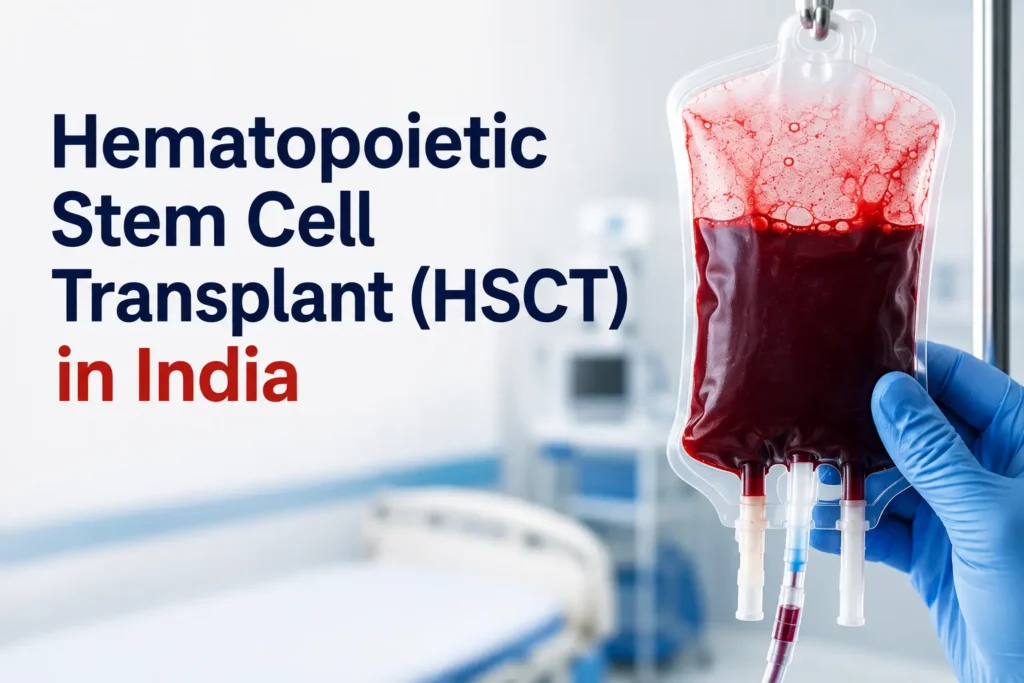
Not all types of blood diseases or cancers can be managed with the usual treatment methods. In such cases, the production of adequate numbers of red blood cells in the bone marrow is reduced. This can result in extreme tiredness, infection, bleeding, and a weak immune system. For patients suffering from such conditions, a stem cell transplant is their best option for survival.
A Hematopoietic Stem Cell Transplant, also called HSCT, is a sophisticated method that involves replacement of defective or affected bone marrow with healthy blood-forming stem cells. Today, Hematopoietic Stem Cell Transplant (HSCT) in India is performed in advanced treatment centers equipped with specialized isolation facilities and experienced hematology teams.
Get Free Consultation Now
What Is Hematopoietic Stem Cell Transplant (HSCT)?
HSCT is a complex medical procedure where healthy, blood-forming stem cells are infused into the body to rebuild healthy blood production. These cells travel to the bone marrow, where they begin producing new, healthy blood cells. Depending on the source of the replacement cells, the approach may use the patient’s own previously collected stem cells or rely on a matched donor.
Diseases Treated with Hematopoietic Stem Cell Transplant (HSCT) in India
When the blood-forming system of the body is affected by disease, HSCT becomes a treatment modality. These diseases include:
- Cancers of Blood Cells: Leukemia, Lymphoma, and Multiple Myeloma.
- Bone Marrow Failure: Aplastic anemia, which leads to low production of blood cells by the bone marrow.
- Genetic Disorders of Blood Cells: Thalassemia and Sickle cell disease.
Types of Stem Cell Transplants Explained
Types of transplants are determined by the nature of the disease and donor compatibility:
- Autologous Transplant: Utilizes stem cells belonging to the patient, which are preserved in advance before receiving any heavy-dose therapy.
- Allogeneic Transplant: Stem cells of a fully compatible donor are used to give a patient an entirely new bone marrow and immune system.
- Haploidentical Transplant: Utilizes partially compatible family donors instead of fully compatible ones.
How Donors Are Matched for HSCT
In allogeneic transplantation, compatibility testing is very critical to prevent complications. Physicians apply high-resolution HLA (Human Leukocyte Antigen) testing in order to match the genetics of the donor with that of the patient. Siblings make up the best genetic matches in most cases; however, specialists can usually find a match for patients without siblings from global donor banks.
Tests and Evaluation Before Stem Cell Transplant
Before the transplant is done, the following tests will be performed to ensure that the individual is able to withstand the transplant process:
- Bone Marrow and Blood Test: Comprehensive bone marrow biopsies and profiling of blood to ascertain the disease condition.
- Function Tests of Organs: Studies on the heart, liver, and kidneys to ensure that these organs are able to tolerate the treatment.
- Virus Screening and Nutritional Assessment.
HSCT Procedure Explained Step by Step
The transplant follows a structured process:
- Conditioning: High-dose chemotherapy or full-body radiation destroys the diseased marrow and suppresses the immune system to prepare for the new cells.
- Stem Cell Infusion: Healthy stem cells are delivered directly into the bloodstream through a specialized central line.
- Engraftment: The infused cells travel to the bone marrow, settle in, and begin producing new blood cells over the following weeks.
Risks and Complications of HSCT
Since this treatment is associated with the use of drugs that suppress the immune system, there are risks involved in this treatment that need to be well understood by both the patients and their family members. Some of the risks that can occur during the period before new cells have engrafted include the possibility of severe infections, bleeding, and other organ problems. There could be complications such as:
- Graft-Versus-Host Disease (GVHD): Occurs in allogeneic transplants when the donor’s immune system attacks the recipient’s body. It can be classified as mild or moderate based on duration (days vs. weeks) and presented as acute (developing shortly post-transplant) or chronic (developing gradually into full infection).
- Graft Failure: A rare complication where the grafted stem cells fail to grow properly inside the recipient.
- Disease Recurrence: The risk of cancer returning following the transplant procedure.
Recovery After Hematopoietic Stem Cell Transplant
Recovery requires intensive monitoring, typically in a sterile isolation environment. Patients often remain isolated for several weeks while new blood cell production stabilizes and blood counts recover to safer levels. Significant fatigue and weakness are common during this phase, as the body focuses its resources on rebuilding.
Infection Prevention and Post-Transplant Care
Due to the fragility of the immune system for months following the transplantation procedure, it is extremely important to prevent any potential infections:
- Hygiene: Observing personal hygiene practices and wearing masks as advised by the medical team.
- Protection from Exposure: Staying away from crowded and public places because small infections can prove fatal during this vulnerable phase.
- Diet: Eating safe food as recommended by medical practitioners.
Long-Term Care and Regular Monitoring
The care of patients does not stop when they get out of the isolation room because continuous checking is necessary to ensure the future well-being of patients. Physicians check their blood counts and bone marrow regularly to see how the person has recovered and whether there are any symptoms of disease recurrence. The recovery of patients may take up to several months.
Hematopoietic Stem Cell Transplant (HSCT) in India Cost
Hematopoietic Stem Cell Transplant (HSCT) in India typically costs around $12,000 to $50,000, depending on the type of transplant and the patient’s medical requirements. Autologous and standard allogeneic transplants are generally more affordable, while haploidentical or unrelated-donor transplants and complex cases may cost more.
The exact cost depends on the underlying disease, transplant type, donor matching, conditioning regimen, stem-cell collection, HLA and other pre-transplant testing, hospital stay, medications, infection management, and post-transplant monitoring. Transplant-related complications, ICU care, or prolonged hospitalization may further increase the overall cost. These figures are general estimates, not fixed quotes. Medicsaz can provide a personalized estimate after a partner hematologist and transplant specialist review the patient’s medical records and treatment requirements.
How Medicsaz Supports Your Hematopoietic Stem Cell Transplant (HSCT) in India Journey
Medicsaz connects international patients with vetted partner hospitals and experienced hematologists and transplant specialists for Hematopoietic Stem Cell Transplant (HSCT) in India. The team assists with medical record review, hospital and specialist matching, treatment and cost estimates, donor and transplant coordination, travel and visa support, accommodation, and coordination throughout the patient’s treatment journey.
For patients exploring Hematopoietic Stem Cell Transplant (HSCT) in India, Medicsaz can help identify an appropriate transplant center and specialist based on the patient’s medical records, underlying condition, donor requirements, and clinical needs.
Conclusion
Extreme bone marrow failure or aggressive forms of blood cancer are dangerous conditions that may lead to death. However, stem cell transplantation can give patients a chance to return to normal life. In India, Hematopoietic Stem Cell Transplant (HSCT) in India helps you get acquainted with professional transplant experts and top-quality isolation treatment units. Compliance with instructions from your care team both during the process of transplantation and the rehabilitation period can increase the chances of your recovery.
Frequently Asked Questions
What's the difference between an autologous and allogeneic stem cell transplant?
An autologous transplant uses the patient’s own previously collected stem cells, while an allogeneic transplant uses cells from a matched donor, either a sibling or someone from a donor registry. The right choice depends on the specific disease being treated and whether the patient’s own cells are suitable for use.
What is Graft-versus-Host Disease (GVHD)?
GVHD happens after an allogeneic transplant, when the donor’s immune cells recognize the patient’s body as foreign and attack healthy tissue. It can range from mild to life-threatening and can appear either soon after transplant (acute) or develop later and persist longer (chronic).
Can the original disease come back after a stem cell transplant?
Yes, relapse of the underlying disease, particularly for blood cancers like leukemia, remains a real risk after transplant and is one of the most significant long-term concerns. Regular follow-up testing helps catch any signs of relapse early.
Will HSCT affect my ability to have children?
The high-dose chemotherapy or radiation used to prepare for transplant commonly causes infertility, and in women, can bring on premature menopause. It’s worth discussing fertility preservation options with your care team before starting treatment if this is a concern for you.
How is a donor matched for a stem cell transplant?
Donors are matched using HLA (Human Leukocyte Antigen) testing, which compares specific genetic markers between the donor and patient. Siblings often provide the closest match, but international donor registries are frequently used when a sibling match isn’t available.
How long does recovery take after HSCT?
Initial recovery in isolation typically takes several weeks as blood counts recover, but full recovery of strength and immune function can take many months, sometimes longer. Regular long-term monitoring continues well after the initial recovery period to watch for complications and confirm the transplant is working as expected.
Medically Reviewed
This page on Hematopoietic Stem Cell Transplant (HSCT) in India has been medically reviewed by Dr. Rashid Ali, MBBS, a Delhi Medical Council–registered practitioner (Registration No. DMC/R/36289), to ensure it reflects accurate, current, and evidence-based medical information.
At Medicsaz, every treatment page is checked by a licensed doctor before publication, not written by a marketing team alone. Dr. Rashid Ali review covers the accuracy of procedures, terminology, and claims described on this page, so patients researching Hematopoietic Stem Cell Transplant (HSCT) in India can rely on what they read here to make informed decisions.
Last medically reviewed: 09/09/2026
You can independently verify Dr. Rashid Ali’s registration on the Delhi Medical Council’s official website using Registration No. DMC/R/36289, or read more about his role as Medicsaz’s medical reviewer on his reviewer profile page.