
Fanconi Anemia Treatment in India
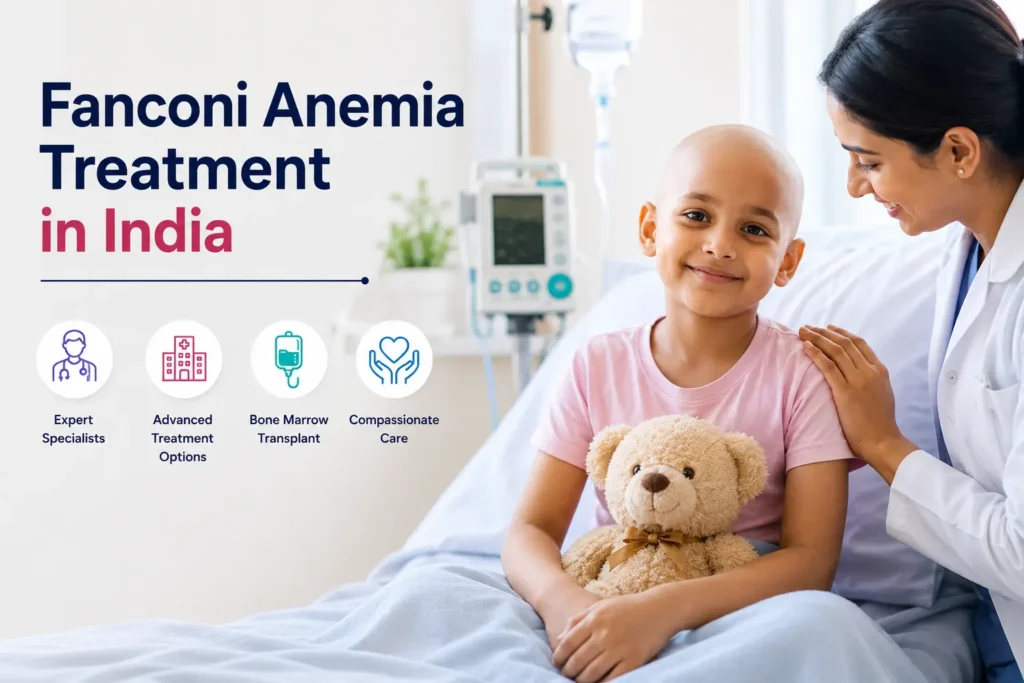
A few blood conditions start in childhood in a seemingly harmless way, yet are difficult to detect. This is because kids suffering from Fanconi anemia have certain symptoms like tiredness, growth failure, or physical defects, which slowly become a source of worry within the family. Because of the rarity of this condition, bone marrow failure may be noticeable only when the patient is experiencing very low levels of blood.
Fanconi anemia is a rare inherited condition characterized by bone marrow failure causing inadequate blood cell production. The condition can lead to infections and hemorrhaging. Luckily, there are medical services specialized in treating Fanconi anemia, with Fanconi Anemia Treatment in India being one of them.
Get Free Consultation Now
What Is Fanconi Anemia?
Fanconi’s anemia is a very uncommon congenital disease of the blood whereby the bone marrow fails to produce enough blood cells. This is because the bone marrow produces the red blood cells (which carry oxygen), the white blood cells (which help in fighting infections), and platelets, which are responsible for clotting in the blood. However, due to this condition, the bone marrow does not function as expected, thus causing:
- Anemia (a deficiency of red blood cells causing tiredness and weakness)
- Immunodeficiency (insufficient white blood cells causing infections)
- Thrombocytopenia (deficient platelets causing easy bruising and bleeding)
Additionally, Fanconi anemia causes physical abnormalities too.
Early Signs and Symptoms of Fanconi Anemia
The early symptoms of Fanconi anemia show up in children. They must be detected early so that future complications do not arise:
- Persistent weakness and tiredness: Caused by anemia (lack of red blood cells).
- Getting sick frequently: Because of a lack of white blood cells.
- Bleeding easily or having easy bruises: Caused by a lack of platelets; the child may have nosebleeds, bleeding gums, and easy bruising.
- Birth defects: This could include being shorter than normal, thumb or arm problems, small head size, kidney problems, or skin pigmentation changes (cafe-au-lait spots).
- Delayed growth or development: Not growing properly and late puberty.
How Fanconi Anemia Is Diagnosed in India
Specialists carry out unique tests to confirm the condition and also to measure its severity:
- Complete Blood Count (CBC): Tests the levels of red blood cells, white blood cells, and platelets for low levels (cytopenia).
- Bone Marrow Study: Tests how well the bone marrow produces blood cells.
- Chromosome Fragility Test (DEB or MMC Test): A unique diagnostic test that confirms the presence of Fanconi anemia through higher levels of chromosome breakages when cells are exposed to certain chemicals. This is the most effective diagnostic test for the condition.
- Genetic Testing: Determines the unique gene mutation responsible for Fanconi anemia.
All these tests assist in choosing the appropriate Fanconi Anemia Treatment in India.
Complications Linked to Fanconi Anemia
If not managed medically, Fanconi anemia may result in various complications that are associated with it:
- Bone marrow failure: Progressive reduction of blood cells resulting in anemia, infection, and bleeding.
- Greater cancer risk: Acute myeloid leukemia and solid tumors such as those of the head and neck, gastrointestinal tract, and gynecologic malignancies.
- Organ dysfunctions: Renal, cardiac, and gastrointestinal abnormalities.
- Endocrine abnormalities: Diabetes, thyroid disorders, and deficiency of growth hormones.
Detection of these complications at their early stages is crucial to prevent further progression into life-threatening conditions.
Options for Fanconi Anemia Treatment in India
Therapies will vary according to how severe the bone marrow dysfunction is and the health of the individual:
- Blood Transfusions: For anemia or bleeding, using red blood cells or platelets, respectively.
- Androgen Treatment: Use of medications (e.g., oxymetholone) to encourage the formation of blood cells in some patients.
- Growth Factors: Use of drugs like erythropoietin or granulocyte colony-stimulating factor (G-CSF) to encourage the formation of blood cells.
- Infection Prevention: Antibiotics and antifungal medicines to prevent infection when white blood cells are at a lower level.
- Bone Marrow Transplant: The only therapy that can cure the bone marrow dysfunction component of Fanconi anemia.
A custom treatment regimen will be developed by the physician based on blood count, symptoms, and availability of a donor for transplantation.
Bone Marrow Transplant for Fanconi Anemia
The bone marrow transplant (or hematopoietic stem cell transplant) is considered the most successful way to treat bone marrow failure associated with Fanconi anemia. This procedure helps replace the damaged bone marrow with healthy donor stem cells and restore normal blood cell production in the body.
Main features of transplant in Fanconi anemia patients:
- The best results are achieved if there is a matched sibling donor
- Transplants are usually done before complications arise
- Patients with Fanconi anemia need a special reduced-intensity conditioning due to their extreme sensitivity to chemo and radiotherapy
- Although transplant is a cure for the blood disorder, it doesn’t reduce the risk of cancers and thus requires regular screening
Despite all risks related to the transplant procedure, this method gives the most chances for survival.
Blood Transfusion and Supportive Therapy
Those who suffer from severe cases of anemia or have very low platelet counts may need transfusions to ensure their safety. The other types of supportive care needed include:
- Regular Transfusions: Red Blood Cells/Platelets to ensure the hemoglobin/platelet count is safe.
- Prevention/Treatment of Infections: Antibiotics as a prevention method when the white blood cell count is very low.
- Growth: When there is growth failure, growth hormones may be necessary.
- Iron Chelation Therapy: This is done to get rid of excessive iron caused by multiple transfusions.
Long-Term Care and Monitoring
Fanconi anemia requires lifelong monitoring even after successful transplant, as the underlying genetic abnormality leads to an increased risk of cancer. The follow-ups entail:
- Monitoring Blood Cell Production: Regular CBC tests
- Cancer Screening: Annual screening for leukemia and solid tumors (particularly head and neck, and gynecological)
- Testing Organ Functionality: Liver, kidneys, heart, and endocrine system functioning
- Preventing Infections: Maintaining current vaccination status (use inactivated vaccines instead of live vaccines when immunocompromised)
- Maintaining Healthy Living: Proper nutrition, preventive steps from infection, avoidance of tobacco and alcohol (increasing risk of cancer)
It is critical to have a hematology/transplant team dedicated to you in order to keep you healthy and detect any issues early.
Fanconi Anemia Treatment in India Cost
Fanconi Anemia Treatment in India typically costs around $20,000 to $50,000 or more when hematopoietic stem cell transplantation (HSCT) is required. HSCT is the main curative treatment for the bone marrow failure associated with Fanconi anemia, while supportive treatments may be used to manage blood counts and other complications.
The exact cost depends on the patient’s condition, donor type and availability, transplant protocol, hospital, hematologist and transplant team, pre-transplant investigations, conditioning therapy, hospitalization, medications, blood products, and post-transplant monitoring. Unrelated or haploidentical donor transplantation, additional procedures, or transplant-related complications may further increase the overall cost. These figures are general estimates, not fixed quotes. Medicsaz can provide a personalized estimate after a partner hematologist and transplant specialist review the patient’s medical records and treatment requirements.
How Medicsaz Supports Your Fanconi Anemia Treatment in India Journey
Medicsaz connects international patients with vetted partner hospitals and experienced hematologists and transplant specialists for Fanconi Anemia Treatment in India. The team assists with medical record review, hospital and specialist matching, treatment and cost estimates, travel and visa support, accommodation, and coordination throughout the patient’s treatment journey.
For patients exploring Fanconi Anemia Treatment in India, Medicsaz can help identify an appropriate specialist and assess advanced treatment options such as HSCT based on the patient’s medical records, donor availability, and clinical requirements.
Conclusion
Fanconi anemia is an unusual and dangerous genetic disease that affects the blood, but thanks to proper early diagnosis and treatment, there have been considerable advances in its prognosis. Fanconi Anemia Treatment in India provides the patient with highly specialized pediatric hematology clinics, modern diagnostics, supportive treatments such as blood transfusions and medication, and bone marrow transplant procedures, which have much experience dealing with such cases. With proper treatment, careful monitoring, and familial support, patients with Fanconi anemia may enjoy life for a long time.
Frequently Asked Questions
Can Fanconi anemia be cured?
Bone marrow transplant can cure the bone marrow failure component, but it does not eliminate the underlying genetic defect or the increased cancer risk. Lifelong monitoring is still necessary even after successful transplant.
At what age is Fanconi anemia usually diagnosed?
Most cases are diagnosed in childhood, typically between ages 3 and 12, when blood counts begin to drop, or physical abnormalities become apparent. Some cases are diagnosed earlier if physical birth defects are present.
Is Fanconi anemia different from Fanconi syndrome?
Yes, they are completely different conditions. Fanconi anemia is a genetic blood disorder affecting bone marrow. Fanconi syndrome is a kidney disorder affecting nutrient reabsorption. They are unrelated despite the similar name.
What is the life expectancy for someone with Fanconi anemia?
Without transplant, median survival is typically into the 20s or 30s. With successful bone marrow transplant, many patients survive into adulthood, though long-term cancer surveillance remains essential.
Can parents who are carriers be tested before having children?
Yes, carrier screening and prenatal testing (amniocentesis or chorionic villus sampling) are available for families with a known Fanconi anemia mutation. Preimplantation genetic diagnosis (PGD) with IVF is also an option.
Why do Fanconi anemia patients have a higher cancer risk?
The genetic defect impairs DNA repair, making cells more likely to accumulate mutations that can lead to leukemia and solid tumors. This risk persists even after successful transplant, requiring lifelong cancer surveillance.
Medically Reviewed
This page on Fanconi Anemia Treatment in India has been medically reviewed by Dr. Rashid Ali, MBBS, a Delhi Medical Council–registered practitioner (Registration No. DMC/R/36289), to ensure it reflects accurate, current, and evidence-based medical information.
At Medicsaz, every treatment page is checked by a licensed doctor before publication, not written by a marketing team alone. Dr. Rashid Ali review covers the accuracy of procedures, terminology, and claims described on this page, so patients researching Fanconi Anemia Treatment in India can rely on what they read here to make informed decisions.
Last medically reviewed: 09/09/2026
You can independently verify Dr. Rashid Ali’s registration on the Delhi Medical Council’s official website using Registration No. DMC/R/36289, or read more about his role as Medicsaz’s medical reviewer on his reviewer profile page.