
Sickle Cell Disease Treatment in India
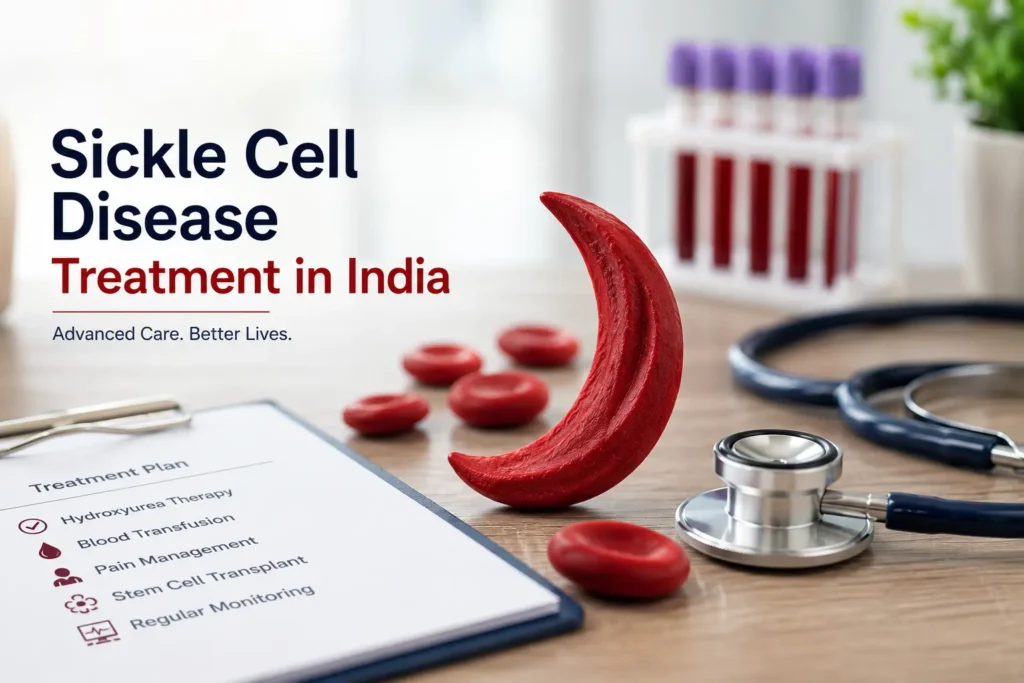
Sickle cell anemia is a chronic disease that is genetic in nature. It results in fatigue as well as pain in adults and children. Patients suffer from severe fatigue or pain and do not know that their red blood cells have abnormal shapes that prevent blood from flowing normally. Due to the nature of the condition, it fails to provide oxygen to tissues, which might eventually lead to harm to vital organs if it is not managed via a complete medical approach.
The prevalence of sickle cell anemia in India varies across specific ethnic tribes. Now, the approach to sickle cell disease treatment in India concentrates on disease management, pain management, blood transfusion, and bone marrow transplant in suitable cases.
Get Free Consultation Now
What Is Sickle Cell Disease?
This is an inherited disorder where the shape and function of the red blood cells are affected. The normal red blood cells are soft and have a round shape, making them flow easily through the blood vessels. With this disease, the red blood cells become rigid, sticky, and crescent-shaped, leading to clogging of blood circulation and early death.
Early Signs and Symptoms of Sickle Cell Disease
The signs of sickle cell disease are typically apparent during the early stages of childhood or infancy. The detection of these signs at an early stage is critical in preventing complications in the future.
- Pain Crisis: Severe pain in the bones, joints, chest, or abdomen as a result of blocked blood flow by sickled cells.
- Extreme Fatigue: Extreme fatigue as a result of anemia, which is the presence of low red blood cells with a lack of oxygen.
- Swelling: Severe swelling of the hands and feet (dactylitis). Swelling is typically among the earliest signs to be noticed during infancy.
- Jaundice: Yellowing of skin and eyes due to the destruction of red blood cells.
Causes and Genetic Factors of Sickle Cell Disease
- Caused by inherited mutations in the gene producing hemoglobin, the oxygen-carrying protein in red blood cells.
- A child develops the disease when inheriting the mutated gene from both parents.
- Inheriting only one copy results in the sickle cell trait (carriers), who typically show no symptoms but can pass the gene to children.
Complications Linked to Sickle Cell Disease
Sickle cell anemia, if not well taken care of through modern medical practice, can give rise to the following complications:
- Stroke: Obstruction of blood vessels within the brain, especially prevalent among children.
- Acute Chest Syndrome: A life-threatening lung problem that involves chest pain, high fever, and difficulty in breathing.
- Organ Damage: Chronic damage to the organs, including the spleen, kidneys, liver, and heart due to blockages and insufficient oxygen flow.
- Infection: Increased susceptibility to infections owing to damage to the spleen.
- Pulmonary Hypertension: High pressure of blood within the lungs.
- Priapism: Painful and long-lasting erection of the penis in males.
- Vision Problems: Damage to the eye blood vessels.
Proper treatment and monitoring are very crucial to keep the organs safe from these complications.
Methods of Diagnosis of Sickle Cell Disease in India
There are some tests to diagnose sickle cell disease:
- Complete Blood Count (CBC): The levels of hemoglobin can be tested through a CBC test to identify anemia or an unusual number of red blood cells.
- Hemoglobin Electrophoresis: This test is done to identify the type of hemoglobin (e.g., HbS).
- Newborn Screening: Newborns in India are screened for this disease in many states.
These tests help specialists plan Sickle Cell Disease Treatment in India with precision.
Treatment Options for Sickle Cell Disease in India
Management of symptoms, prevention of complications, and sometimes even curing the disease are aimed at:
- Pain Relief: Taking medications (NSAIDs, opiates for severe pain), hydration during episodes of pain.
- Hydroxyurea: Medicine that helps to increase the level of fetal hemoglobin, decrease pain attacks, and the need for transfusions.
- Blood Transfusion: Either regular or emergency transfusion for anemia treatment or prevention of stroke.
- Antibiotics and Vaccination: Prophylactic antibiotics (in particular, penicillin in young children) and vaccination against serious infection.
- Folic Acid: For red blood cell formation.
- Bone Marrow (Stem Cell) Transplantation: The only possible cure, transplantation of healthy donor stem cells into the patient’s bone marrow.
Specialists create a personalized treatment plan based on disease severity and the patient’s age and overall health.
Blood Transfusion and Pain Management
For people suffering from severe anemia or who are at risk of suffering from strokes, blood transfusions are regularly required to keep their hemoglobin levels within normal limits and avoid problems. For pain management in cases of vaso-occlusive crises, the following strategies may be considered:
- Pain medication, either oral or IV
- Hydration using IV fluids
- Adequate rest and warm compresses
- Admission to the hospital for severe crises
Modern Management of Sickle Cell Disease Treatment in India focuses on proper pain management techniques and prevention.
Bone Marrow Transplant for Sickle Cell Disease
BMT (hematopoietic stem cell transplant) is at present the only therapy capable of curing sickle cell disease. This therapy involves replacing the sick bone marrow of the patient with healthy stem cells taken from a matching donor (sibling). It results in the formation of healthy red blood cells in the body.
A transplant is usually recommended in cases of:
- Patients who are younger (children and adolescents)
- Those who have complications of the disease
- Presence of a full-matched sibling donor
Although the transplant is curative in nature, it entails some risks such as graft rejection, GVHD (graft-versus-host disease), infection, etc.
Lifestyle and Infection Prevention Tips
Good care is required to maintain the stability of the patients and prevent complications:
- Hydration: Proper hydration to prevent the blocking of blood vessels by sickle-shaped cells.
- Avoiding Triggers: Avoiding triggers that cause a crisis, which include hot/cold weather, dehydration, high altitudes, and strenuous activity.
- Immunizations: Vaccination against diseases (including pneumonia, meningitis, influenza, and Haemophilus influenzae type B).
- Healthy Eating: A healthy eating habit consisting of food rich in folic acid.
- Preventive Antibiotics: Use of penicillin on a daily basis, especially in young children.
Sickle Cell Disease Treatment in India Cost
Sickle Cell Disease Treatment in India typically costs around $18,000 to $40,000, depending on the treatment approach and the patient’s medical requirements. The cost is primarily associated with advanced treatment such as hematopoietic stem cell transplantation (HSCT), which offers a potential curative option for eligible patients. Current Indian hospital and transplant center pricing supports this range for international patients.
The exact cost depends on the donor type, transplant protocol, hospital, hematologist and transplant team, pre-transplant investigations, conditioning therapy, hospitalization, medications, and post-transplant follow-up care. Complications or prolonged recovery may further increase the overall cost. These figures are general estimates, not fixed quotes. Medicsaz can provide a personalized estimate after a partner hematologist reviews the patient’s medical records and treatment requirements.
How Medicsaz Supports Your Sickle Cell Disease Treatment in India Journey
Medicsaz connects international patients with vetted partner hospitals and experienced hematologists and transplant specialists for Sickle Cell Disease Treatment in India. The team assists with medical record review, hospital and specialist matching, treatment and cost estimates, travel and visa support, accommodation, and coordination throughout the patient’s treatment journey.
For patients exploring Sickle Cell Disease Treatment in India, Medicsaz can help identify an appropriate specialist and treatment approach based on the patient’s medical records, including assessment for stem cell transplantation where clinically appropriate.
Conclusion
Sickle cell anemia is a serious condition that causes blood disorders genetically; however, early detection and proper management help enhance their lives and well-being. Sickle Cell Disease Treatment in India provides the following treatment options: specialized hematology clinics, medicines such as hydroxyurea, transfusion programs, and even bone marrow transplantations. If one receives proper treatment, prevents complications, and receives family assistance, they will be able to live an active life.
Frequently Asked Questions
Will I need to take vitamins for the rest of my life after bariatric surgery?
Yes — lifelong vitamin and mineral supplementation is essential, since even with good adherence, most patients develop at least one nutrient deficiency over time, which can lead to serious issues like anemia or bone loss if left unmanaged.
How often do pain crises occur?
Frequency varies widely. Some patients have several crises per year, while others may go years without one. Hydroxyurea and preventive care can significantly reduce crisis frequency.
Can people with sickle cell disease have children?
Yes, but genetic counseling is strongly recommended. If both parents carry the sickle cell gene, there’s a 25% chance with each pregnancy that the child will have sickle cell disease.
What is the life expectancy for someone with sickle cell disease?
With modern treatment, many patients live into their 50s, 60s, or beyond. Early diagnosis, comprehensive care, and newer treatments have significantly improved life expectancy compared to previous decades.
Is hydroxyurea safe for children?
Yes, hydroxyurea is approved and widely used in children over 9 months old. It reduces pain crises, anemia, and the need for transfusions. Side effects are monitored through regular blood tests.
Can carriers (sickle cell trait) have symptoms?
Most carriers have no symptoms and lead normal lives. Rarely, under extreme conditions (severe dehydration, high altitude, intense exercise), carriers may experience complications. Genetic counseling is important for family planning.
Medically Reviewed
This page on Sickle Cell Disease Treatment in India has been medically reviewed by Dr. Rashid Ali, MBBS, a Delhi Medical Council–registered practitioner (Registration No. DMC/R/36289), to ensure it reflects accurate, current, and evidence-based medical information.
At Medicsaz, every treatment page is checked by a licensed doctor before publication, not written by a marketing team alone. Dr. Rashid Ali review covers the accuracy of procedures, terminology, and claims described on this page, so patients researching Sickle Cell Disease Treatment in India can rely on what they read here to make informed decisions.
Last medically reviewed: 09/09/2026
You can independently verify Dr. Rashid Ali’s registration on the Delhi Medical Council’s official website using Registration No. DMC/R/36289, or read more about his role as Medicsaz’s medical reviewer on his reviewer profile page.